
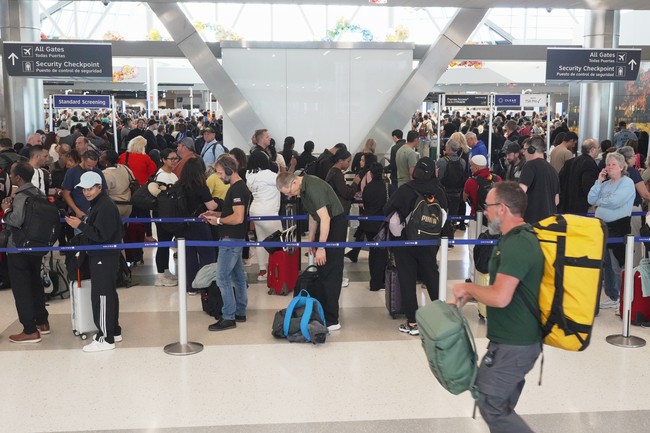
The Democratic leadership chose brinkmanship over solutions, and travelers paid the price as airport lines ballooned and worker shortages worsened. With the House-approved DHS funding stalled in the Senate, an unexpected stopgap arrived: ICE agents stepping in to support operations at busy terminals. That move cut wait times quickly, exposed the politics behind the chaos, and provoked predictable outrage from the left. This piece walks through how the standoff unfolded, how the temporary fix performed, and what it reveals about priorities in Washington.
The tone from Democrats on this issue has been petulant and performative, driven more by political theater than practical problem solving. Instead of passing a straightforward funding bill that already cleared the House, the party opted to fragment the legislation and press procedural gambits. Those maneuvers, including an attempt to run policy through the Rules Committee, stalled the process and shifted blame to Republicans in public messaging.
That messaging landed neatly in some outlets with the exact line, “Republicans reject Democrats’ effort to fund TSA.” The line framed the narrative while obscuring the real sequence of events: the House passed DHS funding and Senate Republicans supported moving the package forward. The standoff was therefore a choice to force a political moment rather than prioritize smooth airport operations.
Meanwhile, real people faced long lines and missed connections as TSA staffing thinned from callouts and resignations. Airports looked more like overwhelmed bus depots, with families and business travelers stuck in slow-moving queues. Travelers deserve functioning security checks and on-time departures, but the political calculus in Washington left the system strained instead of fixed.
Over the weekend, an administrative fix arrived that cut through the theatrics: ICE agents were deployed to assist at select airports in support roles. The deployment was practical and immediate, focused on restoring staffing where gaps had formed. Reaction from the Democratic coalition was swift and furious, but the critics were attacking a pragmatic step intended to keep people moving and flights on schedule.
Predictable complaints centered on training and suitability, as opponents argued crowd control is a specialized skill. Those objections ignored the fact that the ICE personnel were filling support roles, not replacing specialized TSA functions. The goal was to bridge a short-term staffing deficit while elected officials finalized funding decisions, not to reinvent how airports operate permanently.
As the support teams arrived, protestors showed up at some terminals to voice opposition, offering a photo-ready contrast between action and outrage. Organizing presence at airports on the same day the staff arrived suggested the demonstrations were timed for maximum visibility. That optics-first response underscored the priority: dramatize resistance rather than engage with the simple fix that reduced wait times for real travelers.
Within hours of the ICE units taking up support duties, airport wait times began to fall noticeably. Lines shortened, bottlenecks eased, and terminals regained a working rhythm. The evidence of improvement was hard to argue with, and even media outlets that typically recoil from such policy choices reported the operational gains. The solution worked where politics had not.
The deeper lesson is about incentives. When political actors benefit from a manufactured crisis, they may prefer the crisis to the cure. Delaying funding and fragmenting votes creates narratives and headlines, but it also leaves Americans to bear the inconvenience. A simple, bipartisan approach to staffing and funding would have avoided the need for last-minute fixes and public spectacle.
Deploying federal personnel from one agency to shore up another is not novel; it’s common-sense crisis management when immediate capacity is required. The decision reflected a recognition that passengers matter more than party messaging. It also demonstrated how quickly commonsense measures can replace chaos when leaders opt for solutions over point scoring.
If the parties return to negotiating in good faith, the short-term reliance on support teams can be wound down without consequence. But if the strategy remains centered on creating headlines, travelers will keep suffering through avoidable delays. The coming days will show whether lawmakers prefer to resolve the root problem or keep weaponizing airport pain for political advantage.
The administration’s quick pivot also highlighted how outside voices can catalyze real ideas; a public suggestion on talk radio reportedly sparked the deployment discussion. Regardless of origin, the decision had one clear outcome: fewer people stuck in lines and fewer flights delayed. That practical win revealed a gap between grandstanding and governing.
Washington can either let this episode be a lesson in prioritizing service over spin or double down on the theatrics that created the mess. For travelers, the preferable outcome is obvious: stable funding, staffed checkpoints, and predictable travel. The rest is political noise that passengers can do without.


Add comment