
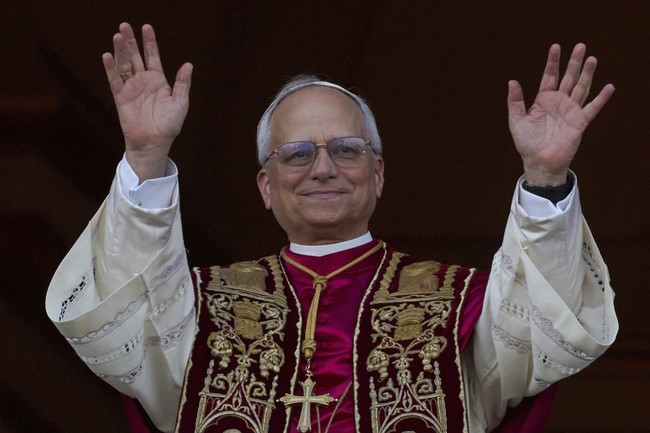
Pope Leo XIV says he is not interested in debating President Donald Trump after a public clash over foreign policy and comments made in Africa; the pope insists his remarks were pastoral, predated the presidential criticism, and that media reaction turned a scheduled peace message into a political controversy.
Five days after President Donald Trump criticized him, Pope Leo XIV pushed back, saying the timeline matters and that his words were taken out of context. He told reporters aboard the papal plane en route to Angola that the speech stirring backlash had been prepared well before the president’s response. The pope stressed his intent was pastoral, focused on proclaiming the Gospel and accompanying Catholics across Africa.
Leo rejected the idea that his recent comments were a deliberate rebuttal to the president, arguing reporters and pundits layered interpretations on top of one another. “It looked like I was trying to debate the president, which is not in my interest at all.” That line cut to the heart of his complaint: the narrative shifted from the substance of his Africa trip to a manufactured debate with a political leader.
He pointed specifically to a peace address delivered in Cameroon as the origin of the remarks that sparked headlines, saying that address had been written two weeks before President Trump’s public critique. The pope said that once the president weighed in, coverage quickly turned into commentary about commentary rather than a discussion of the original message. “Much of what has been written since then has been more commentary on commentary, trying to interpret what has been said.”
Leo said the trip itself was overtaken by that dynamic, and that reporting moved away from the pastoral work he had set out to accomplish. He described the main purpose of the journey as accompanying local Catholics and sharing the Gospel in places where the Church is growing. That effort, he implied, was drowned out by political back-and-forth that neither he nor his hosts had intended.
President Trump’s response did not stay confined to policy or a single social post; it broadened into a critique of the pope’s judgment and international standing. In social media comments, Trump labeled the pope “weak on crime” and said he was “terrible for foreign policy,” expanding the disagreement into a wider spat over personal credibility and global affairs. Those sharp words pushed the exchange into the headlines and forced Vatican aides and U.S. conservatives to react.
Despite the flare-up, Leo has repeatedly emphasized the difference between his role as a religious leader and the realm of political office. “I have no fear of neither the Trump administration nor of speaking out loudly about the message of the Gospel.” That statement underscored his claim that his interventions stem from moral and spiritual concerns rather than partisan calculations. He framed his position as grounded in doctrine and conscience, not in electoral politics.
“We are not politicians … I do believe in the message of the Gospel, as a peacemaker.”
Those words highlight the pope’s view of his responsibilities: to preach peace and caution against escalation, especially around international crises. The disagreement over tone and timing, however, has wider ripple effects inside U.S. conservative circles, where some see the pope’s language as stepping into matters that carry real policy consequences. Vice President JD Vance weighed in from a conservative event, warning that theological statements can have political consequences and urging caution when religious figures comment on public policy.
The split between Leo and Trump has come to represent a larger tension over how moral authority intersects with national security decisions. Leo has urged diplomacy and restraint as the safer course for avoiding a broader conflict, while Trump insists that pressure, including military measures, is sometimes necessary to prevent regimes like Iran from achieving nuclear capabilities. That disagreement is now playing out in public, with both sides firm in their convictions.
On the ground in Africa, the pope continued to focus on pastoral duties even as global attention followed the clash. He spoke to local communities, met clergy, and highlighted the Church’s growing presence across the continent, obstacles notwithstanding. Still, the media cycle kept returning to the spat, illustrating how a single presidential reaction can reframe an entire diplomatic and religious visit.
The exchange between a sitting U.S. president and the leader of the Catholic Church shows how quickly routine statements can be politicized. Both men remain at odds over approach and emphasis, and the debate over judgment, neutrality, and the proper scope of public moral commentary looks set to continue. The pope insists he will keep speaking about the Gospel and peace, even if that means pushing back against being drawn into partisan fights.

Home-based job that pays more than 12,000 Dollar per month by doing simple tasks on a laptop or mobile device part-time. Last month, I earned 24,863 Dollar from this job by working 4 hours per day online. Very simple jobs to do, and the earnings are insane. Everyone can now make more money online by joining the website listed below…..
𝒋𝒖𝒔𝒕 𝒖𝒔𝒊𝒏𝒈 𝒕𝒉𝒊𝒔 𝒔𝒊𝒕𝒆.. Www.FindJobs1.Site