
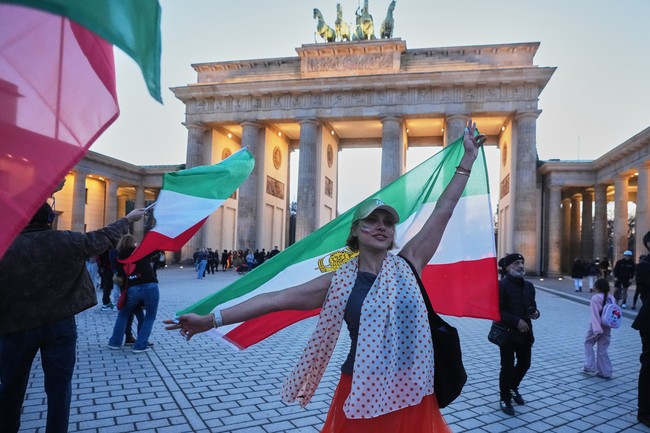
The piece examines a recent online clash where a Montana Libertarian leader criticized Iranian women celebrating after U.S. and Israeli strikes, and those women and others quickly pushed back. It tracks the insults, the responses from Iranians on social platforms, and the broader context of a decisive military action that removed Iran’s regime leaders. The tone is direct and unapologetic, reflecting a viewpoint that supports the strikes and the freedom they enabled. The article preserves firsthand reactions, exact quotes, and embedded media that captured the online exchange.
Social feeds lit up after Operation Epic Fury, with commentary pouring in from every corner of the political internet. A whole genre of commentary popped up telling Iranians how to grieve, how to feel, and how to behave, as if outsiders own the emotional vocabulary of people who just tasted liberation. Women who for decades faced fines, beatings, and imprisonment for small violations of a dress code are now dancing in the streets, and some commentators reacted with contempt rather than sympathy.
Melissa Wong, chair of the Montana Libertarian Party and someone who lists “America First” in her X bio, chose to mock the women in those videos, saying they looked like “hookers.” That crude remark landed badly with people who understood the backstory: these women risked jail and worse to step outside without full hijabs or to speak publicly. For many observers, the comment felt like kicking at survivors rather than acknowledging the trauma they endured under forty-seven years of religious despotism.
There was a swift backlash. Iranians and diaspora members reminded Wong she had no standing to shame them, and the replies were sharp and unambiguous. Social media became an immediate classroom, where women explained what daily life used to demand and why their public celebrations were an act of defiance against authoritarian control.
Some responses were blunt: people told Wong to stay in her lane and to consider deleting her account if she could not show basic respect. Others shared personal memories of checkpoints, morality patrols, and the fear of being stopped for minor alleged infractions. Those memories gave the online replies a moral weight that simple cultural-snark lacks.
Not every reaction was scholarly or measured; much of it was raw and immediate, the kind of instant justice social media hands out when someone punches down at a vulnerable group. But the main point most replies made was clear: freedom looks messy and loud when people are finally allowed to be themselves. The celebration videos were a public release of years of suppressed grief, anger, and hope.
Critics who thought their sneers would land found instead that the people they attacked taught them history lessons on the spot. Commenters posted clips and recollections showing how the regime policed women’s bodies and punished nonconformity, undercutting any smug moralizing from abroad. Those corrections were sharp, factual, and hard to argue with.
Advertisement interruptions on the original social pages attempted to monetize the outrage, but the human stories kept reasserting themselves. Faces in the videos smiled and danced, sometimes tearful, sometimes ecstatic, but unmistakably relieved. These were not staged viral stunts; they were spontaneous moments of people reclaiming public space they had been forbidden to occupy.
Some replies carried humor and scorn in equal measure; people pointed out the hypocrisy of cultural gatekeepers lecturing people who had spent decades under threat. Others gave direct rebukes to Wong’s tone, calling it jealous or cruel. The consensus online tilted firmly toward empathy for the Iranians and disdain for anyone who dismissed their joy.
Alongside the cultural pushback, there were reminders of what had changed on the ground: the regime’s leadership had been eliminated in decisive strikes that supporters say removed a global threat. That context framed the celebrations as part of a larger geopolitical shift, not merely a social-media trend. The public rejoicing intersected with a hard security reality that conservative voices have argued needed addressing for years.
Men weighed in too, and not always predictably; some men thanked Wong for filling their feeds with attractive women, a response met with derision from many viewers. Others took a firmer stance, noting that commenting on appearance misses the point entirely. The online debate revealed how gendered assumptions often shape first instincts, and why those instincts can be wrong when confronting actual human suffering.
Responses varied from educational to scathing, but most carried an ethical throughline: liberated people get to choose how they celebrate, and outsiders should exercise humility before lecturing them. The Iranian women in the videos made clear they would continue to wear what they wanted and to dance publicly, consequences be damned. That stubborn insistence on self-determination became the real story behind the clips.
Some replies called out the arrogance behind an assumption that anyone had the authority to shame another country’s protesters and survivors. Those messages emphasized bodily autonomy and personal agency, concepts that resonate broadly across cultures and political lanes. In this instance, those principles defended people who had been denied basic freedoms for generations.
A few commentators tried to reframe the exchange as entertainment or spectacle, but for many watchers that read as trivializing a serious moment. The images on the feeds were not props for punditry; they were evidence of a seismic change in a society long restrained by coercion. Observers who missed that nuance found themselves corrected rapidly and publicly.
Conservative figures noted the strategic victory represented by the strikes and celebrated that the removal of Iran’s leadership altered a dangerous status quo. For those voices, the footage of jubilant Iranians provided visual confirmation that the operation had liberated people as well as degraded a hostile regime. That interpretation fueled continued support for decisive action against threats to American and allied security.
The final takeaway from the online spat is simple: people who have endured state violence will reclaim their streets, their styles, and their joy, and critics abroad should not mistake cultural discomfort for moral high ground. The women in the videos will likely keep dancing, and their choices will remain their own. As images circulate, the debate will continue to expose more about who speaks for whom and why it matters who gets to answer.



Add comment