
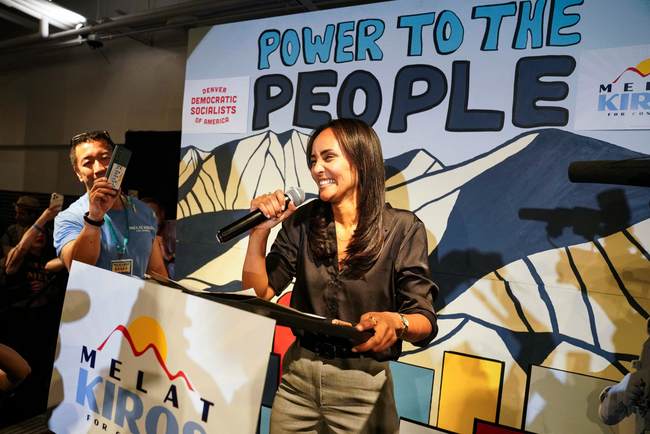
This article examines rising antisemitism concerns in Denver after Democratic Socialists’ primary winner Melat Kiros unseated a long-term congresswoman, detailing community reactions, specific incidents that have heightened fear, and why local leaders see a growing threat tied to charged rhetoric and political shifts.
The recent primary upset in Denver has unsettled many residents, especially within the Jewish community. A young Democratic Socialist, Melat Kiros, defeated a 15-term incumbent in Colorado’s 1st Congressional District, and that result has brought attention to comments she made on Israel and the conflict. Local leaders say those remarks have increased tension and anxiety in neighborhoods that once felt secure.
Community leaders describe a pattern of aggressive language and incidents that feel coordinated with the tone of political discourse. Rabbi Menachem Lehrfield reported being targeted on the street and found an outpouring of hostile messages online after speaking out. Those experiences have left many observant Jews concerned about simply being visible in public while wearing religious attire.
“I was walking down the street right here, right outside this building, and somebody rolled down their window and yelled, ‘dirty Jew,’ to me,” Lehrfield told Fox News Digital during an interview at his Denver office. “I don’t know what’s going to happen next time. I don’t know if next time, instead of hurling vile words, they’ll be hurling an explosive like the person who killed Karen Diamond in Boulder. I don’t know if they’re going to do something to me or my family or my community. There’s a real fear that we’re living with.”
Those fears are amplified by recent violent events nearby and by rhetoric that many say crosses the line from criticism of policy into dehumanizing language. Kiros has been quoted using phrases and terms that some leaders call inflammatory, pointing to a link between public speech and private acts of hostility. For many in Denver, the question is whether political debate can be conducted without putting people at physical risk.
Some Jewish leaders describe social media backlash that followed expressions of concern, turning private worry into a more public, fraught debate. Posts that warned about rising hostility were met with vitriol, which only deepened the sense of vulnerability in neighborhoods with visible Jewish populations. That response underscored the challenge of addressing safety concerns while navigating polarized online spaces.
The political geography of the area matters. Denver and nearby Boulder have long been centers of left-leaning activism, with strong progressive networks that influence local discourse. In a district that overwhelmingly votes Democratic, a primary victory often translates to election, which means a shift in who represents the area in Washington and what platform that person will have. That reality makes local remarks and actions more consequential beyond city limits.
Conversations about antisemitism now sit at the intersection of politics, public safety, and community cohesion. Leaders worry rhetoric that frames entire nations or peoples in stark moral terms can feed hostility, especially when amplified by candidates who gain prominence. For Denver’s Jewish residents, that concern is not hypothetical; it is rooted in direct threats and the lived experience of rising incidents.
Residents and community organizations are grappling with how to respond. Some call for calm and continued dialogue; others demand firmer condemnations and concrete safety measures. The debate reflects broader national tensions about free speech, protest, and where the line is drawn when rhetoric appears to foster violence against a religious group.
Whatever path the community chooses, the mood in Denver is one of wary vigilance. Observant Jews report being more cautious while going about daily life, and local leaders say they are monitoring threats and incidents closely. With a newly empowered political figure heading toward a likely general election, those concerns are unlikely to fade quickly.

Add comment