
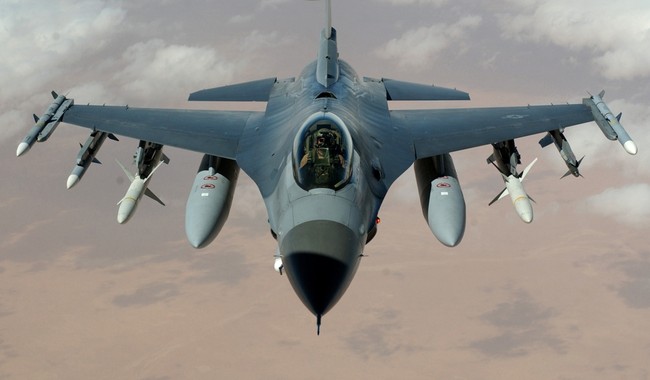
NORAD scrambled F-16s and used flares to intercept several private planes that entered restricted airspace over Bedminster and East Rutherford during President Trump’s appearance at the World Cup final, and the incidents underscore why firm, visible air defense matters when high-profile events draw big crowds and international leaders.
On Sunday, multiple general aviation aircraft violated temporary flight restrictions that had been put in place while President Trump attended the match at MetLife Stadium. NORAD responded quickly, launching F-16 fighter jets to identify and escort the intruding aircraft out of the protected zones. The rapid military response made clear that airspace violations around a presidential visit will be taken seriously.
NORAD released a statement saying, “More than 10 general aviation aircraft have entered restricted airspace today, three of which required intercepts by NORAD aircraft. During two of the intercepts, NORAD aircraft dispensed flares, which may have been visible to the public.” Those exact words illustrate both the scale of the incursions and the defensive steps taken to regain control of the airspace.
The statement continued with a short, clarifying line: “The flares were used to draw the pilots’ attention.” That is a textbook tactic to create a bold visual cue and prompt compliance from pilots who may not realize they have wandered into a no-fly zone. Reports indicate the aircraft were safely escorted away, and no kinetic action or damage occurred.
Pilots were reminded to check NOTAMs and FAA Temporary Flight Restrictions before filing or launching flights, and NORAD emphasized the role of civil aviation cooperation in keeping events secure. In the charged security environment of today, a simple oversight by a pilot can produce a rapid and visible military response. That reaction is necessary when a sitting president and a crowd of international figures are nearby.
President Trump arrived at the final in dramatic fashion as Marine One flew over MetLife Stadium, a moment that drew public attention on top of already heightened security needs. Spain won the match 1-0 in extra time, and afterwards the president stood with FIFA leadership to present the trophy and medals, a high-profile appearance that only increases the importance of tight airspace control. With so many moving parts—dignitaries, media, and thousands of fans—there is zero room for ambiguity about where aircraft are allowed to fly.
Following the match, the president presented the trophy to Spain and took part in awarding medals, further spotlighting the event and the need for robust perimeter security. NORAD later posted about the mission, framing the intercepts as part of routine responsibilities that are nonetheless crucial during major events. The agency’s later message read, “The matches are over, but our mission never ends,” reinforcing that vigilance continues even after celebrations wind down.
https://x.com/NORADCommand/status/2078967547379282109?ref_src=twsrc%5Etfw
NORAD also thanked the civil aviation community, noting, “As World Cup activities draw to a successful close, we thank the civil aviation community across North America. Your cooperation with NOTAMs, TFRs, and airspace restrictions was vital to public safety.” That acknowledgment points to the partnership between military defenders and civilian pilots in preventing avoidable risks. When pilots follow notices and restrictions, everyone benefits from clearer skies and fewer dangerous encounters.
While most violations are honest mistakes—pilots who failed to review the latest NOTAMs—the political and global context raises the stakes for any airspace breach. High-profile events around political leaders can attract attention from hostile actors or simply create confusion that leads to dangerous situations. A decisive intercept capability is a straightforward, necessary part of protecting leaders and the public without escalating to unnecessary force.
The incident is a reminder that airspace rules are not bureaucratic trivia; they are practical safeguards that protect tens of thousands of people at large events and the officials who attend them. NORAD’s actions showed the system worked: violations were identified, pilots were alerted, and the airspace was cleared without injury or escalation. That’s the outcome conservative voters expect—firm security measures executed professionally to reduce risk and preserve public safety.

Add comment