
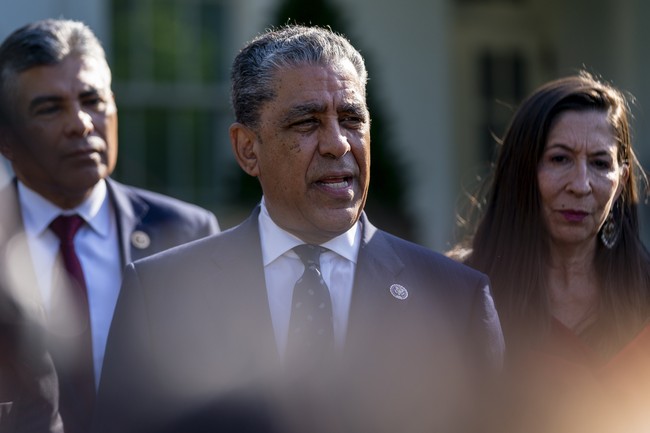
The New York 13th District Democratic primary delivered a surprise squeeze as Darializa Avila Chevalier, backed by Mayor Zohran Mamdani and the Democratic Socialists of America, narrowly beat five-term Rep. Adriano Espaillat. Voter splits along race and ideology, plus a contingent of liberal white voters, appear to have tilted the result in a district that covers northern Manhattan and parts of the Bronx. This piece looks at the numbers, the likely coalition that pushed Chevalier over the finish line, and the broader political signals for Democrats ahead of the general election.
Chevalier’s win over Espaillat was the closest of the races Mamdani touched, and it came with a backdrop of heated debate over Israel and the mayor’s own alignment with far-left positions. The contest underscored how identity and ideology can cleave a Democratic electorate, especially in a city where progressive activists and older coalition voters do not always agree. With about 88 percent of the vote in, the race was still tight enough that small, motivated blocs could decide the outcome.
Polling released the week before the primary painted a clear picture of who was moving where, showing Chevalier performing strongly with white voters while Espaillat held leads with black and many Latino voters. Those numbers hint at a coalition split that many on the right have been warning about: a growing divide between activist white progressives and the minority communities that once formed the backbone of the Democratic machine. The result suggests activist energy and turnout patterns mattered more than incumbency or established caucus leadership in this cycle.
“Doctoral candidate Darializa Avila Chevalier, who is also supported by the Democratic Socialists of America, bested Espaillat among white voters, 35% to 25%, according to the survey obtained by The Post.”
https://x.com/DecisionDeskHQ/status/2069598511105016301
“Espaillat led among black voters 36% to 21% and Latinos 42% to 30% in the 13th House District that runs through the northern Manhattan neighborhoods of Morningside Heights, Harlem, East Harlem, Washington Heights/Inwood and the western Bronx.”
That raw divide helps explain why a candidate like Chevalier, tied to radical-left organizing and anti-establishment messages, could topple a sitting congressman who chairs the Congressional Hispanic Caucus. When activists and well-organized progressive groups flood a primary with targeted turnout, incumbents who rely on older coalition patterns can be vulnerable. Espaillat’s role in bipartisan Hispanic-Jewish outreach may not have protected him this time against a surge driven by ideological passion and precinct-level organizing.
Another quote from local coverage captures the mayoral parallel that mattered in voters’ minds: “And Mr. Mamdani did so even as he lost many of New York City’s most solidly Black neighborhoods. A New York Times analysis of the results shows that Mr. Cuomo dominated in precincts where at least 70 percent of residents are Black, more than doubling Mr. Mamdani’s support, 59 percent to 26 percent.”
The same write-up included a local pastor’s observation that frames the tension in simple terms: “The ‘tough part that we’re wrestling with,’ [Rev. Rashad Moore] added, ‘is Zohran won with support of liberal progressive white folk. Are these the same progressive white folk that are pricing us out and we can’t live in the community? That’s the tension.'”
Those lines matter because they show why Democratic leaders who depend on multiethnic coalitions should be worried. The party’s progressive wing can win primaries with energized, ideologically driven white voters, but that approach risks alienating long-standing Black and Latino voters whose turnout is critical in general elections. Republican strategists will note that division and push to exploit it where Democrats look weakest.
On the ground in NY-13, the numbers indicate a likely pattern: activist progressive turnout, concentrated in specific neighborhoods, overcame the broad but softer support that sustained Espaillat for years. If that dynamic repeats across other urban districts, Democrats could see more primaries that reward ideology over experience. That trend also reshapes the messaging Republicans will use in the fall, focusing on stability, safe communities, and common-sense governance while Democrats sort out internal disputes.
For now, the Chevalier win is a warning shot: insurgent candidates backed by the far left can topple incumbents, but they do so by changing the party’s coalition makeup. Whether that model holds up in a general election remains an open question, but the primary outcome already tells us a lot about where Democratic energy and priorities are headed in these city districts.


SMART W0RK I was kind of worried about the entire thing. I’ve never worked from home, But Yeah, (D11) I did just join and all is good. so I will post back how it
goes!_____ JUST CLICK ON MY USERNAME