
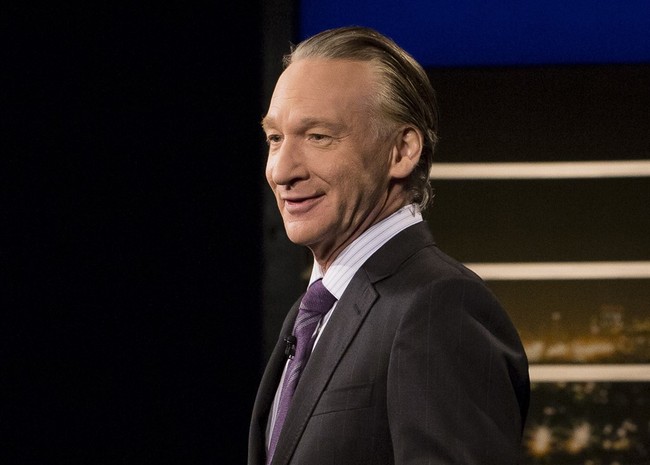
Bill Maher tore into Dr. Anthony Fauci after the release of Fauci’s diary and the heated Senate hearing where he invoked the Fifth Amendment, arguing the diary exposes a pattern of ego-driven behavior and public image management that demands scrutiny and political accountability.
The diary’s release reignited a conversation that many on the right have pushed for months, and the Senate hearing added fuel when Fauci refused to answer questions by invoking the Fifth. Republicans who want answers pointed to the diary as further evidence that public trust was mishandled during the pandemic, and the hearing amplified those concerns. What was once a limited debate in select circles has become a mainstream issue, especially after high-profile commentators and even sports figures weighed in.
Bill Maher did not hold back on his Friday “Real Time” show, knocking Fauci off the pedestal many in the media built for him. Maher said the diary entries are embarrassing and framed them as a serious problem because they reveal how Fauci viewed public adoration. In Maher’s view, that adulation may have affected policy choices at the worst possible time.
Maher called the diary release “the most embarrassing public release of anything” since Anthony Weiner and mocked the self-regard he found there. He contrasted the breathless celebrity praise with the stakes of pandemic policy and suggested a dangerous feedback loop where public acclaim influenced crucial decisions. That line of critique resonates with conservatives who have long argued for greater accountability in pandemic leadership.
Warning for graphic language:
“Fauci: ‘The nurses went absolutely wild to see me. They were squealing and laughing and clapping. It was something to behold.’”
“Fauci: ‘Many print profiles and features on me. Ridiculous. Too many to count.’”
“Fauci: ‘I’m such a valued spokesperson and a good communicator.’”
Those lines read less like a public servant’s reflections and more like a celebrity’s journal, which is exactly what critics are pointing to. Maher said outright that such indulgence is dangerous when the person indulged holds real power over public health policy. The critique is blunt: if leaders are making choices that affect millions, their ego trips become a legitimate political concern.
https://x.com/VigilantFox/status/2083386726303559933
Other reporters and commentators have pulled similar passages from the diary and highlighted Fauci’s fascination with attention and status. One passage quoted in press coverage says, “It is not [hyperbole] to say that today I am the most famous and talked about person in the country and one of the most recognizable [people] in the world.” That kind of language undercuts the image of humble public service and raises valid questions about motive and judgment.
Maher also read diary moments where Fauci seemed giddy about meeting public figures and media personalities, noting that the list included prominent journalists and a senator. Puck journalist Peter Hamby chimed in on the show, mocking the idea that Fauci would be starstruck by those names. The segment played for laughs, but the laughs cut to a serious point about public perception versus responsibility.
Republican critics say this episode underlines why oversight matters and why political leaders must be accountable when they occupy powerful roles. Releasing the diary allowed voters and lawmakers to see the contrast between public rhetoric and private reflections, which is a powerful tool in any democratic system. The argument from the right is straightforward: public officials should be judged on both their actions and the attitudes that drove them.
The diary and the hearing have shifted the terms of public debate away from uncritical praise toward accountability and scrutiny. For many conservatives, this is overdue and necessary, especially when policy choices had major social and economic consequences. The controversy will likely continue as more entries are examined and as lawmakers consider whether existing oversight mechanisms were sufficient.



You seemed (like the rest of the fake news) to forgot to mention is the fact that he not invoked the fifth amendment. That he did it 111 times, and that he had 5 criminal defense attorneys with him. One refused to obey Senate rules and sat at the table with the mass murder. Not to mention his “public image management” that demands scrutiny. Are you kidding, he belongs in prison, while he was swooning over his new found fame, people were being put to death, ALONE, families barred from seeing them. I want no more of you half news that smooth the edges for the liberals. Consider your garbage going in my spam folder from now on. Don’t worry I have no doubt this comment will go where no public can see it.
G.L.M.; “you half news that smooth the edges for the liberals.”
Yes and I’m now seeing all News Agencies outside of the Big Legacy Media Networks as only Controlled Opposition now; Nobody does absolute Truth for the Public Edification Journalism anymore! ALL SOLD-OUT!!!
Money and Power Talks and Bullshit Walks!!!
That is all the other News Agencies outside of “the corrupt to hell lying Big Legacy Media Networks.”
Propaganda Machine! That is all we got now!