
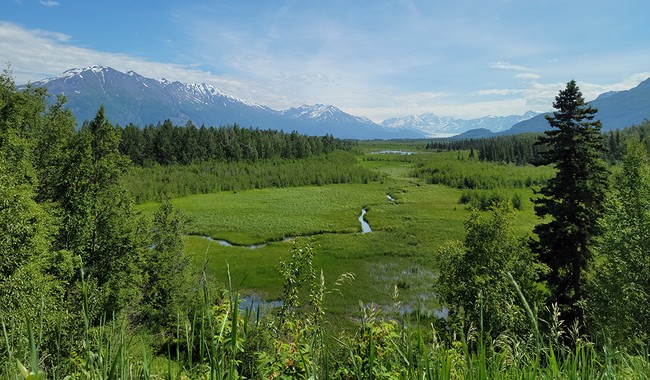
Summer’s heat has crept into Alaska this week, pushing daytime highs toward 80 in places that rarely see numbers like that, forcing locals to reckon with warm houses, scarce air conditioning, and the quirks of living so close to the ocean and so far from the lower 48’s routine weather swings.
It has been a hot summer across much of the United States, and Alaska is no exception this year. A heat advisory covered parts of the Susitna Valley through the weekend, with daytime highs flirting with 80 degrees. For Alaskans, that kind of warmth feels extreme because our everyday lives and buildings are tuned to cool conditions.
Homes here often rely on passive solar design: lots of windows and insulation meant to keep heat in during long winters. Those same features turn living rooms into sun traps when the sky decides to cooperate for a few days in a row. Add the fact that few houses have air conditioning and you get people improvising ways to keep comfortable.
People who have lived in Alaska for years still have the same low threshold for warm weather that newcomers notice immediately. We break out t-shirts and shorts when temperatures hit the 50s, and even mild warmth changes routines and wardrobes quickly. That cultural habit explains why a stretch into the 70s or low 80s feels like a heat wave here, even though it would be a mild summer day in many other states.
Heat advisories across Southcentral Alaska go into effect at 2 p.m. Friday afternoon, as the return of summer really ramps up. This comes following an extended stretch of rainfall in the forecast, with this week providing much drier weather. While we have dried out, the sun’s energy will now be used to heat up the earth’s surface, driving temperatures well into the 70s over the weekend.
We will see the warmest temperatures in the Mat-Su, the Copper River Basin, along the Sterling Highway and for eastern parts of Anchorage from midtown to Muldoon.
How heat plays out geographically across Alaska depends a lot on proximity to the ocean and local topography. Coastal areas near Cook Inlet, Prince William Sound and the Gulf of Alaska usually stay cooler and see more breeze and cloud cover. Inland valleys and the Interior can spike much higher in summer while plunging brutally cold in winter, the extremes that make living here unique.
Those marine influences are going to matter as the pattern shifts again. Forecasts showed a low in the Bering Sea moving into western Alaska, which can push clouds and rain back into Southcentral and knock daytime highs down into the low to mid 60s. In short, a few warm days are often followed by a return to the cooler, wetter weather that defines much of the region.
Not everyone across Southcentral will see the heat. If you live near Cook Inlet, Prince William Sound and near the Gulf of Alaska, you will experience much cooler weather. Temperatures in these areas may only top out in the upper 60s and lower 70s over the weekend. Remember to stay hydrated as you get outdoors this weekend and enjoy the sunnier weather.
People adapt in simple ways: open the truck, head to higher ground, find shade, or drive to the coast for a cooler breeze. Vehicles and commercial buildings usually have air conditioning, so a short trip can make a big difference on an exceptionally warm day. For most of us, the odd hot afternoon is manageable and even welcome compared to the long winter chill.
Alaska’s day-night cycle and seasonal swings are extreme by continental standards, and that reality shapes how locals talk about weather. A couple of warm days are a reminder that summer exists here, even if it’s brief and often followed by a return to rain and cool temperatures. We enjoy the sun while it lasts but expect the usual pendulum to swing back.
Six months from now, when temperatures plummet toward 20 below, we will be dealing with the other side of the coin. In the meantime, modest warmth and a string of sunny days give folks an excuse to get outside and soak up what passes for a heat wave in the Great Land.



Add comment