
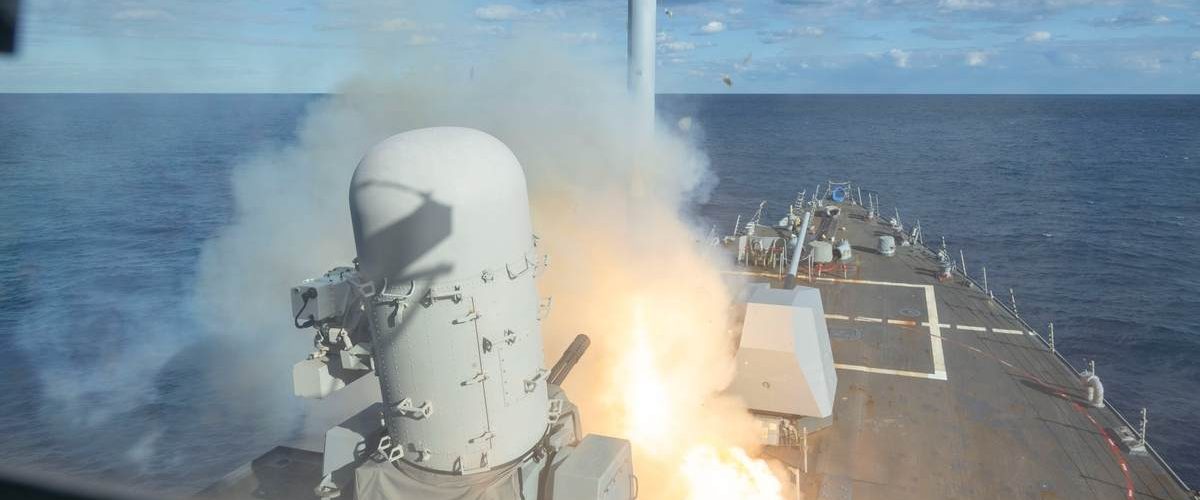
U.S. forces struck Iranian positions on Larak Island to stop a marked threat to shipping, and Iran replied with attacks it then mischaracterized; regional partners say their defenses intercepted the incoming missiles and drones, while U.S. statements framed the strikes as defensive moves to protect maritime traffic and personnel.
The U.S. military said it struck rocket launchers on Larak Island after observing preparations to launch rockets armed with mines into the Strait of Hormuz. CENTCOM presented the action as necessary to prevent Iran from blocking a vital shipping lane and endangering civilian mariners and commercial traffic. From a conservative perspective, the move was a straightforward step to defend commerce and deter further Iranian meddling. The response from Tehran, however, included claims that did not match what regional militaries and U.S. officials reported.
CENTCOM described the strikes as eliminating a clear danger: the placement of mines that could have choked off oil and gas shipments. That framing puts the operation in defensive terms, focused on commerce and freedom of navigation rather than aggression. U.S. officials emphasize that the demining effort had already cleared the strait, and the follow-on strike sought to prevent a renewed threat. In Washington, that posture fits a broader argument that American force should be used to protect global trade routes and reassure allies.
Iran responded by announcing attacks on Jordan and the United Arab Emirates and by claiming damage to bases and infrastructure used by the U.S. military. Those accusations were loud and sweeping, asserting hits on King Hussein and Al-Azraq air bases and even “technical and maintenance infrastructure and the enemy’s fighter jets’ deployment sites.” Such claims were designed to project strength at home and intimidate abroad, but the on-the-ground reports from Jordan and the UAE told a different story.
https://x.com/CENTCOM/status/2094228119079067852
Capt. Tim Hawkins, a spokesman for Central Command, said that Iran’s Islamic Revolutionary Guards Corps forces had been observed preparing to launch rockets armed with mines from Larak Island into the waters of the surrounding strait, a vital shipping waterway for oil and gas.
Jordanian officials reported that they intercepted missiles that entered their airspace and destroyed them before they could cause damage. Those interceptions, reported by domestic broadcasters and confirmed to outside outlets in more limited terms, undercut Tehran’s narrative of successful strikes. The intercepted missiles failed to produce the dramatic damage Iran claimed, and Jordan’s account points to air defenses doing their job rather than infrastructure being destroyed.
The Jordanian Armed Forces said Sunday it intercepted eight missiles that had entered the country’s airspace, according to Jordan’s Al-Mamlaka TV broadcaster.
A spokesperson for the military said all eight missiles were destroyed before they could do any damage, according to the broadcaster.
A person familiar with the attack also confirmed to CBS News the missiles were intercepted, although they did not specify how many.
The UAE likewise reported neutralizing an Iranian drone over its waters and explicitly denied that a major base in Dubai had been hit. Those statements ran directly contrary to Tehran’s assertions about striking Al Minhad Air Base and producing tangible damage. That kind of contradiction is familiar in this theater: Iran claims bold battlefield successes, while regional partners and independent observers report limited or no effects.
In a short statement, the Defense Ministry said it “dealt with” an Iranian drone that was detected over its waters approaching from Iran. There were no reports of damage.
The UAE Defense Ministry later issued a second statement denying a claim by the Iranian army that the Al Minhad Air Base in Dubai had been targeted, saying it was false.
That pattern—provocation followed by exaggerated claims—matters beyond headlines. When Tehran inflates its successes, it complicates decision-making for capitals trying to calibrate responses without escalating to wider conflict. From a conservative angle, that underlines the need for clear deterrence: credible defense measures and prompt, proportionate responses that protect interests and signal consequences for further aggression.
Social media and political leaders added to the noise, including one post and an AI-generated video mentioning Kharg Island that appears aimed at sending a message to Tehran. While such posts can be symbolic, they also shape public perceptions and expectations about the U.S. posture in the region. For policymakers, the balance is between demonstrating resolve and avoiding actions that invite misreadings or unintended escalation.
Regional partners showed they can and will defend their airspace and waters, intercepting missiles and drones and denying Iran the narrative victory it sought. The diplomatic and military picture remains tense, and actions by Iran continue to test international resolve. In the meantime, the record on the ground supports the view that the U.S. strikes were defensive and that several of Iran’s poststrikes claims were contradicted by honest reporting from Jordan and the UAE.



Add comment