
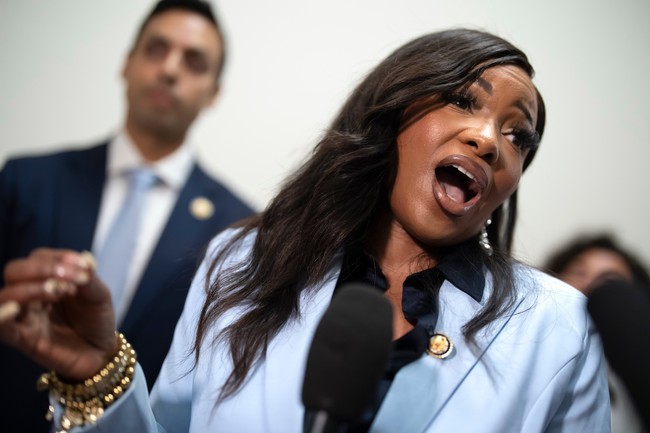
The trial and guilty verdict in the fatal stabbing of Austin Metcalf by Karmelo Anthony sparked intense community debate, and this piece examines how Representative Jasmine Crockett’s public comments after the verdict inflamed tensions, mischaracterized facts, and raised real concerns about responsibility from elected officials.
The facts are stark: the April 2025 incident at a Frisco, Texas stadium ended with 17-year-old Austin Metcalf dead and 17-year-old Karmelo Anthony charged after Anthony admitted to stabbing Metcalf. Anthony asserted self-defense, and his family launched a legal defense fund that reportedly raised over $600,000. Early rumors suggested the money bought lavish items, but organizers later said no funds had been withdrawn at the time the reports circulated.
Race quickly became the lens through which many viewed the case. Anthony is black and Metcalf was white, and that basic reality has been exploited by some to frame the whole episode as a racial battle. That made a volatile situation even more combustible in a community where emotions were already running high before the trial even began.
In that charged environment, leaders ought to calm and clarify, not stoke. Instead, Rep. Jasmine Crockett took to public platforms and a podcast to question key elements of the case in ways that sounded less like sober legal analysis and more like provocation. She raised doubts about whether the object used was a “deadly weapon,” suggested the victim’s behavior might have been racist, and compared the Metcalf family’s grief to “the agony black women live in everyday.”
Crockett’s phrasing often began with qualifiers such as “as I understand it,” which suggested she had not closely followed the facts laid out at trial. She also portrayed the track meet encounter in a way that implied Metcalf was attacking Anthony, even though multiple witnesses told investigators that Anthony acted as the aggressor. Those witness accounts were part of the record leading to a guilty verdict.
Even more troubling was her admission that, had she been in Anthony’s place, she might have reacted similarly. For a sitting congresswoman and an attorney licensed in Texas, Arkansas, and federal courts to express that sentiment publicly is irresponsible. Public officials should prioritize de-escalation and respect for the judicial process rather than issuing remarks that can be read as condoning lethal violence under disputed circumstances.
The post-verdict clips of Crockett collected on social media and during interviews made clear why many residents felt nerves frayed rather than soothed. Her rhetoric was seized upon by others to call for confrontation, and reports noted that extremist groups showed up at the courthouse area around the time of the verdict. That is exactly the kind of escalation a lawmaker should be working to prevent.
There is a difference between advocating for racial justice and needlessly inflaming racial tensions after a jury has spoken. Crockett’s defenders will say she was amplifying a perspective many feel; critics will say she crossed the line into reckless commentary. From a Republican viewpoint, elected leaders must be held to a higher standard of steadiness and fidelity to public safety rather than performative outrage.
Communities left reeling by a violent death deserve truth, accountability, and a path toward healing. That requires elected officials to ground comments in verified facts and to respect judicial outcomes while pursuing legitimate legal remedies through appropriate channels. It does not require amplifying speculation or likening a grieving white family to systemic injustices experienced by others in a way that dismisses their loss.
https://x.com/realDailyWire/status/2064792966430962144
Those watching closely will note the fundraising mechanics and courtroom record, and they will judge public figures on whether their statements helped cool a tense situation or poured fuel on the fire. Representatives who want to be constructive should focus on clear, careful language that does not encourage division or potential unrest, especially when testimony and evidence have already been presented to a jury.
The community deserves leaders who lower the temperature and protect public safety after a verdict is rendered, not leaders who use their platforms to inflame. Crockett’s comments have left many feeling she chose the latter, and that choice will influence how constituents evaluate her judgment and priorities going forward.
Watch the post-verdict clips below of Crockett, some of which came from her podcast and others which came during an interview in Washington, D.C. Discerning readers and viewers will also note that it’s obvious she hasn’t kept up with the case at all, which is clear not just by the use of words like “as I understand it,” but also when she misrepresents what happened at that track meet by suggesting Metcalf was on top of Anthony beating him up, which did not happen. Also left out was that, according to multiple witnesses, Anthony was the aggressor:
And as you watch all of that, keep in mind that Crockett is actually an attorney who is, according to her “congressional bio”, licensed to practice law in Texas, Arkansas, and the federal courts.


Add comment