
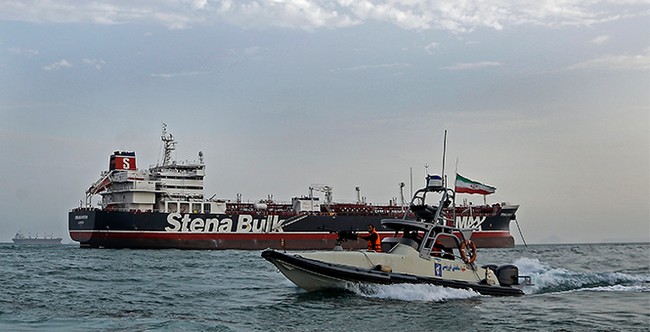
This article examines President Trump’s claim that U.S. forces and a covert logistics network moved large quantities of crude through the Strait of Hormuz, describes how an operation of escorted or rendezvoused tankers could work, and reviews available public statements and reporting about Project Freedom, CENTCOM actions, and associated maritime tactics.
President Trump announced on TruthSocial that a secret mission shepherded over 200 tankers carrying more than 100 million barrels of oil through the Strait of Hormuz under U.S. protection. From a Republican perspective, this is presented as decisive action proving American control of a vital chokepoint and undermining Iran’s ability to interdict Gulf exports. The claim, if accurate, reframes prior doubts about freedom of navigation efforts into a strategic success.
Last month, I directed our Great U.S. Military to execute a secret mission to support Oil Tankers and other Commercial Ships through the Strait of Hormuz. Today, I am pleased to announce that this effort has resulted in more than 100 MILLION Barrels of Oil making its way through the Strait, and into the Open Market. More than 200 Commercial Ships have safely traveled through the Strait. This wildly successful effort is because the UNITED STATES of AMERICA CONTROLS the Strait of Hormuz — NOT Iran. Their military is defeated, and their economy is lost. It’s over for Iran! Thank you for your attention to this matter. President DONALD J. TRUMP
An Oval Office interview added further context about nightly operations and oil flows, but much of the public reporting that followed had previously painted the effort as ineffective theater. Early observers noted few visible convoy movements and assumed rhetoric outpaced results. The new account suggests there was a different playbook in effect from the start.
https://x.com/FoxNews/status/2064742749383918019
“When the war is over, it’s coming down. It’s going to come down like a rock.
And again, we’re taking out millions [of barrels of oil], which I’m just announcing today for the first time, but we’ve been taking out millions of barrels of oil — millions of barrels. Every night we took out [oil].
But now I’m going to tell you because they just figured it out. So now that they’ve figured it out, I can tell you. It was very hard for me. I wanted to say it so badly, but I didn’t want to ruin it.
Millions of barrels of oil have come out. That’s why it’s at $85–$90 a barrel instead of $250.
But we have the greatest military in the world, the toughest military in the world. Just the best in every way — nobody even close. There’s no military that is even close. I rebuilt it during my first term. I’m using it now.
When this conflict is over… [someone] said please go to a ‘conflict’ right? As opposed to the word ‘war.’ He didn’t like the word ‘war,’ but it’s sort of a conflict, it’s a military operation.
When it’s over, you will see oil drop to where it was before.”
The timeline centers on an initiative announced in early May called Operation Project Freedom, which publicly framed the mission as defensive support for merchant traffic. CENTCOM statements emphasized regional security and economic stability while also denying direct naval escort in public briefings. That apparent contradiction is the key question: could the U.S. legitimately support safe passage without leaving a public footprint?
Operation Project Freedom was on May 4, with public language about aiding merchant transit and citing the strait’s massive role in global oil shipments. Observers who expected overt destroyer-led convoys saw little demonstrable movement and assumed the effort had fizzled. The newer account argues the operation used more discreet techniques to shift traffic quietly and repeatedly.
Reports by maritime analysts and private intelligence firms suggested a pattern of vessels transiting with transponders off, rendezvousing in Oman, and conducting ship-to-ship transfers outside visible lanes. According to those reconstructions, very large crude carriers would exit with transponders disabled, meet partner tankers in the Gulf of Oman, and offload by transfer before empty hulls returned to pick up fresh loads. That method preserves apparent stability inside the Persian Gulf while still moving product into the global market.
This pattern also explains heightened U.S. naval activity in the Gulf of Oman that was presented as blockade enforcement; turning inbound traffic around could prevent Iran from stumbling on transfer operations. Financing and insurance mechanisms reportedly backed the program, with a large insurance pool cited as facilitating the risk of covert moves. Critics had labeled those efforts failures when they saw low uptake, but behind-the-scenes coordination may have been the missing piece.
There are operational consequences beyond oil flows. One report linked a recently downed AH-64 helicopter to these nightly missions, suggesting Army aviation and autonomous sea drones were involved in escort and rescue tasks. The use of USVs and UAVs as part of a layered, low-visibility escort offers a plausible technical solution for moving product while minimizing large surface formations. From a Republican viewpoint, these moves reflect American ingenuity and the willingness to use superior capability to keep markets open and blunt Iranian leverage.
If Trump’s numbers are near the mark, a single-night movement of dozens of tankers could represent a meaningful slice of Gulf daily output and a direct blow to any claim Iran maintains absolute control of Hormuz. The broader implication is geopolitical: if the U.S. can preserve Gulf exports despite Iranian pressure, Tehran’s ability to coerce neighbors is reduced. That shifts the strategic balance in favor of countries that want open trade lanes and underlines the value of decisive American action in contested waters.

Add comment