
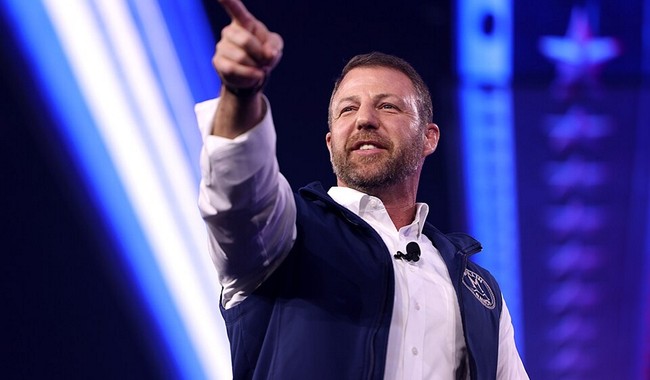
The Department of Homeland Security, led by Secretary Markwayne Mullin, says the U.S. is ready to secure the 2026 World Cup across multiple cities and millions of visitors, while also calling out recent funding fights that nearly jeopardized operations and describing how agencies will be deployed to guard fans and venues.
The World Cup starts in just hours with games in 16 U.S. cities, plus matches in Mexico and Canada, bringing an unprecedented influx of visitors and security needs. Secretary Mullin framed the task as large but manageable, saying the federal government has coordinated across agencies to protect players, fans, and infrastructure. This is a classic example of the federal role in major international events—when risks rise, so does operational focus.
DHS has had to plan for huge crowds and complex logistics, including transportation hubs, stadium perimeters, and international arrivals. Mullin emphasized the scope, noting the sheer number of host venues and the movement of people between them, and warned of the potential for bad actors who might try to exploit the atmosphere. The administration is leaning into intelligence-sharing and on-the-ground deployments to deter and respond quickly.
https://x.com/RapidResponse47/status/2064759552927822064
DHS Secretary Markwayne Mullin said in a recent interview on Fox News that while it’s a “huge task,” the U.S. is ready to keep “5-7 million” enthusiastic soccer fans safe during their stay:
Look, we have 78 Super Bowls, in 38 days, in 11 cities. Most of these cities are having a game…every other day…We’re going to have five to seven million visitors.
Mullin also pointed to recent political drama over department funding that created real operational stress in the run-up to the tournament. He made clear that the shutdown of DHS components left gaps at the worst possible time and that getting funding restored was essential to fielding personnel where they were needed. From his perspective, restoring full funding meant rescuing an operation that had already been stretched thin.
“Unfortunately, the radical Democrats put this in jeopardy because they had us shut down as a whole for 76 days,” Mullin said, but pointed out that it was 100 days for the Customs and Border Protection (CBP) and Immigration and Customs Enforcement (ICE) employees.
The Secretary took a direct, partisan tone about the shutdown’s effects, stressing that certain agencies faced even longer furloughs. That mattered for staffing decisions at entry points and stadiums, where CBP and ICE play critical roles in vetting visitors and intercepting threats. Restoring those teams was presented as a concrete win for public safety heading into the tournament.
Critics of the funding fights had argued the impasse was rooted in demands for sweeping policy changes that would have limited enforcement tools. One related commentary warned those proposals were “nonsensical demands” that risked operational capability, a point Mullin echoed in laying blame. The core argument here is straightforward: national security should not be held hostage to political bargaining when public safety is on the line.
We’re going to show the best of America. We expect to have safe games, but we also know there’s [sic] bad actors out there every day threatening us.
We have Customs and Border Protection over five stadiums, the FBI is over three stadiums…We have the Coast Guard that’s taking two arenas.
The operational plan Secretary Mullin described uses an all-of-government approach, deploying CBP, FBI, Coast Guard, and other elements across venues to deliver layered security. That multiagency posture is meant to cover airspace, ports of entry, and event perimeters so threats can be detected and disrupted early. Officials are treating prevention and quick response as twin priorities for a tournament this size.
Officials have already moved to block certain foreign officials with dubious ties from entering the country for matches, a sign that screening and visa decisions remain tools in the security toolbox. Tightening access for those with suspected bad links demonstrates a willingness to use immigration authorities as part of protective measures. For many conservative voices, that proactive stance is a needed line of defense at major international gatherings.
Mullin closed by reminding audiences that the tournament opens Thursday with matches in Mexico and continues through July 19, and he joked about being sleep-deprived until the early hours after kickoff. The logistics will continue to unfold as attendees arrive and security teams settle into their assignments city by city. For Republican leaders and supporters, the focus remains on strong federal coordination, restored funding, and visible deployments that reassure the public while keeping the event safe for millions.
The US Attorney’s Office for the Central District of California, which includes Los Angeles, one of the host cities for the 2026 matches, shared this timely warning Wednesday about restricted airspace during the World Cup events:
Add comment