
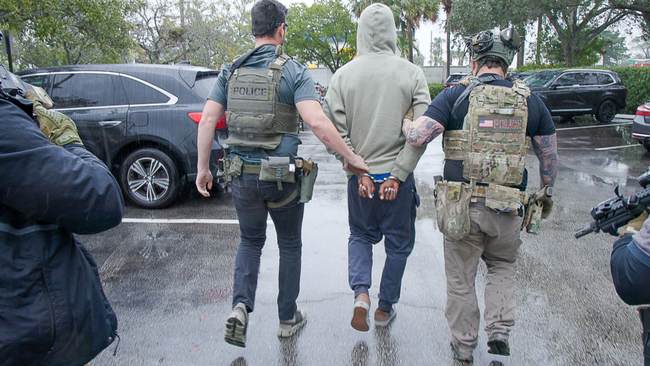
The back-and-forth over the use of whistles at anti-ICE actions has turned into a public spat between immigrant-led groups and mostly White rapid responders, exposing tensions over tactics, motives, and who gets to lead support efforts for vulnerable migrants.
Street-level confrontations with immigration enforcement have always been messy, and small tactics can become big battles over principle. The whistle, once a simple tool to warn or call for help, has become a symbol of deeper disagreements about control, safety, and who is steering the effort. What started as a tactic meant to alert neighbors and responders now highlights different views on accountability and respect for those directly impacted.
Organizers in places like Seattle argue they prioritize calm, harm reduction, and the needs of people most vulnerable to enforcement actions. They say the goal is not spectacle or confrontation but carefully managed accompaniment that reduces harm and centers immigrants. “We show up with care and accountability, not noise or panic.” “It is not about being the loudest, the bravest, or the most visible person on the scene or confronting immigration agents. It is a commitment to non-violence, discipline and harm reduction, centering the well-being of the most vulnerable immigrant and refugee committees in Washington,” the statement continued.
Fox News Digital has reviewed days of messages inside Signal chat rooms that reveal that a new internal feud has erupted inside the anti-ICE protest industry, pitting immigrant-led organizations against predominately White “rapid response” networks that have made whistle-blowing a dramatic part of anti-ICE protests.
In one dismissal, a “rapid responder” in Seattle reported back that “immigrant networks are being weird.”
Groups from Seattle to Montgomery County, Md., are telling mostly White “rapid responders” to back off a dynamic described by activists as “White Savior,” reminding them they are not cameo actors in an “action movie” against ICE.
Not everyone agrees with the quieter approach, of course, and some responders reject the pushback on whistles. A few in responder circles say whistles are necessary and wanted by people on the ground, arguing that noise can be the simplest, quickest way to draw attention during an enforcement action. “We believe in whistles, people want whistles. Nothing change [sic] no matter what WAISN says,” one participant wrote in a group called “WA Whistles.”
“We believe in whistles, people want whistles. Nothing change [sic] no matter what WAISN says,” one participant wrote in a group called “WA Whistles.”
In the Seattle group, a “rapid responder” dismissed the group’s concerns as “vaguely condescending,” arguing that while whistles might be “traumatizing,” they were surely “no worse than being actually kidnapped, or watching it happen in front of your house.”
Others framed the immigrant-led nonprofit as self-interested and risk-averse. One person sneered at the “immigrant rights nonprofit business,” while another complained about “careerists at nonprofits” who don’t put the “cause over their job.”
Leaders in Maryland and elsewhere pushed back with a different concern: well-meaning allies can inadvertently take center stage. They caution that rapid response is about discipline and humility, not about asserting control in crisis situations. “Especially for white allies,” they wrote, “whistles can represent a subconscious desire for authority, protection or control in moments of crisis, but rapid response is not about assuming authority. It is about showing up for your community with discipline, humility, and restraint when we question decisions made by those impacted, we risk centering our own comfort instead of impacted people.”
“Especially for white allies,” they wrote, “whistles can represent a subconscious desire for authority, protection or control in moments of crisis, but rapid response is not about assuming authority. It is about showing up for your community with discipline, humility, and restraint when we question decisions made by those impacted, we risk centering our own comfort instead of impacted people.”
They wrote, “This is not an action movie. You are not in a one-on-one fight with ICE.”
Adding bold emphasis, they noted, “And you are not the center of this situation.”
The coalition also raised practical risks: loud, chaotic scenes can escalate tensions, make documentation harder, and invite misinterpretation by officers or the public. They pointed out historical baggage tied to certain sounds or tactics and warned that theater can overshadow protection. The message is straightforward: tactics should reduce harm, not amplify it.
There’s also a broader political tack to consider. From a Republican viewpoint, critics argue that some of these rapid responder networks romanticize resistance and treat federal law enforcement as an enemy to be thwarted at any cost. That mindset, they say, can lead people to celebrate disruption without facing the legal or safety implications for themselves and for the communities they claim to protect.
Whatever side you land on, the clash makes a clear point: tactics matter and who decides those tactics matters more. Immigrant-led groups want to set priorities for their communities, while some allies want a louder, more visible resistance. The debate over whistles is really a debate over leadership, responsibility, and the line between solidarity and self-aggrandizement.



Add comment