
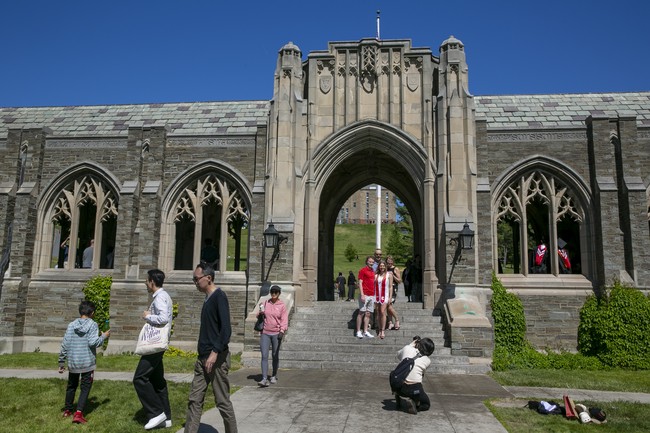
This article covers a recent incident at Cornell involving a 19-year-old student, Austin Franco, who rejected a summer job because the company founders were Jewish, the online reaction and fundraising that followed, and the firm stance his parents took in response to his public statements.
Austin Franco, a Cornell student, became the center of a social media firestorm after he turned down a summer internship at a New York City company because its co-founders were Jewish. The company’s CEO shared the exchange on X, revealing that Franco replied, “Not interested in working for a Jew. Thanks.” That blunt refusal prompted widespread online condemnation and set off a chain of events that quickly escalated beyond a campus spat.
Franco doubled down in follow-up posts, writing, “My experiences with Jews have not been pleasant, both in person and online. This is not to say I havent had positive experiences, but on the aggregate that is not the case. Obviously, the reactions by your community only serves to further prove my point and indicate your post on X was not done in good faith.” Those words amplified the backlash and drew attention from both critics and supporters online.
As the story spread, a fundraising campaign appeared that collected nearly $20,000 for Franco, with one donor contributing $1,776. The fundraiser framed the effort in religious terms, urging contributors to “help fund a good Christian man.” That kind of support showed how polarizing moments like this can attract money and attention from people who see the situation through very different lenses.
https://x.com/EinhornGabe/status/2064044867970330723
Franco’s parents — identified in reporting as Alexander, a patent lawyer and Cornell alum, and Diana, a senior product manager — publicly rejected their son’s views and said they believed he had been influenced by extremist online content. They called his statements “morally repugnant” and insisted their family did not share those beliefs. Their reaction was swift and decisive: they asked him to leave their Virginia home by August 1, drawing a clear line between parental responsibility and tolerance of hateful speech.
After being asked to move out, Franco launched his own fundraising page, portraying himself as a victim of what he called a rejection by his parents’ “conventional life.” In his own words he wrote, “I have reiterated that my parents do not share my views, and it seems they no longer wish to provide me with a home to live in.” He went on to say, “I do not regret anything I have done. If I were to die today, I would at least know that I did so believing in myself.” Those sentences underscored his commitment to the stance that got him expelled from the family home.
Parents and alumni often expect better from young people with access to good education and resources, and this episode highlights how families sometimes have to respond forcefully when a child embraces bigotry. In this case, the family’s decision to cut ties was framed as a necessary rejection of extremist influences, rather than mere punishment. That posture reflects a desire to protect the family and its values while refusing to normalize hateful language.
Public reaction ranged from incredulity to support, and the fundraising totals made clear that fringe support can be monetized quickly online. Yet the practical reality is that short-term donations rarely turn into long-term stability, especially when someone isolates themselves from family and mainstream opportunities. Observers noted that those who bankroll a cause from afar are not the same as parents who must weigh consequences and offer tough love.
The incident also raises questions about how universities and employers should respond when a student publicly rejects work opportunities based on the identity of founders or colleagues. Companies have a legitimate interest in hiring based on fit and talent, not on tribes or beliefs, and campuses are supposed to be places that encourage debate without enabling discrimination. Institutions face the challenge of balancing free expression with the protection of students and staff from harassment or exclusion.
This episode serves as a reminder that choices have consequences, both online and off. Public declarations that assign collective blame to a whole group can damage personal relationships and future prospects, and families may take uncomfortable steps to enforce standards. For many, the Franco affair is a modern cautionary tale about the costs of adopting extreme views and airing them in public.



Add comment