
The mainstream press is showing its hand: reporters who claim neutrality are openly pushing Democrat strategies and encouraging party nominees to step aside in favor of independent candidates, and that pressure is shaping several Mountain West Senate races this cycle.
The media likes to style itself as dispassionate, but when it comes to the Democrats’ chances in deep-red states its mask slips and partisan instincts show. This matters because outlets are not just reporting events, they are signaling which nominees should withdraw to improve Democratic odds. The result is an odd alliance between journalists and party operatives aimed at reshaping ballots instead of letting voters decide.
That dynamic is front and center in a recent Politico piece that argued Democrats should consider ceding their ballot lines to independent challengers. The article stated, “Democrats vying for a pair of deep-red Senate seats are facing increasingly desperate calls from within their party to step aside for more promising independent candidates…If the Democrats stay on the ballot, it will be almost impossible to claw these seats away from Republicans in Mountain West states that President Donald Trump dominated in 2024.” That kind of editorial nudge from a national outlet reads less like neutral reporting and more like strategic play-calling for one party.
What the article is really doing is highlighting the Democrats’ admission that the party label is toxic in certain states, and documenting internal pressure to replace official nominees with independents who might perform better. Those are not hypothetical concerns; they have real consequences in Idaho, Montana, Nebraska, and South Dakota, where Democrats and allied independents are altering the usual two-party ballot dynamics. The press is broadcasting and, in many ways, amplifying that strategy.
In Idaho, three-term Republican Sen. Jim Risch is the clear favorite against independent Theodore B. “Todd” Achilles, with Risch holding a substantial lead in available polling. The Democrat nominee exited the race, leaving Achilles as the main non-Republican challenger. Risch’s fundraising advantage and polling strength make this a tough map for a Democratic flip, and it’s exactly the kind of situation where national outlets argue parties should get out of their own way and hand the field to independents who might siphon conservative-skeptical votes.
Montana is a more tangled case. Republican Steve Daines engineered a late retirement that elevated Kurt Alme to the GOP nominee slot, while independent Seth Bodnar, a former Green Beret, has picked up support from prominent Democrats. The official Democratic nominee is a progressive with limited resources, sparking calls from within the left for her to withdraw in favor of a single stronger opponent. Polling averages show Alme ahead, and fundraising numbers heavily favor the Republican and the independent over the Democrat, forcing a strategic crossroads for party leaders who must weigh principles against the practical desire to unseat a GOP candidate.
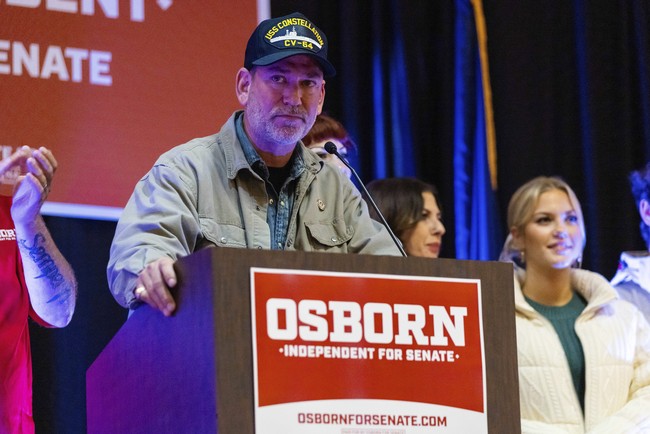
Nebraska presents another example of an independent candidacy that complicates the map. Dan Osborn, who outperformed Democrats previously, is back as an independent against incumbent Republican Pete Ricketts. Party leaders again opted to step aside and clear the ballot line, apparently betting that an independent could consolidate anti-Ricketts votes more effectively than a Democrat label could. Polling here is closer than usual for a Nebraska Senate race, but the prevailing narrative pushed by sympathetic outlets suggests the best path for Democrats is to avoid splitting the center-left vote.
South Dakota follows the same script: Sen. Mike Rounds remains strong against independent Brian Bengs and the official Democrat nominee who has not withdrawn. Poll averages favor Rounds comfortably, and Democratic operatives have privately and publicly urged consolidation to maximize any chance at an upset. When party chairs and former senators call for nominees to step aside, it underlines an ugly fact for the left—their brand underperforms in these states, and press coverage often acts as a pressure valve to encourage tactical sacrifices.
Across these contests the pattern is consistent: Democrats or allied independents attract significant attention from national outlets that then frame withdrawal as the sensible move. Fundraising gaps and polling numbers are cited to justify those pleas, but the underlying message is that party labels matter more than voters’ choices. That’s a slippery slope when news organizations pivot from chronicling politics to shaping tactical outcomes.
There’s no shame in reporting the arithmetic of a race, but there is a problem when editors and reporters advocate for specific tactical maneuvers that benefit one side. Voters deserve contests decided on full ballots and open competition, not press-managed candidate consolidation. If the political press wants to restore credibility it should report plainly on strategy without pressuring nominees to resign for the sake of narrative-driven political engineering.
Democrats vying for a pair of deep-red Senate seats are facing increasingly desperate calls from within their party to step aside for more promising independent candidates…If the Democrats stay on the ballot, it will be almost impossible to claw these seats away from Republicans in Mountain West states that President Donald Trump dominated in 2024.


Add comment