
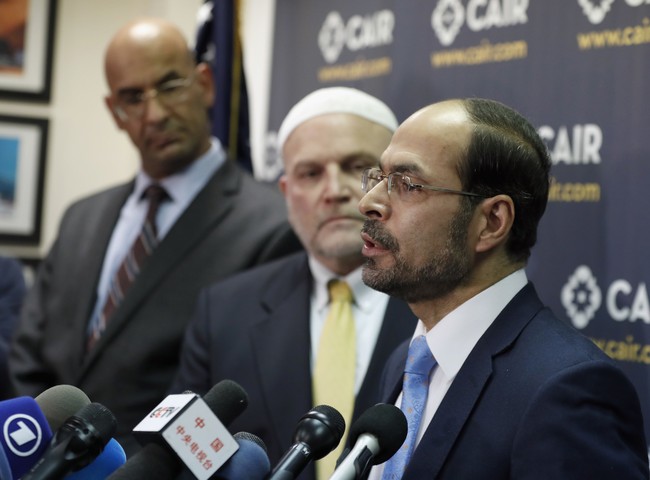
The Council on American-Islamic Relations has rolled out a new Muslims.Vote initiative aimed at boosting turnout among American Muslims ahead of the 2026 midterms, focusing on a dozen battleground states and drawing predictable partisan concern about its likely partisan tilt and political impact.
Hoo Boy: CAIR Launches New Muslims.Vote Drive for 2026 Midterms
CAIR announced a national push called Muslims.Vote to mobilize Muslim voters for the upcoming midterms, and it’s no surprise the group expects a left-leaning result from that effort. The campaign targets specific states where CAIR says Muslim communities can change outcomes, and that focus alone makes it a strategic play. For conservatives, this is a reminder that organized voter outreach on the other side is already underway.
The group frames its effort as a civic engagement campaign to equip American Muslims with tools and resources to vote, and CAIR notes that of the estimated more than 8 million Muslims in America, more than 2.5 million are registered voters. That is a sizable voting bloc and one political parties will try to sway. Even as CAIR disputes labels applied by some governors and pursues legal challenges, it’s clear their civic operation aims to shape the 2026 battlefield.
A new national initiative has launched to encourage Muslim Americans to vote ahead of the Nov. 3 midterm elections.
The initiative comes after Christian, Jewish and nonpartisan nonprofit organizations have launched similar voter registration and get out the vote initiatives.
The Council on American-Islamic Relations (CAIR), the largest Muslim civil rights and advocacy organization in the U.S., launched Muslims.Vote, a non-partisan civic engagement campaign to equip American Muslims with tools and resources to vote.
Republican Govs. Ron DeSantis of Florida and Greg Abbott of Texas have designated CAIR a foreign terrorist organization. CAIR rejects the designation and sued both governors. CAIR won its lawsuit in Florida. Its lawsuit in Texas is ongoing.
Of the estimated more than 8 million Muslims in America, more than 2.5 million are registered to vote.
CAIR has laid out a strategic election plan that names 12 states where they believe Muslim voters can deliver decisive margins. Those states include Arizona, Florida, Georgia, Michigan, Minnesota, Nevada, North Carolina, Pennsylvania, Ohio, Texas, Virginia and Wisconsin. CAIR argues the outcomes in those states will determine control of Congress and describes its mobilization as decisive rather than symbolic.
CAIR has identified 12 states where it says concentrated Muslim communities are located and Muslim voters can make an impact: Arizona, Florida, Georgia, Michigan, Minnesota, Nevada, North Carolina, Pennsylvania, Ohio, Texas, Virginia and Wisconsin.
The outcomes of races in these 12 states “will decide control of the U.S. House and Senate, our mobilization is not symbolic – it is decisive,” CAIR argues.
The political reality is straightforward: Democrats have been effective at turning organized outreach into votes, and a focused push in urban and suburban districts can flip tight races. Several of the targeted states lean Republican outside major metro areas, but the margins in swing districts are thin enough that turnout shifts matter. Conservatives should not underestimate the power of coordinated civic campaigns, even when they’re framed as nonpartisan.
There are parallels on the right, where faith-based and pro-life networks have been mobilizing voters for years. Activists like David Lane and others have encouraged conservative Christians to engage in the political process and even run for office, arguing that leaving the public square to opponents risks cementing policies that run counter to their values. That model of civic engagement works both ways.
A similar argument has been made by American Renewal Project founder David Lane. For decades, Lane has been involved in encouraging evangelical Protestant Christians and prolife Roman Catholics to vote. He’s also encouraged pastors to run for office.
“If we stay home, candidates who oppose biblical values will win and then draft and pass legislation to codify into law their values,” Lane told The Center Square. “We’re asking the living God to move into the public square of America.”
From a Republican viewpoint, the right response is simple: organize at least as effectively and make conservative turnout the story of the election. If the opposition builds a disciplined voter program, conservatives must match it with grassroots outreach and sharper messaging. History shows turnout is decisive in midterms, and complacency has been costly before.
Yes, CAIR has First Amendment rights to encourage its members to vote, and so do any organizations on the right. The legal and civic space allows advocacy groups to mobilize voters so long as they do not break election laws. That makes the 2026 midterms a test of mobilization, persuasion and organizational strength for both sides.
Republicans should take the launch of Muslims.Vote seriously but not panic. It’s a competitive signal, not an insurmountable threat. Strengthening conservative outreach, especially in suburbs and cities where margins are razor thin, is the practical course of action for those who want to preserve the policies and priorities on the GOP agenda.

Add comment