
The United States faces a stark shortfall in next-generation airpower: a recent study says we need far more sixth-generation fighters and long-range stealth bombers to deter or defeat China, and that shortfall forces hard choices about procurement, logistics, and national will.
We have world-class platforms but not enough of them. The F-22 is unmatched in air superiority, yet the fleet is capped at 185 and no more will be produced, while the F-35 has not filled every gap left by legacy designs. New systems like the F-47 and the B-21 are on the way, but they are years from full fielding and current buy plans fall well short of what a near-peer fight would demand.
A respected think tank lays out a blunt math problem: for a conflict with a near-peer like China we will need roughly 300 next-generation fighters and 200 advanced stealth bombers. That kind of capacity is not an optional extra; it is the baseline for being able to project long-range air power, hold enemy sanctuaries at risk, and avoid grinding, attritional wars that sap our strengths. Short-term fixes and stopgap measures won’t substitute for numbers when geography and enemy capabilities favor anti-access strategies.
The U.S. Air Force must buy at least 500 sixth-generation fighters and bombers — more than it already plans — to be able to prevail in a war against China, the Mitchell Institute for Aerospace Studies said Monday.
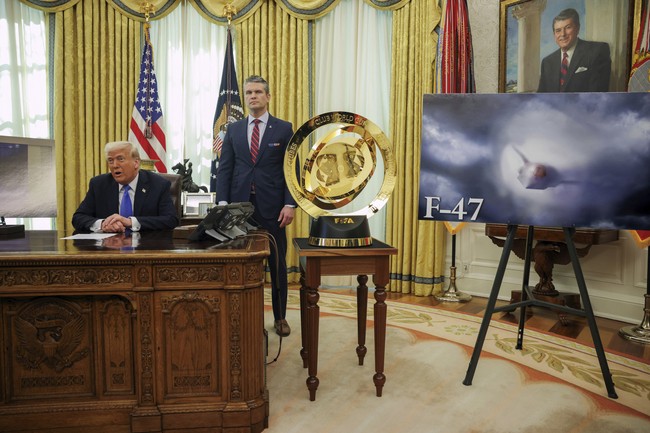
In its policy paper, “Strategic Attack: Maintaining the Air Force’s Capacity to Deny Enemy Sanctuaries,” experts from the Mitchell Institute argue that the Air Force needs at least 300 next-generation F-47 fighters and at least 200 B-21 Raider stealth bombers to counter China. The Air Force has previously signaled it plans to buy at least 185 F-47s from Boeing and at least 100 Northrop Grumman-made B-21s.
Those quoted findings are not alarmist rhetoric; they are a straightforward assessment of force math and geography. China is building long-range strike, air defense, and area-denial systems designed precisely to make the western Pacific a sanctuary for their forces. If we accept that sanctuary, we cede maneuver space and strategic initiative — that is how wars are won or lost.
History offers a warning: wars where one side cannot hit enemy bases and logistics from the air become grinding stalemates. The Mitchell Institute reminded readers that Korea and Vietnam produced attritional fights that cost vast lives and resources, and that contemporary conflicts show how avoiding decisive air campaigns invites long, costly wars. We should prefer deterrence by credible, overwhelming capability rather than learning the same lesson under fire.
Numbers alone won’t secure victory. Buying 300 fighters and 200 bombers means nothing without the infrastructure to support them: tankers for reach, munitions stockpiles, forward-capable bases, trained ground crews, and secure logistics chains. Those support elements are expensive, complex, and time-consuming to build, but they are exactly what turns aircraft into sustained combat power instead of short-lived demonstrations.
Our alliances matter, and our partners in the Pacific will be critical in any crisis, but allies cannot carry the burden alone. Japan, Australia, and others will help, yet geography and will mean the United States remains the primary weight-bearer for long-range strike and theater control. That reality should shape procurement decisions and readiness priorities in Washington.
The political question is simple: will we fund and prioritize actual deterrent capacity, or will we accept plans that leave capability short of credible? Investing now in production lines, munitions, tankers, and bases is a Republican common-sense approach to national defense—strong forces deter conflict and preserve American liberty and commerce without relying on endless diplomacy alone. Retrenchment or timid buy plans invite adversaries to test limits.
Practical steps follow: accelerate production where possible, commit to realistic buy numbers, and fund the logistics and sustainment lines that make modern airpower operable at scale. Build the industrial base, train the maintenance and supply personnel, and keep our posture ready to surge. If we want to avoid being boxed in by an adversary’s sanctuary, we must act with purpose now.
Editor’s Note: Thanks to President Trump and Defense Secretary Pete Hegseth’s leadership, the warrior ethos is coming back to America’s military.



Add comment