
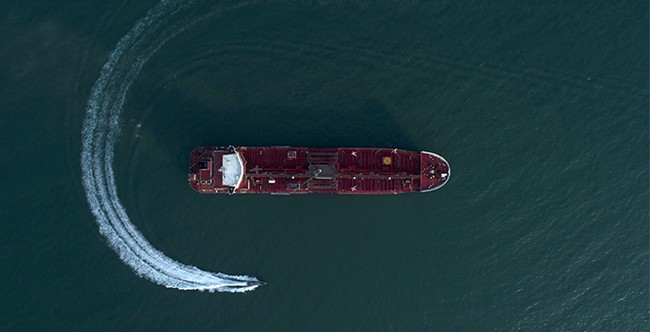
The Indian Coast Guard’s seizure of three sanctioned tankers tied to the so-called “dark fleet” marks a notable enforcement moment in an international effort to disrupt illicit oil shipments from Iran and others. These small, often unregistered vessels move sanctioned oil through opaque transfers and take advantage of lax oversight, and India’s actions show a willingness to push back. The three ships seized off Mumbai were named Chiltern, Asphalt Star, and Stellar Ruby, and U.S. Treasury sanctions already flagged them for transporting Iranian oil to benefit the Islamic Revolutionary Guard Corps. This article lays out what happened, why it matters, and how it fits into a broader push by several nations to choke off the shadowy trade that props up hostile regimes.
The operation itself targeted three small tankers, the 45,000-ton Chiltern, the 16,820-ton Asphalt Star, and the 6,200-ton Stellar Ruby. All three vessels had been designated by U.S. authorities for carrying Iranian oil linked to the Islamic Revolutionary Guard Corps, and their registries appeared dubious or inconsistent. Observers note that registrations like Nicaraguan, Malian, or Iranian on paper often do not reflect true ownership or control, which is precisely the loophole these shadow operators exploit. India’s action signals a crackdown on that ambiguity.
These particular ships fall into a category known as Handies, small tankers suited to short hops and concealed transfers between larger vessels and smaller coastal ships. Reports suggest Chiltern and Asphalt Star loaded in Iran, while Asphalt Star had just completed a transfer to Stellar Ruby when Indian authorities intercepted the trio. The likely intention was to crossload oil onto other vessels for final movement into Indian ports, a practice that blurs origin and complicates enforcement. That pattern has been a core trait of the dark fleet’s playbook.
Stopping these ships matters for several reasons. First, it cuts off a revenue stream for regimes that use black-market oil sales to underwrite malign activity across the region. Second, it undercuts the price manipulation that happens when sanctioned oil is sold only to a handful of buyers at discounts set by demand rather than open-market bidding. Third, it raises the operational cost and risk for shadow operators who rely on anonymity and legal gray areas to move product. Taken together, seizures like these reduce the incentives for continuing the practice.
The Indian action follows a string of similar moves by other countries that are no longer ignoring the problem. France recently impounded a dark fleet tanker, and Germany blocked one from entering the Baltic, diverting it toward Murmansk. The United States also seized a vessel in the Indian Ocean, the Aquila II, after monitoring its suspected defiance of embargoes tied to Venezuelan oil sales. These coordinated actions show growing international resolve to police the seas against illicit shipment networks.
One tactical response by the shadow fleet has been to reflag vessels as Russian, attempting to mask prior links to Iran or Venezuela and muddy responsibility. That reflagging is an obvious attempt to game jurisdiction and complicate legal action, but enforcement authorities are getting better at looking past superficial registry claims. Boards, impoundments, and careful surveillance are becoming the default response instead of long, risky pursuits, which reduces the chance of dangerous confrontations and still achieves the enforcement objective.
The Russian government has protested these operations, framing them as anti-Russian policy, and its foreign minister publicly complained that “New sanctions are being introduced, and a war against shadow fleet tankers is being waged on the high seas.” Those statements reflect Moscow’s discomfort as the net tightens around a trade that benefits state and nonstate actors tied to its geopolitical rivals. Regardless of the rhetoric, the practical effect is a rising cost for anyone who thought they could hide behind shell registries and covert transfers.
For India, the seizure is a signal that national security and rule-of-law concerns can take precedence over commercial convenience when it comes to suspect vessels. It also puts India in step with Western naval and coast guard forces working to enforce sanctions and maritime insurance standards. As more countries treat unregistered, uninsured tankers as unacceptable risks, the options for the dark fleet will shrink and their business model will look less viable.
The bigger lesson is straightforward: when nations act in concert to enforce maritime norms, the cloak of anonymity that once protected illicit oil shipments starts to lift. That outcome is good for global markets, for regional security, and for countries trying to deny revenue streams to hostile actors. Expect more surveillance, more interdictions, and more pressure on insurance and flag registries that enable this shadow trade to continue.



Add comment