
Checklist: I will argue that Sen. Lisa Murkowski’s opposition to the SAVE Act undermines election security; explain why voter ID and national standards are constitutional and necessary; preserve and present key quoted statements exactly as written; remove author credits and external links while keeping the embedded media token intact.
Senator Lisa Murkowski’s recent stance against the SAVE America Act marks another clear divergence from conservative priorities on election security. She says she opposes federal measures she views as federalizing elections, and that position matters because protecting the integrity of voting is central to public trust. Conservatives see voter identification and consistent rules as common-sense steps to prevent fraud and ensure every lawful vote counts. Opposition from a Republican senator risks signaling to voters that the party is not serious about securing elections.
Murkowski has a history of breaking with Trump-aligned policies, and her latest comments follow that pattern. She publicly stated she would not support forthcoming legislation that aims to tighten voter eligibility and registration processes. For many grassroots conservatives, this is the kind of seat-of-the-pants independence that looks less like principled moderation and more like abandoning a core concern. When a senator from a reliably red state shuns measures designed to verify identity at registration and at the ballot box, it raises real questions about priorities.
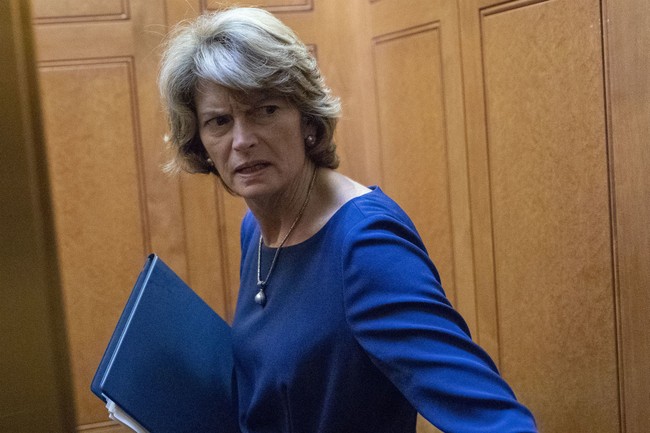
A Senate Republican who has routinely broken from the GOP and President Donald Trump announced that she wouldn’t support efforts to pass voter ID legislation.
Sen. Lisa Murkowski, R-Alaska, said in a post on X on Tuesday that she would oppose forthcoming legislation that would enact more stringent election integrity laws backed by both Trump and conservatives in the upper chamber. Her opposition underscores a reality many in the Senate already acknowledge: without extraordinary steps such as nuking the filibuster or support from Democrats (a non-starter), the effort is effectively dead on arrival.
At stake is a basic proposition: voters should verify who they are when registering and when casting a ballot. Opponents sometimes paint photo ID and eligibility checks as voter suppression, but practical safeguards aren’t about locking anyone out of the process. They are about ensuring the system is honest, transparent, and defensible when close elections hinge on a handful of ballots. To conservatives, that’s not an optional preference; it’s fundamental to representative government.
Murkowski panned a pair of bills — the Safeguarding American Voter Eligibility Act, dubbed the SAVE America Act, and the Make Elections Great Again (MEGA) Act — two voter ID and election integrity proposals making their way through the House.
She noted that when congressional Democrats “attempted to advance sweeping election reform legislation in 2021, Republicans were unanimous in opposition because it would have federalized elections, something we have long opposed.”
“Now, I’m seeing proposals such as the SAVE Act and MEGA that would effectively do just that. Once again, I do not support these efforts,” Murkowski said.
There’s a clear constitutional basis for congressional action on the mechanics of federal elections, and that point is often overlooked in the debate. Article 1, Section 4 of the Constitution gives Congress authority to regulate the times, places, and manner of federal elections while still leaving primary control to the states. That clause exists so the national government can provide consistent guardrails where necessary to protect the integrity of elections that select federal officials.
The Times, Places and Manner of holding Elections for Senators and Representatives, shall be prescribed in each State by the Legislature thereof; but the Congress may at any time by Law make or alter such Regulations, except as to the Places of chusing Senators.
Arguments that any federal standard automatically destroys state control are overblown. Reasonable national rules on identification, voter eligibility verification, and ballot chain of custody do not seize state sovereignty; they simply ensure federal contests are run under rules that protect every voter’s voice. Conservatives who want to defend federalism should not fear plain rules that make elections auditable, consistent, and fair.
For Alaska Republicans frustrated with Murkowski’s pattern of votes, removing ranked-choice and reclaiming the Senate seat are political priorities. Voters can push for officials who will champion secure and accountable elections. When elected leaders refuse to support measures that reinforce public confidence in voting, they open the door to cynicism and distrust.
Public policy debates about elections deserve tough-minded, practical answers, not reflexive resistance to any federal role. Sensible laws requiring verification and transparency strengthen democracy by making fraud harder and ballots more verifiable. That’s a conservative position rooted in preserving the republic for future generations.



Add comment