
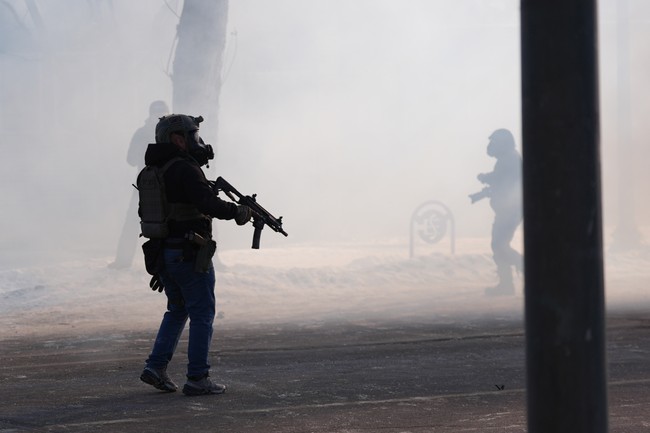
This article reports on escalating unrest in Minneapolis after a Border Patrol officer-involved shooting, detailing violent protests aimed at ICE and federal facilities, injuries to law enforcement including a gruesome finger injury, and the activation of the Minnesota National Guard as authorities move to secure federal sites.
The downtown scene turned volatile quickly after word spread about the fatal shooting earlier Saturday involving Border Patrol. Protesters gathered in large numbers around federal buildings and the site of the police activity, pushing back against immigration enforcement presence in the area. Local streets filled with demonstrators and makeshift barricades as tensions rose into the evening. Officials on the ground described scenes of obstruction and direct attacks on officers.
Protesters flooded the streets jeering at masked agents, with some blowing loud whistles – while federal forces fired repeated volleys of tear gas trying to disperse the crowds.
Rioters tossed trash cans atop an armored vehicle and other projectiles, while screaming, “F- – k you!” at armed officers.
“About 200 rioters arrived at the scene and began to obstruct and assault law enforcement on the scene, crowd control measures were deployed for the safety of the public and law enforcement,” the Department of Homeland Security said in a statement after the incident.
A crowd that large and that agitated creates real danger for bystanders, local residents, and the officers trying to keep people safe. Witnesses reported dumpsters and trash cans dragged into intersections and stacked to form barriers, effectively creating no-go zones near federal buildings. Those actions forced agents to make split-second decisions while facing projectiles and attempts to block vehicles. The escalation made containment and de-escalation much harder for law enforcement personnel on the scene.
Amid the chaos, reports surfaced of a Homeland Security investigator suffering a severe injury at the hands of a rioter. One public briefing relayed that the officer’s finger was bitten and severed during an assault, a frightening turn of events for a department already managing disorder. DHS leadership confirmed the officer would lose his finger, and images of the injury were circulated by national figures. The attack underscored how violent these confrontations can become when mobs target federal agents rather than focusing on lawful protest.
Officials said the violence included direct assaults on vehicles used by federal agencies, and protesters reportedly attempted to disable or trap agents with physical barriers. Officers used crowd-control measures to protect both the public and themselves while trying to maintain access to federal facilities. The situation prompted swift coordination between city, state, and federal officials to prevent further harm. That coordination included moving personnel and resources to secure vulnerable sites.
With threats of continued unrest, Minnesota’s governor authorized National Guard activation to protect the Whipple Federal Building and other locations tied to immigration enforcement. Troops were also deployed to the shooting scene to assist local law enforcement as needed. The decision reflected the seriousness of the security concerns and the need to provide a visible, stabilizing presence. Guard members were positioned to reduce the likelihood of further attacks on federal property and to safeguard public safety.
There is no excuse for violence against law enforcement, and the gruesome injury to an agent makes that reality painfully clear. Elected officials who fan the flames of anger instead of calming crowds bear responsibility for worsening the environment. Arrests and prosecutions will be necessary to hold violent actors accountable and to deter future attacks on federal workers. Communities deserve leaders who prioritize security and order over political theater.
Local businesses and residents already began boarding up storefronts and federal building windows in anticipation of more confrontations, reflecting a city bracing for further nights of unrest. Property owners worry that damage and looting could follow unless authorities can stabilize the area. Lawful protest should be protected, but violent mob actions aimed at federal personnel and installations cross a line into criminality. That divide between peaceful dissent and violent confrontation is what officials must address now.
As investigations proceed, federal and state leaders will face questions about how to balance civil liberties with protecting public servants and infrastructure. The involvement of the National Guard signals a recognition that this is more than a localized protest; it is an escalation that demands a firm response. Commanders on the ground will be judged by their ability to secure the area while avoiding unnecessary force. Meanwhile, families of officers and ordinary citizens watch closely for signs that order will be restored.
For now, patrols remain increased and contingency plans are in place should unrest spread or intensify elsewhere in the city. Officials emphasize that those who commit violence will be pursued under the law, and that safeguarding federal operations is a top priority. The coming days will test whether coordination between agencies can prevent further harm while respecting legitimate public expression. The situation remains fluid and will require steady leadership to navigate safely.


Add comment