
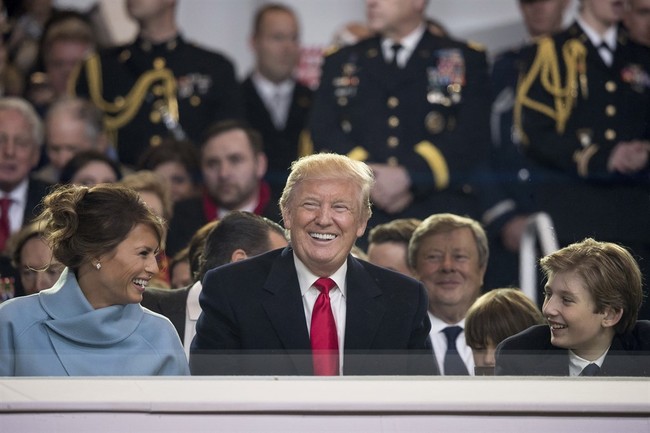
Trump told a New York audience he plans to “declare the Hormuz Strait a territory of the United States” after U.S. forces finish defeating Iran, arguing the blockade already gives America effective control and that further action would send a clear message to Tehran and other adversaries.
President Trump has a habit of making bold, headline-grabbing statements and this is no exception. Speaking at the Nassau County Police Academy in Garden City, New York, he raised the idea of formalizing U.S. control over the Strait of Hormuz once Iran is beaten. The Strait is a strategic chokepoint for oil and cargo, and control there would be a major geopolitical move with real consequences.
Trump framed the plan as a natural follow-through to current U.S. pressure on Iran. He argued that a blockade and sanctions are already squeezing Tehran and that, in his view, the United States “essentially” controls passage through the waterway. That line of reasoning supports a more assertive posture and signals to allies and rivals that Washington intends to protect maritime flows by any means necessary.
“After we finish defeating Iran, which is being very badly defeated, pretty soon I’ll be declaring the Hormuz Strait a territory of the United States,” Trump said. “Essentially, that’s what we have.”
He added that the reason is “the blockade. No ships get through unless we want them to.”
He repeated the point later on television, stressing U.S. leverage over shipping and Iran’s economy. “We totally control, we own, in the true sense, we own the Strait of Hormuz,” he said, adding “We only allow boats to come in if we want them to come in.” That rhetoric ties military capability directly to diplomatic posture and economic pressure, underscoring a doctrine of decisive strength.
Trump pointed to the economic cost imposed on Iran, noting the blockade is costing Tehran “hundreds of millions of dollars every single day.” He also cited sweeping U.S. sanctions as another layer of pressure intended to hasten regime weakness. From his vantage, combining economic choke points with naval dominance is an effective way to limit Iran’s regional ambitions without necessarily resorting to wider conflict.
The president made clear the United States retains major retaliatory options if Iran escalates. “We’re capable of really destroying the whole place. We don’t want to do that,” he said. “If they hit, we would hit back 100 times harder.” That stark warning is designed to deter provocations and reassure domestic supporters who favor a tough stance on adversaries.
https://x.com/nicksortor/status/2088354297142452676
His remarks were delivered with a chuckle at times, which left room for observers to wonder how literal every line was meant to be. Still, Trump did not offer a legal roadmap for declaring international waters U.S. territory, nor did he outline administrative steps if such a declaration were attempted. The absence of operational detail doesn’t erase the political impact of the statement itself.
Conservative supporters see this as plain and necessary talk: make threats credible, uphold U.S. interests, and exploit strategic advantages when they exist. To them, vocal clarity about control of chokepoints and the costs imposed on adversaries is a feature, not a bug, of leadership. It signals to allies that the U.S. will secure trade routes and to rivals that escalation carries steep consequences.
Critics will predictably howl if a president moves to formalize control over an international strait, and mixed responses are expected from international partners and courts. The legal, diplomatic, and logistical hurdles would be enormous, and the global order is built on norms that resist unilateral grabs of maritime corridors. That reality means any move toward declaring territory would trigger intense debate both at home and abroad.
Trump tied the topic to the political calendar by suggesting Iran would pay a steep price if it tried to influence U.S. elections through attacks or disruptions. He warned that any escalatory plan directed at affecting the November midterm landscape would “go very, very badly for them.” That linkage to domestic politics makes the foreign policy stance part of a broader campaign narrative about strength and deterrence.
Whether one views the statement as bluster or a preview of hard policy, the message is clear: the White House is prioritizing American maritime leverage and economic pressure to counter Tehran. The idea of declaring the Strait of Hormuz U.S. territory is dramatic, but it serves a political purpose now by framing U.S. strategy as uncompromising and forward-leaning.
Supporters will cheer the resolve; opponents will stress rule-based constraints. Either way, the conversation about control of the Strait, blockade effects, and what counts as legitimate American action in international waters has been kicked into high gear.
Talk of declaring foreign waterways a U.S. territory raises hard questions about international law, coalition politics, and the risks of unilateral steps. The president acknowledged the limits of his remarks by laughing at points, yet doubled down on the core claim of control and the economic squeeze on Iran. The result is a clear and forceful statement of intent that will keep this issue front and center in policy debates.


Home-based job that pays more than 12,000 Dollar per month by doing simple tasks on a laptop or mobile device part-time. Last month, I earned 24,863 Dollar from this job by working 4 hours per day online. Very simple jobs to do, and the earnings are insane. Everyone can now make more money online by joining the website listed below…..
𝒋𝒖𝒔𝒕 𝒖𝒔𝒊𝒏𝒈 𝒕𝒉𝒊𝒔 𝒔𝒊𝒕𝒆.. Www.PayAtHome1.Com
Do it the Commie and Islamist Infested EU Globalist’s are doing squat!!!
But once you do they will all pay fares for passage!