
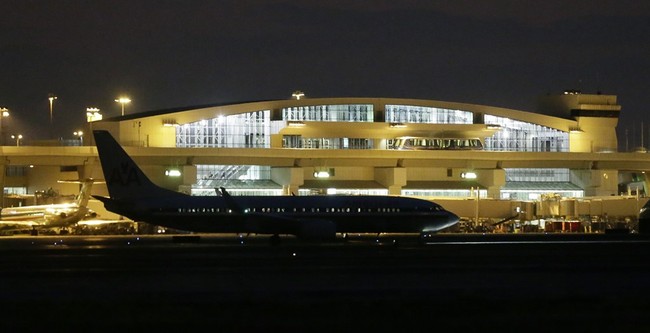
Governor Greg Abbott intervened after reports that Dallas-Fort Worth International Airport was considering ablution stations for Muslim travelers, prompting an official review and the airport’s decision not to move forward; the exchange highlights broader concerns about immigration, assimilation, and how state leaders respond to cultural clashes in Texas.
News that DFW had evaluated adding foot-washing stations for Islamic ritual washing set off a political firestorm that centered on law, public resources, and cultural norms. Texans quickly framed the issue as one of fairness and government neutrality toward religion, and Abbott stepped in with a pointed response. The debate tapped into deeper frustrations over immigration and the pace of cultural change in rapidly growing Texas cities.
Governor Greg Abbott today directed a review of all state grants to entities that operate airports in Texas, including Dallas-Fort Worth International Airport (DFW) and George Bush Intercontinental Airport (IAH), for possible revocation of active state grant funds and the denial of any future grants due to illegal religious discrimination at government-owned facilities. He also referred DFW and IAH to the U.S. Department of Transportation for investigation and enforcement.
DFW plans to install ablution facilities for Islamic washing rituals. IAH has already installed one such facility and an interconnecting prayer room.
In a letter to Transportation Secretary Sean Duffy, Governor Abbott requested that the U.S. Department of Transportation and Federal Aviation Administration immediately review the religious facilities and accommodations at DFW and IAH and take appropriate corrective action. The airports are recipients of federal funds and subject to conditions that require full compliance with laws prohibiting religious discrimination.
Abbott’s blunt assessment was that the proposed Wudu stations “appear designed to single out one subset of the population for special treatment based on religion. That is illegal.” He argued that government-owned airports cannot favor one religious view over others, and that constitutional constraints require equal treatment. That legal framing forced a quick response from airport leadership under public pressure.
DFW announced it had accelerated its internal review and determined not to proceed, saying the project “would not deliver the originally anticipated operational benefits.” The airport cited operational, customer service, risk, and cost factors in its decision, and said the process had simply been an evaluation that was stopped amid heightened public interest. That outcome satisfied many residents who saw the plan as an unnecessary government accommodation.
For conservatives, this issue wasn’t just about fixtures in a terminal; it was a symbol of a wider problem. Many Texans view the growth of foreign-born populations and H1B visa holders as a cultural shift that strains shared norms and public services. The reaction to the DFW story fed into long-standing concerns about assimilation, local control, and the role of state power in protecting cultural continuity.
People in the Dallas area point to rapid demographic changes in suburbs like Frisco and Plano as visible evidence that communities are evolving fast. Critics argue that newcomers often remain within cultural enclaves and that public policy has not insisted on integration. Those observations were mixed with sharper political digs, accusing Republicans of failing to act decisively on immigration until it becomes a hot-button issue.
Abbott’s move to review grants and refer airports to federal authorities showed how state officials can use funding leverage to enforce constitutional norms, and it highlighted the political value of taking a public stand. Supporters saw it as defending the rule of law and secular fairness in government operations, while detractors called it performative politics aimed at calming voters. Either way, the governor’s intervention changed the immediate outcome at DFW.
Beyond the airport episode, some commentators offered practical objections to ablution stations, noting sanitation and safety concerns if sinks are used for washing feet in high-traffic public bathrooms. Those pragmatic points resonated with folks who felt the accommodation created maintenance and liability issues rather than solving a pressing operational need. For many Texans, it was a simple question of common sense mixed with cultural expectations.
The debate over the DFW proposal underscores a larger tension in Texas politics: balancing economic growth fueled by newcomers with preserving local customs and public priorities. Officials face pressure to respond when symbolic changes collide with public sentiment, and this episode shows how quickly that pressure can lead to policy reversals. As Texas continues to change, these flashpoints are likely to reappear in different forms.
https://x.com/MJTruthUltra/status/2085732762397327630
Home-based job that pays more than 12,000 Dollar per month by doing simple tasks on a laptop or mobile device part-time. Last month, I earned 24,863 Dollar from this job by working 4 hours per day online. Very simple jobs to do, and the earnings are insane. Everyone can now make more money online by joining the website listed below…..
𝒋𝒖𝒔𝒕 𝒖𝒔𝒊𝒏𝒈 𝒕𝒉𝒊𝒔 𝒔𝒊𝒕𝒆.. Www.PayAtHome1.Com
Wonder how many “Chapels” are in all the airports in all the countries in the Middle East? I don’t know who makes these idiotic decisions, but I find it hard to believe a lot of cash does not support the effort. Muslim religion is alien to the very nature of the US. We are a Christian nation by birth. We should never allowed them in to start with. This allowance will end badly with war between extremists in both camps.