
I will explain the facts of Jason Arday’s fall and reported death, trace how institutions enabled him, put his case beside other high-profile academic scandals, highlight the role of DEI and identity politics in academia’s failures, and present skeptical conservative perspectives on accountability and standards.
News that Jason Arday was found dead shocked those tracking his rapid disgrace and invited an odd mixture of sorrow, disbelief, and grim fascination. Authorities noted, “At this time his death is being treated as unexpected, but is not believed to be suspicious,” after his body was discovered at his south London home. The 41-year-old had resigned from his Cambridge post amid a cascade of plagiarism and fabrication allegations that unraveled almost overnight.
The specifics of Arday’s fabrications unfolded quickly: a celebrated academic persona, a memoir that collapsed under scrutiny, and multiple instances where claims did not hold up. His rise and fall played out like a Greek tragedy compressed into days, leaving critics to ask not just how one man lied so much, but why the institutions that rewarded him failed to notice. The spectacle exposed gaping weaknesses in the checks and balances inside elite universities.
At the center of outrage was a broader institutional failure: systems that seemed eager to celebrate a narrative rather than verify facts. Many conservatives see this as a predictable outcome when identity-driven priorities override merit and rigor. While personal responsibility for Arday’s actions is clear, the louder alarm should be about an environment that let the deception go unchecked for years.
There is a grudging acknowledgment from some commentators of the sheer chutzpah involved in Arday’s behavior. “Of course, in an ideal world, Arday should not have embellished his credentials, as is claimed, or borrowed from other people’s work, allegedly, or over-emphasised [sic] how much he couldn’t speak for years or how broken one of legs was while running a chain of marathons during which he collapsed with epilepsy,” wrote Melissa Kite in The Spectator. “But whatever the truth — and he might yet be fully vindicated — a part of me thinks he’s a genius,” Kite added, a line many found provocative though not excusing the misconduct.
There is a cultural reflex that sometimes turns con artists into antiheroes when the target is seen as a broken system. Film and popular culture have romanticized con men who exploit institutional blind spots, and Kite explicitly compared Arday’s gambit to those dramatic narratives. That comparison taps into a broader anger about elitism and performative virtue in academic circles.
https://x.com/CelOlulode/status/1631268539569954817
Arday’s case is not unique. Similar scandals have surfaced at prestigious U.S. institutions, where allegations of plagiarism and misrepresentation met with slow or tepid responses. One prominent example involved Claudine Gay at Harvard, a controversy that ballooned as reporting and scrutiny intensified, revealing a tangled mix of politics and protective bureaucracy. In that episode, a fierce defensive posture lasted until the weight of evidence became unavoidable, a pattern critics say repeats across the academy.
Public reaction to uneven consequences has been fierce. “It’s unacceptable when you have students at Harvard who would be expelled for plagiarism to allow a faculty member who has nearly 50 examples of plagiarism in their very slim body of academic work,” said Republican Rep. Elise Stefanik. “It’s absurd and everybody knows it. Harvard knows it too.” That sentiment reflects a widespread conservative belief: rules must apply equally to students and faculty, or credibility collapses.
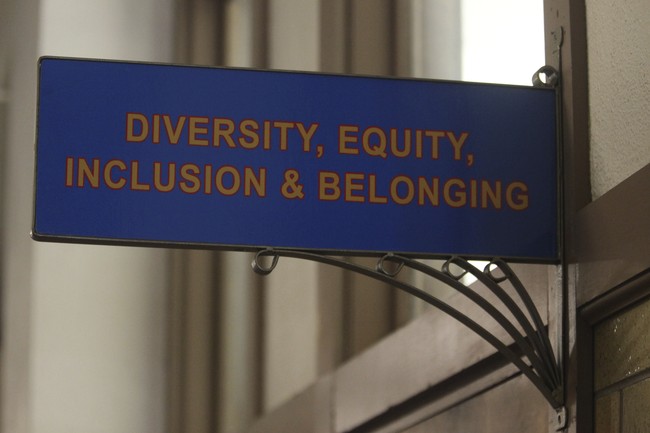
Efforts to hold colleges accountable for prioritizing identity politics over merit have often been diluted or sidestepped. A number of DEI offices and programs found ways to persist by rebranding or obfuscating their activities rather than complying with federal directives aimed at restoring merit-based policies. Critics argue these moves amount to institutional self-protection at the expense of academic standards and public trust.
Scathing observers have argued that much social-science output goes unread and unvetted until scandal forces attention. “The greatest secret of the social sciences is that nobody reads any of this stuff,” Sadka . “It’s all just busy work to keep a giant grift going, so you can have typos in the title of your PhD dissertation and nobody will notice until you have a plagiarism scandal.” That blunt assessment adds fuel to calls for real reform and scrutiny.
With Arday’s demise, conservatives insist the lesson must be institutional reform rather than sympathy for the individual performer who exploited systemic weakness. “Whether or not he even knows it, Jason Arday played the rotten, elitist, box-ticking, minority and sick note obsessed education regime brilliantly,” Kite noted, capturing the view that the scandal exposes a culture that rewards narratives over substance. “…So never mind Arday’s grammar, consider the grand sweep of his achievement,” she added. “He has shown us that the emperor has no clothes.”

Home-based job that pays more than 12,000 Dollar per month by doing simple tasks on a laptop or mobile device part-time. Last month, I earned 24,863 Dollar from this job by working 4 hours per day online. Very simple jobs to do, and the earnings are insane. Everyone can now make more money online by joining the website listed below…..
𝒋𝒖𝒔𝒕 𝒖𝒔𝒊𝒏𝒈 𝒕𝒉𝒊𝒔 𝒔𝒊𝒕𝒆.. Www.PayAtHome1.Com
TOTAL IDIOCY brought on by the Commie Leftists infested Educational System and some Government Agencies!
It’s called from all the way back in Ancient times; Divide and Conquer!