
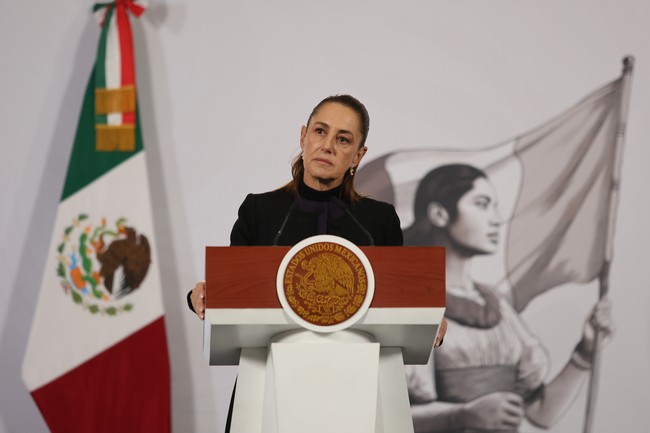
The U.S. has unsealed an indictment naming the governor of Sinaloa and several high-ranking Mexican officials in an alleged partnership with the Sinaloa Cartel, triggering fresh tensions in bilateral relations and raising hard questions about extradition, enforcement, and the future of U.S.-Mexico security cooperation.
For years conservatives have warned that cartels reach far beyond the jungle or the desert; they have seeped into political structures and law enforcement, undermining sovereignty and threatening Americans at the border. This indictment puts that warning into stark relief by naming current and former officials at the state level, including the sitting governor of Sinaloa. The revelation forces a choice: Mexico can cooperate and clean house, or it can risk deeper confrontation with Washington.
The Department of Justice laid out a stark accusation in a detailed charging document that was unsealed in the Southern District of New York. The indictment alleges that named officials collaborated with the cartel to move massive quantities of narcotics and that one defendant faces charges related to kidnappings that resulted in deaths. If the allegations are true, this is not merely criminality; it is an institutional collapse that reaches into public trust and regional stability.
United States Attorney for the Southern District of New York, Jay Clayton, and Administrator of the U.S. Drug Enforcement Administration (“DEA”), Terrance C. Cole, announced today the unsealing of an indictment charging RUBEN ROCHA MOYA, ENRIQUE INZUNZA CAZAREZ, ENRIQUE DIAZ VEGA, DAMASO CASTRO ZAAVEDRA, MARCO ANTONIO ALMANZA AVILES, ALBERTO JORGE CONTRERAS NUNEZ, a/k/a “Cholo,” GERARDO MERIDA SANCHEZ, JOSE ANTONIO DIONISIO HIPOLITO, a/k/a “Tornado,” JUAN DE DIOS GAMEZ MENDIVIL, and JUAN VALENZUELA MILLAN, a/k/a “Juanito,” with drug trafficking and related weapons offenses. MILLAN is additionally charged with offenses related to his participation in kidnappings of a DEA source and the source’s relative that resulted in their deaths. The defendants are all current or former high-ranking government and law enforcement officials in the Mexican State of Sinaloa (“Sinaloa”), including the current Governor of Sinaloa, RUBEN ROCHA MOYA, and are alleged to have partnered with the Sinaloa Cartel to distribute massive quantities of narcotics to the United States. The case is assigned to U.S. District Judge Katherine Polk Failla.
Washington’s move will test longstanding diplomatic norms. Historically, U.S. administrations have relied on quiet cooperation rather than public indictments of foreign officials, especially elected ones. Republicans who prioritize border security see this as a long-overdue step that forces accountability and removes safe havens that let cartels operate with impunity.
Extradition is the central practical obstacle. Even with a strong case, the Mexican government must decide whether it will hand over the accused for trial in the United States. Refusal would signal defiance and could trigger sanctions, economic pressure, or a recalibration of security ties. Cooperation, by contrast, would show Mexico is serious about uprooting corruption and cartel influence.
An outside law firm’s post captured the political shock this will deliver in Mexico. The firm framed the indictments as an escalation that could destabilize regional governance and force Mexico City to choose between domestic political alliances and international consequences. That assessment highlights how legal action can carry geopolitical weight beyond the courtroom.
Breaking News: The U.S. Department of Justice has indicted the Governor of Sinaloa along with nine other current and former Mexican officials on drug trafficking and weapons-related charges. This move represents a direct and aggressive escalation by Washington against the highest levels of the Mexican state apparatus. The indictments detail a systemic entanglement between regional Morena governance and cartel operations, effectively labeling the Sinaloa state leadership a criminal enterprise under U.S. law.
This legal assault by the DOJ decapitates the political leadership of one of Mexico’s most strategically sensitive states at a moment of extreme national fragility. By targeting a sitting governor, the U.S. is signaling a total collapse of bilateral trust and an end to the era of diplomatic shielding for Mexican officials. The move is designed to force a confrontation within the Sheinbaum administration, leaving Mexico City with zero room to maneuver between its domestic political alliances and the threat of total diplomatic isolation.
The fallout will be immediate and chaotic. Beyond the legal proceedings, these indictments serve as a precursor to broader sanctions and a likely reclassification of Mexican security cooperation. For the Mexican government, the era of managed stability in Sinaloa is over; Sheinabum is now facing a direct challenge to state legitimacy and a physical security vacuum that will likely trigger a violent internal restructuring of cartel hierarchies and government control.
On the ground, voters and law enforcement back home will watch closely. Republicans will press for tougher measures to secure the border, expand interdiction, and sanction foreign actors who shelter or collude with traffickers. This case underlines that border security is not just about fences or patrols; it is about confronting networks that exploit weak institutions for profit.
The political calculus in Mexico will determine the next chapter. If Mexican authorities respond decisively, extraditing defendants and purging corrupt officials, this could be a turning point. If not, expect deeper mistrust and pressure from the U.S. Congress to impose tougher tools to protect American communities from drugs and cartel violence.
An interesting X post from a law firm that purports to serve all of North America appears in the record, .
The stakes here are national and regional. The indictment forces a public conversation about whether Mexico will root out cartel influence or dig in behind impunity. For the United States, the choice is simple: defend our border and citizens, or accept a slow erosion of security and law enforcement integrity across miles of shared frontier.

Add comment