
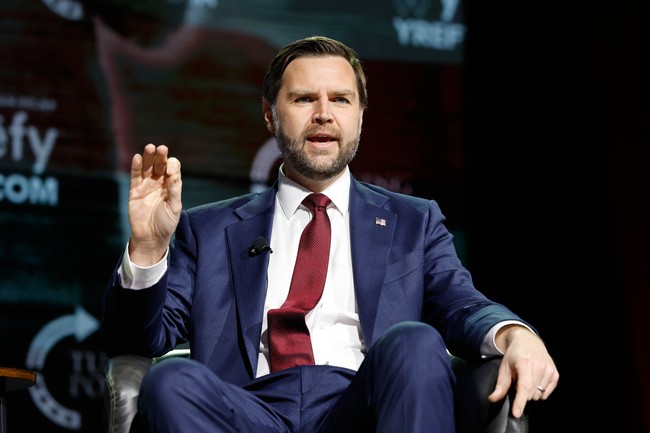
I’ll describe Vice President JD Vance’s firsthand account of the White House Correspondents’ Dinner shooting, detail his immediate reactions and fears, quote his warnings about left-wing rhetoric, and place his remarks in the context of recent political violence while keeping the original quotes intact.
Vice President JD Vance spoke on Fox News’ The Will Cain Show about the moment gunfire erupted at the White House Correspondents’ dinner, and his recollection is stark and personal. He described being on the dais with the president and journalists when the first loud noises and commotion began, and how that confusion quickly turned to serious concern. His account captures the uncertainty and urgency officials felt as they tried to secure the room and figure out what had happened. The scene he paints is one of disorientation, with people ducking for cover while agents moved to protect those on stage.
Vance explained that he didn’t immediately know the full extent of the danger and that even those at home felt the shock of the moment through social media and texts. He emphasized how surreal it was to be in a formal event and then, within minutes, to be escorted off stage and taken to a secure hold room. The details he shared put a human face on a chaotic event that could have been far worse, and they underscore how quickly public safety can be upended. Those moments of not knowing and waiting for confirmation are what many officials and attendees remember most vividly.
He also recalled an especially frightening early report that suggested an agent had been shot, which amplified the fear in the room. In his words, that initial information made him fear the worst about someone’s life being at stake. That turned out to be inaccurate regarding the severity, but the emotional impact of thinking an agent was down was immediate and real. The fog of those first minutes, he said, is something he won’t forget.
Watch:
Vance pivoted from the personal to the political, arguing that rising political violence in America is not random and is largely coming from one ideological direction. He put responsibility squarely on left‑wing leaders and influencers who, he says, have normalized violent rhetoric and scapegoating of political opponents. His message was blunt and directed: political disagreement does not justify targeting people, and those who drive narratives that invite violence must be held to account. He framed this as a moral check the left needs to perform.
He delivered a pointed quote that directly challenges leftist audiences to confront this problem: “.@VP: “Political violence right now is coming not exclusively, but largely from one side of the aisle… If you’re part of the left wing in this country, you gotta look yourself in the mirror and say, ‘Why is it that so many of the people who are firing guns at their political opponents agree with my perspective and listen to the same sources of information that I listen to?'”
Vance also criticized media narratives that, in his view, have made it acceptable to dehumanize or threaten conservatives who disagree with progressive ideas. He singled out rhetoric surrounding public figures, arguing that some outlets and voices crossed a line by implying violence against people like TPUSA co-founder Charlie Kirk is justified. That, he insisted, is not how our politics should work; heated debate should not translate into threats or attempts on lives.
He said, “So I think, really, it’s incumbent upon everybody, but particularly those who are driving some of the narratives that Donald Trump, you know, that Donald Trump has somehow invited this violence upon himself, that killing your political opponents is somehow justified.” This direct condemnation demands responsibility from narrative drivers who might encourage or excuse violent responses to political disagreement. Vance pressed the point that casting political rivals as villains can have consequences in the real world.
He followed with another tightly worded admonition: “If you’re engaged in that kind of rhetoric, you need to check yourself. You need to look yourself in the mirror, and say that political disagreement is fine, but inviting violence upon your political opponents makes you part of the problem.” Those words were aimed at those who create and amplify hostile political environments, and they leave little room for equivocation. For Vance, acknowledging how rhetoric fuels action is a necessary step toward reducing attacks and threats.
The vice president tied his message to a series of recent incidents he sees as proof the nation is on a dangerous path, citing attempted and successful attacks that have targeted public figures and corporate leaders. He argued that those patterns should prompt a serious examination of how political language and media ecosystems interact with individuals who choose violence. Vance’s tone was urgent but composed, asking for accountability rather than spectacle. His call is for cultural responsibility from those in power and influence who shape public conversation.
He concluded his interview by urging restraint and responsibility from those who shape political narratives, insisting that normal political disagreement must not be allowed to morph into encouragement of violence. For Vance and like-minded conservatives, the answer lies in restoring a sense of civic duty and decency to public discourse so that political conflict remains nonviolent. His account from the dinner serves as a reminder that rhetoric can have immediate, dangerous consequences when words translate into action.

Add comment