
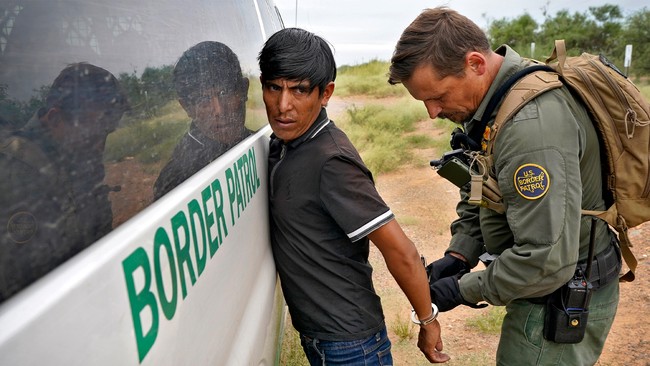
This piece explains recent staffing milestones at the U.S. Border Patrol, the effects on illegal immigration, and the broader challenge of visa overstays and unauthorized residents, while preserving key official figures and direct quotes about recruitment and deportations.
A nation without borders is not a nation, and securing those borders requires people in place to enforce them. During the previous administration, many crossed illegally and were often released with little consequence. The current administration prioritized funding and staffing for border enforcement to reverse that approach.
Recent reporting notes a historic staffing level for the Border Patrol, with 21,471 agents serving as of this spring. That figure represents the highest staffing level in U.S. Border Patrol’s 102-year history and reflects a focused recruitment push. Officials are now aiming to reach 25,000 agents to further strengthen border security.
As of this spring, 21,471 Border Patrol agents are now serving, U.S. Customs and Border Protection said Wednesday. This is the highest staffing level in U.S. Border Patrol’s 102-year history.
CBP’s fiscal 2026 budget is about $23 billion, roughly the same as its fiscal 2025 budget. Trump wants to increase that spending to hire more Border Patrol agents and to expand the border wall at the southern border. Some U.S. Senate reconciliation packages proposed over $70 billion for CBP and Immigration and Customs Enforcement.
When enforcement works, you double down on it. The Department of Homeland Security reports nearly 900,000 deportations of noncitizens who entered illegally since January 2025. Those removals are part of a sharp policy shift intended to deter illegal entry and restore predictable, orderly process at the borders.
The U.S. Department of Homeland Security, under which CBP and ICE are housed, reports that it has deported nearly 900,000 noncitizens who entered the U.S. illegally since Trump took office in January 2025. At least 14 million foreign nationals illegally entered under the Biden administration, The Center Square reported.
“This record-setting achievement highlights the effectiveness of our recruitment efforts,” U.S. Border Patrol Chief Rosario “Pete” Vasquez said. “We are building a stronger workforce every day, and our progress toward 25,000 agents will further enhance our ability to protect our borders and serve the nation.”
Border staffing is a tangible metric, but the immigration challenge is bigger than crossings at the southern and northern lines. Visa overstays are a major part of the problem, with DHS estimating as many as 850,000 people overstaying visas in a single year. Cumulative estimates suggest millions have remained beyond authorized periods, adding complexity to enforcement priorities.
Estimates place the number of people who remain unlawfully in the country in the single-digit millions from visa overstays, in addition to tens of millions who entered across borders illegally in prior years. Those totals include individuals from regions that may pose security concerns, which complicates enforcement and screening. Effective border policy must address both entry points and the interior presence of unauthorized residents.
Funding and personnel are only part of the solution, but they matter. CBP’s fiscal 2026 allocation sits near $23 billion, roughly matching 2025 levels, and proposals circulated in some reconciliation discussions would invest far more in CBP and ICE. Political choices determine whether agencies have the resources to recruit, train, and retain the workforce needed for sustained border security.
Policy outcomes also depend on clear rules and consistent enforcement. During the prior period of lax enforcement, large numbers entered and were released, which undermined deterrence. Reversing that requires a mixture of funding, legal authority, and the will to execute a comprehensive border strategy.
There remains a long road ahead: staffing goals still need to be met, interior enforcement must be sharpened, and mechanisms to prevent and address visa overstays must be improved. The recent staffing milestone signals momentum, but it does not eliminate the work of restoring control over who enters and remains in the country. Ongoing recruitment and operational improvements will determine whether today’s gains hold.
Editor’s Note: Thanks to President Trump, illegal immigration into our great country has virtually stopped. Despite the radical left’s lies, new legislation wasn’t needed to secure our border, just a new president.


Add comment