
The national dust-up over a freshly sealed Lincoln Memorial reflecting pool and a tarp on the Kennedy Center turned into another episode of left-wing outrage theater, with patrols around the reflecting pool, a federal judge demanding answers about scaffolding and tarps, and predictable cable pundit histrionics. This piece tracks how the controversy unfolded, who said what, and why the reaction says more about partisan instinct than about public works or decor. It keeps the facts straight: the pool was resealed and refilled, fencing went up after vandalism, Judge Christopher Cooper ordered the removal of a renaming, and the Kennedy Center must explain the tarp and scaffolding. Expect blunt commentary, exact quotes kept intact, and embeds left where they belong.
The Lincoln Memorial reflecting pool was recently resealed and refilled as part of federal beautification efforts tied to America 250, and soon after workers erected security fencing around it. Officials say fencing became necessary after vandals interfered with the pool, and a few arrests followed for tampering with public property. The petty theatrics of some opponents focused on algae in shallow water, treating a natural summer bloom as a political indictment rather than a maintenance issue. Once the chance to stir up dirt in the pool dried up, critics turned their sights elsewhere.
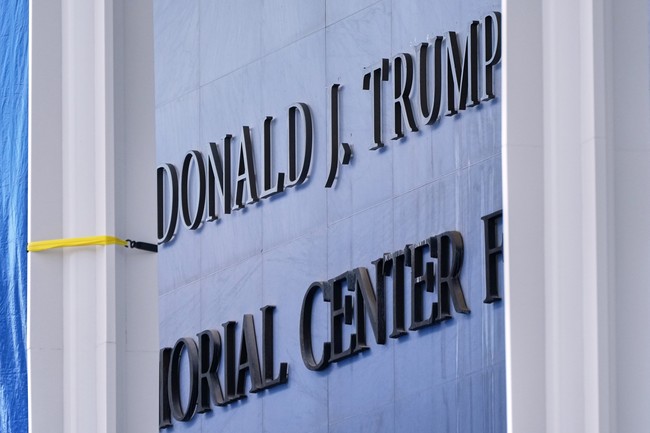
The new target became a tarp on the Kennedy Center’s exterior, which drew courtroom action and cable commentary. In May, U.S. District Judge Christopher Cooper issued a ruling that reversed a renaming and ordered the removal of a president’s name from the building’s facade. The administration complied and workers had removed the name by mid-June, but the presence of tarps and scaffolding afterward prompted further legal scrutiny. The court demanded clarity on why tarps remained in place after the removal.
https://x.com/hicharliecotton/status/2069513973234340258
Congressional drama mixed with court filings when a Democratic member of the Kennedy Center board filed suit challenging the renaming and the shutdown plans. That complaint led to Cooper’s order and the subsequent requirement that the center report on the tarps’ purpose and status. The legal back-and-forth is straightforward: the court reversed the renaming and then pressed for a timetable and an explanation for ongoing exterior work. The procedural posture is simple, but media players turned it into a culture battle about symbolism and vanity.
Representative Joyce Beatty, a Kennedy Center board member who brought the legal challenge, released an inflamed statement that captured the partisan tone. She said, “The Kennedy Center is an institution that belongs to the American people, not to Donald Trump. He has desecrated this sacred memorial for his own vanity. I am proud to have fought for the rule of law and to protect this sacred institution.” Those lines were repeated in coverage and social posts, serving as a rallying cry for critics of the building’s temporary signage change. The statement made the dispute about more than scaffolding; it made it about who controls public institutions and what counts as respect for them.
The order, issued Wednesday morning by U.S. District Judge Christopher R. Cooper, directs the Kennedy Center to inform the court about the “purpose for and status of the tarp and scaffolding” that have stood outside the center since the early hours of June 13, when workers removed Trump’s name from the facade to comply with a May court order.
The report is due within seven days of a planned July Kennedy Center Board of Trustees meeting or by July 31, whichever comes first, and requests information about the tarps “to the extent they remain at that time.”
Media figures added fuel. A former cable anchor was filmed outside the complex, speculating on personal sentiments and suggesting the president might be “sulking” over the name removal, while a congressman called the tarp “a literal coverup.” Those reactions come with the territory: when a federal court orders an action in the nation’s capital, pundits turn courthouse logistics into existential drama. The reality is usually prosaic — maintenance, compliance, scheduling — but theatrical takes dominate headlines and feeds.
Kennedy Center spokespeople have explained that tarps remain while workers perform repairs on the marble facade, and the facility will comply with the court’s request to file a written status report. That explanation tracks with common restoration practice; scaffolding and protective coverings are routine during stonework. Yet the optics became political ammunition for those who wanted to claim symbolic victory or assign symbolic grievance, depending on their side.
Watching the reactions, it’s hard not to see a pattern: small, solvable maintenance items are reframed as moral or cultural crises. If a president renovates a public space, opponents search for flaws; if the work exposes something imperfect, that imperfection becomes a scandal. Meanwhile, practical tasks like sealing a pool or repairing marble get wrapped in slogans, press statements, and performative indignation rather than routine project management.
The court’s demand for transparency is a straightforward remedy: require the Kennedy Center to document why tarps remain and provide a timeline for their removal. That should settle the matter efficiently, assuming the center complies and the work continues uninterrupted. For those watching the political theater unfold, the episode is another reminder that process and performance are easily conflated in modern media cycles.
Outrage will continue to be cheaper and louder than reporting, but at the end of the day public spaces need upkeep, judges need compliance, and the taxpayers who pay for these places deserve clarity not cable soap operas. The law has required an accounting; the work will proceed; the rest is commentary that will fade as scaffolding comes down and the marble is restored.
Add comment