
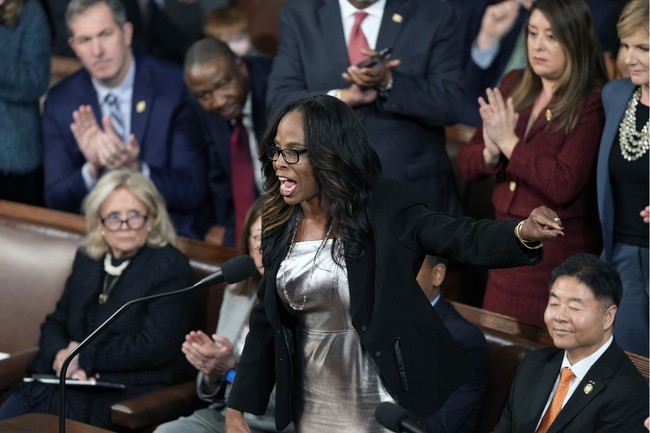
The latest disclosures around Jeffrey Epstein’s files have dragged more elected Democrats into uncomfortable territory, and Rep. Ro Khanna now faces pressure to act beyond rhetoric. New documents suggest Delegate Stacey Plaskett used a pseudonym to solicit Epstein’s money for a targeted voter file, and earlier reporting shows she exchanged texts with him during congressional proceedings. This developing story tests whether calls for accountability are genuine or just partisan posturing.
Rep. Ro Khanna has been vocal about exposing the Epstein connections, casting himself as a reformer determined to bring answers to light. His public stance set expectations that he would pursue anyone with ties to Epstein, regardless of political party. Now that new material points toward Stacey Plaskett, the spotlight swings to whether Khanna will follow through or back away when it gets close to home.
The newly released documents show Plaskett used an email alias to approach Epstein about funding a voter data project for the Virgin Islands. The pitch reportedly asked for a one-year project to build a “new voter file” that would update contact information for voters and guide campaign messaging and phone banking. On its face, that is political work tied directly to campaign advantage, not an innocuous advisory relationship.
Democratic congresswoman Stacey Plaskett (V.I.) beseeched Jeffrey Epstein for help funding a new “voter file” that would allow her to “completely outperform anyone in any race.”
Using the email handle “LeRoy Daughter,” Plaskett pitched Epstein on the idea in an email on May 5, 2017, according to documents released by the Department of Justice. In the pitch, Plaskett asked Epstein to fund a one-year project to “create a new voter file” of Virgin Islands voters.
The goal, according to Plaskett, was to compile data on Virgin Islanders who had voted in recent elections and update their phone numbers, email addresses, and home addresses to help Plaskett’s campaign and those of her allies in other races.
“This is the most important group to poll for messaging and later phone banking for support and get to the polls,” wrote Plaskett, adding that the list would help candidates decide what political positions to take and assist “messaging and campaign work.”
Beyond the fundraising pitch, reporting has highlighted that Plaskett texted with Epstein during a 2019 hearing, allegedly receiving guidance on questions to ask. She later characterized the exchange as taking input from a constituent, a claim many find hard to accept given the context. That timeline matters because Epstein’s criminal history dates back years, and continued association after his initial 2008 conviction raises tough ethical and political questions.
There are awkward specifics in the record: invitations to fundraisers, repeated contacts, and apparent comfort in labeling Epstein a “friend” in correspondence. Those details make it difficult to treat the connection as casual or purely benign. For voters watching from the right, the concern is not only about the moral lapse but about abuse of access and influence tied to a man who trafficked victims.
Khanna’s prior comments promised congressional scrutiny for people connected to Epstein, signaling a willingness to pursue oversight across party lines. If that pledge is sincere, Plaskett would be a logical subject for hearings or formal inquiries to determine the extent of influence and whether any laws or House ethics rules were violated. If Khanna limits his efforts to rhetoric, it will look like selective accountability and political theater instead of principled oversight.
The public deserves a clear accounting of how donors and powerful figures shaped political operations, especially when those donors have violent criminal records. Voter files, data projects, and targeted messaging are powerful tools; their funding sources and the motives behind them should be transparent. Americans should expect elected officials to explain their relationships and to face consequences when those ties cross ethical lines.
This moment calls for concrete steps: document requests, sworn testimony, and ethical reviews where warranted. Avoiding or minimizing the facts because they touch a colleague would erode public trust and fuel cynicism about how power protects itself. For conservatives skeptical of establishment double standards, the test is whether accountability applies equally when allegations cut across party lines.
At the center of this is a simple question about standards: will politicians demand answers when those answers make their side look bad? The Epstein files continue to surface uncomfortable ties that demand scrutiny. Whatever comes next, voters will judge whether officials like Khanna act on principle or choose convenience over transparency.
Add comment