
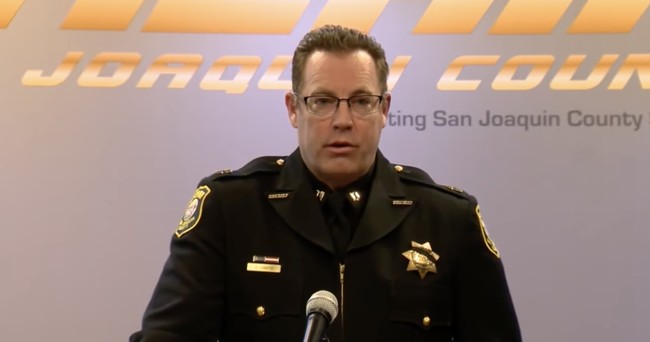
This article examines how a Pakistani citizen living abroad was implicated in the 2020 California election fraud case centered on a former Lodi city councilman, explains the mechanics of California’s online voter registration and mail ballot systems that made the alleged scheme possible, and reviews the evidence and law enforcement findings presented at the press conference announcing the arrest.
Over the weekend a short clip of the San Joaquin County Sheriff saying, “You’re able to register and cast a vote if you don’t live in the country,” went viral and stirred a lot of questions. The sheriff’s remark referred to a real arrest and investigation involving Shakir Khan, a former Lodi city councilman accused of extensive election fraud. Social media users wanted to know whether the claim that a Pakistani citizen voted in California was factual, and the local investigators confirmed the headline claim as part of a much larger pattern.
Evidence collected by investigators paints a picture of systemic exploitation of California’s VoteCal system and the state’s universal mail ballot policy. Prosecutors say Khan re-registered voters to his address, possessed stacks of completed mail ballots, and coerced or filled out ballots in ways that favored his own candidacy and other candidates he wanted elected. The allegations extend beyond one isolated incident to a pattern of ballot tampering, forged nomination signatures, and intimidation.
During an October 2020 search unrelated to the election probe, officers documented 41 sealed and completed mail ballots found at Khan’s residence. Those ballots could not be seized under existing ballot collection rules, but deputies photographed and recorded them as part of their investigation. Later reviews of returned ballot envelopes showed many envelopes tied to Khan’s address bore the same handwriting, a detail investigators highlighted.
Investigators also discovered a spike in registrations to a single Lodi address, with 70 names linked to Khan’s residence during the fall of 2021. Sheriff’s investigators say Khan used the state’s online registration portal to re-register existing California voters from other districts to his address and to register some non-citizens, reportedly including a brother in Pakistan. County staff then activated those registrations once basic identification fields were present in the record.
The registrar explained how VoteCal and county processing work in public remarks: first-time registrants attest to citizenship by checking a box, then provide either a California driver’s license number, state ID number, or the last four of a Social Security number. County staff move records from pending to active when the ID field is populated, and county offices do not have authority under California law to independently verify citizenship. That combination creates an opening that bad actors can exploit.
Once a registration is live, California’s universal mail ballots are automatically sent to the address on file, meaning ballots could be diverted or collected by a third party. Investigators allege Khan exploited that setup, re-registering voters to his address and then pressuring or forcing them to fill ballots the way he demanded. Some victims told deputies Khan took IDs or used threats to ensure ballots were completed as he instructed.
Investigators presented bodycam interviews with voters who said they did not consent to changes in their registration and who denied signing Khan’s candidate nomination form. In one recorded exchange a voter told deputies he did not sign Khan’s nomination paperwork, and in another clip the voter repeats what Khan told him to do on the ballot: “One for me, and one for Biden.”
Another interviewee said Khan held her identification until she marked her ballot according to his directions. Investigators also played footage of voters who remained registered at their original residences but were re-registered to Khan’s address so they would be eligible to vote for him in city council races. Several of those people reported intimidation and coercion, not voluntary transfers.
Beyond the allegations tied directly to Khan, deputies flagged glaring anomalies across local voter rolls, including implausible birthdates, registrations tied to prisons, and thousands of voters listed as 90 years old or older. The sheriff noted registrations linked to shelters and nonprofit offices, duplicate records with similar names and birthdates, and even a registration under the name Jesus Christ as examples of a messy system ripe for abuse.
They noticed that… one person was registered to vote with a birth date of 1850. There were 232 people registered to vote with the address to our local prisons. There were 4,144 people that were 90 years old and older. There were 125 people on the voter rolls that were registered to – their address comes back to nonprofit NGO’s and different businesses.
There were approximately 300 people with no first name, just a last name….
There were 110 people that were possible double voters, basically the same name, date of birth, and address, but different voter ID numbers.
People were registered to vote at various shelters and all that. We even found one person on the voter rolls by the name of Jesus Christ, which we found interesting.
Local officials say the alleged misconduct shows how the combination of weak online attestations, loose identity checks, universal mail ballots, and permissive ballot collection rules can be abused. The case also raises questions about enforcement priorities, because despite claims of potential federal election violations, the Department of Justice reportedly declined to pursue charges and state-level attention was uneven.
Khan pleaded no contest to multiple election-related felonies in January 2024 and later asked the court to set the plea aside while seeking mental health diversion, and he remains out on bond pending further proceedings. The criminal complaint titled KhanComplaint February 17 on Scribd was referenced by investigators, and the county released a full press conference recording that provides the source material for these allegations.
This investigation focuses scrutiny on the mechanics of registration and ballot delivery in California, and it serves as a case study for how those systems can be manipulated when verification is minimal and ballots are delivered automatically. The facts presented by law enforcement demand attention from policymakers who want secure, trustworthy elections while still accommodating legitimate voters.
Investigators continue to pursue the record, and the legal process will determine criminal liability and any broader reforms prompted by these findings.


Add comment