
I’ll lay out what happened, explain why the university episode mattered, show the political backdrop with Gov. Kathy Hochul’s proposal, include the on-scene quotes and footage, note the arrests, and highlight the broader law-and-order implications.
Late last week New York politics spilled onto Columbia’s campus and into the streets when protesters demanding sanctuary for international students staged a disruptive demonstration. Their timing couldn’t be more pointed: it’s an election year, and debates over immigration enforcement are heating up across the state. The scene drew faculty members and activists who blocked traffic and pressed Columbia to adopt protections they say would shield students from federal immigration actions.
That protest came against a specific backdrop in Albany where Gov. Kathy Hochul put forward legislation that critics say would sharply limit local cooperation with federal immigration authorities. The proposal was framed in public remarks about reshaping local policing priorities and resisting federal civil immigration enforcement. Critics on the right see this as political pandering that incentivizes lawlessness and undermines public safety across New York.
Hochul dubbed her proposal the Local Cops, Local Crimes Act, emphasizing that police officers don’t need to assist ICE with civil immigration enforcement in order to keep communities safe. “(ICE) has over $85 billion at their disposal … so they have what they need,” Hochul said at her Manhattan office on Friday. “So don’t buy the argument we have to be there because ICE needs help … We have other responsibilities for our local law enforcement.”
Those remarks landed like gasoline to activists already energized by calls from some city leaders to curtail or eliminate ICE. In New York City, rhetoric about abolishing federal immigration enforcement has emboldened groups that prefer policy gestures to practical enforcement. At Columbia, that translate into loud public theater: blocking Broadway, interrupting traffic, and making a political statement by courting arrest.
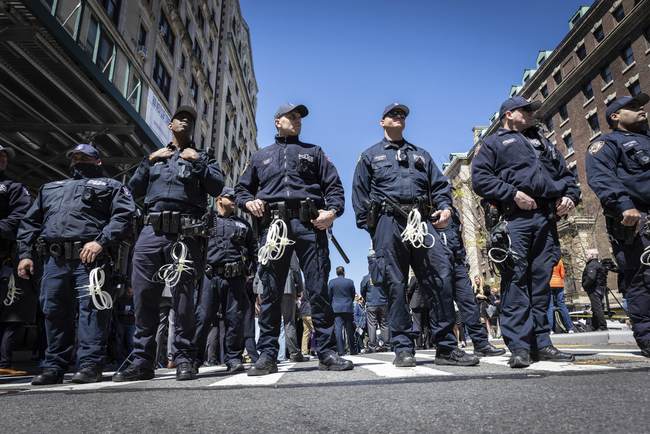
Police ultimately moved in, as they must when public safety is impeded. The NYPD made a dozen arrests, including participants who identified as faculty and staff. Law enforcement’s response was straightforward: restore order and clear the roadways so that city life could continue uninterrupted. For many New Yorkers, that’s the right outcome; protests should not morph into public-works stoppages or threats to community safety.
Campus activists portrayed their arrests as moral acts of civil disobedience. Major outlets picked up interviews with the demonstrators, repeating the narrative of academic conscience versus federal immigration policy. That coverage often frames the issue as one of institutional compassion rather than the messy realities of border control, criminality, and national sovereignty that many voters prioritize.
A dozen Columbia University faculty and staff members and students were taken into custody on Thursday after blocking traffic on Broadway for nearly an hour as they protested President Trump’s immigration crackdown and demanded that Columbia provide more protections for international students.
[…]
Mila Rosenthal, 58, an adjunct professor of international and public affairs, was among those who chose to be arrested as an act of civil disobedience.
“We’re seeing what’s happening in Minneapolis, just all of that terror that ICE is sowing there,” she said before her arrest, referring to the Immigration and Customs Enforcement agency. “And there’s no reason that Columbia can’t say, ‘This ends here.’”
Those quoted lines capture the divide: protesters cast ICE as a source of terror, while critics see the agency as a necessary arm of national security and law enforcement. The debate is more than ideological posturing — it matters for how campuses handle criminal conduct, visa violations, and the safety of students from all backgrounds. When universities slip into advocacy that protects violators, local residents may pay the price.
Video from the scene circulated widely and made the clash immediate and visceral. Footage showed demonstrators chanting, standing in the street, and refusing police directions until officers took action. Those short clips often decide public opinion faster than op-eds, and they make clear why city officials must sometimes choose enforcement over tolerance when disruption threatens daily life.
After the initial arrests the narrative split: some hailed the protesters as defenders of vulnerable students, others warned that this pattern of defiance undermines the rule of law. For Republicans and law-and-order conservatives, the essential point is simple: protecting borders and enforcing immigration statutes are core functions of government, and local policies that intentionally obstruct federal enforcement invite chaos.
Colleges are free to advocate for students, but they are not above the law. When faculty and staff decide to use their positions to lead protests that disrupt public order, institutions must balance academic freedom with civic responsibility. That balance is precisely what voters will be watching as this debate filters into the 2026 cycle.
The scene at Columbia is a snapshot of a larger national dispute: whether America will prioritize border security and the rule of law, or whether symbolic sanctuary policies will take precedence over practical enforcement. For many who watched the arrests unfold, the answer is obvious and matters for the next election.
Add comment