
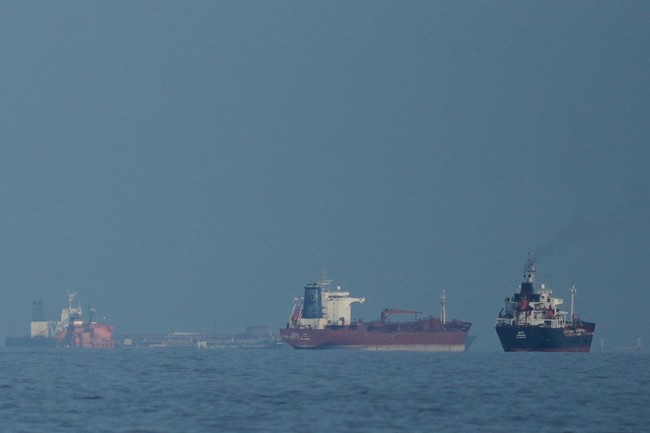
The Iranian Revolutionary Guard Corps opened fire on at least two ships transiting the Strait of Hormuz, striking one vessel that had been given clearance, provoking an angry diplomatic response from India and signaling a wider breakdown in Tehran’s control and credibility at sea.
The incident unfolded in the narrow, strategic waterway where commercial traffic is vital and tensions are already high. One of the ships involved, the motor tanker Sanmar Herald, reported being cleared to proceed before it was fired upon, a contradiction that raised immediate questions about Iran’s command and control. That confusion exposed the IRGC’s weakness rather than strength, and it revealed risks for any ship moving through the region. The episode quickly blew up into a diplomatic problem rather than the show of force Iran may have intended.
“Sepah Navy! Motor Tanker Sanmar Herald! Sanmar Herald! Sepah Navy! You gave me clearance! You gave me clearance to go! Sepah Navy! Sepah Navy! This is motor tanker, Sanmar Herald! You gave me clearance to go! My name’s second on your list! You gave me clearance to go! You are firing now! Let me turn back!”
Sepah Navy refers to the IRGC Navy, distinct from Iran’s regular navy, the Artesh. Both branches have seen their blue-water capabilities degraded over the years, leaving Iran reliant on smaller craft and asymmetric tactics to project influence in the Gulf. Those smaller assets can harass merchant shipping and create headline-making standoffs, but they do not reliably secure safe transit. When a state’s forces both clear and then attack the same ship, it undermines any claim of orderly control and invites international pushback.
The fallout included a strong reaction from India, which summoned the Iranian ambassador to lodge a formal protest and demand answers. India emphasized the safety of merchant mariners and pressed Tehran to resume facilitating safe passage for India-bound vessels. The diplomatic rebuke made clear that regional players will not accept erratic or dangerous behavior that threatens trade and energy flows. That India acted at the highest levels demonstrates how seriously global trading partners view disruptions in the Strait.
“The Ambassador of the Islamic Republic of Iran in New Delhi was called in by the Ministry of External Affairs for a meeting with Foreign Secretary this evening,” the Indian Ministry of External Affairs said in a statement.
“During the meeting, Foreign Secretary conveyed India’s deep concern at the shooting incident earlier today involving two Indian-flagged ships in the Strait of Hormuz,” it continued.
“He noted the importance that India attached to the safety of merchant shipping and mariners and recalled that Iran had earlier facilitated the safe passage of several ships bound for India,” the ministry said. “Reiterating his concern at this serious incident of firing on merchant ships, Foreign Secretary urged the Ambassador to convey India’s views to the authorities in Iran and resume at the earliest the process of facilitating India-bound ships across the Strait.”
This sequence of events chips away at Iran’s narrative of precision and deterrence, showing instead a pattern of risky, self-defeating actions. Regional neighbors and trading partners cannot depend on inconsistent signals from Tehran, and the international community will judge behavior by its practical effects. When merchant crews fear for their safety, insurers raise premiums, shippers reroute, and commerce pays the price. That economic pain reverberates far beyond the initial flashpoint.
The United States has signaled a tougher posture, maintaining a blockade on Iranian-linked vessels and pursuing further actions against IRGC logistics and assets. Washington’s moves aim to constrain Tehran’s ability to operate freely at sea and to target funds parked in Gulf banks that support the regime’s maritime activities. Those measures are intended to impose real consequences beyond diplomatic protests and to limit the IRGC’s reach. The combination of interdictions, seizures, and targeted financial actions seeks to change calculus by increasing the cost of provocative behavior.
Iran likely intended a demonstration of control, but instead it highlighted disorganization and risk. Clearing a ship and then opening fire on it is the sort of misstep that undermines any case for authority or competence. The outcome is political isolation on a practical level: other governments will not tolerate threats to merchant shipping that endanger their trade or citizens. For Tehran, the incident aggravated an already tense situation and prompted firm responses across capitals.
At sea and in diplomacy, credibility matters as much as firepower. The episode in the Strait of Hormuz shows how miscalculations can escalate quickly when signals are mixed and actions contradict official lines. When countries feel their sailors and trade lanes are at risk, they will act to protect them, pushing back against harassment and demanding accountability. Iran’s recent behavior has made it harder for anyone to trust its intentions or its ability to manage the waters it claims to control.

Add comment