
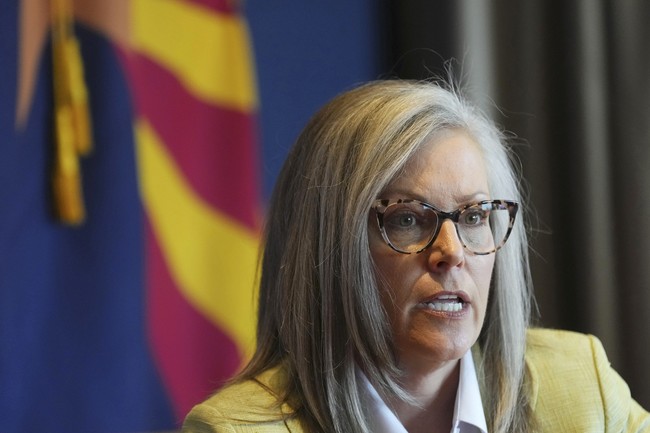
The Arizona governor’s race heads into a decisive Friday deadline for naming running mates, and Governor Katie Hobbs still has choices to make that could reshape perceptions of her campaign. With reports that Mesa Mayor John Giles may be under serious consideration and Republican nominee Rep. Andy Biggs already paired with Sine Kerr, the coming hours will tell whether Hobbs doubles down on a risky play or picks someone safer. The Secretary of State’s office has urged campaigns to submit names before Friday, Aug. 7 so ballots can be printed, tightening the timeline for a move that could matter politically and practically. This article walks through the stakes, the players, and what a late Hobbs pick would signal to voters in Arizona.
A crucial deadline in the hotly contested 2026 Arizona governor’s race is less than a day away, and that means Governor Katie Hobbs (D-AZ) still has time to mess up the pick for lieutenant governor. The general election clock is unforgiving: the Secretary of State’s office told campaigns they needed running mate names submitted before Friday, Aug. 7 to allow time to print ballots. For Hobbs, whose approval battles and policy record are under scrutiny, a poor choice could hand her opponents an easy line of attack and further erode trust among swing voters.
Fresh reporting in legacy outlets floated the possibility that Mesa Mayor John Giles might become Hobbs’ running mate, framing him as a “longtime Republican.” That label is convenient for media headlines, but local voters remember Giles’ active role in the 2024 presidential cycle, including an early endorsement of a national candidate. Presenting him as a bipartisan bridge may play well in some corners, but it also opens Hobbs to criticism for political theater rather than principled governance.
https://x.com/sejalg_/status/2084817727051403379
Republican nominee Rep. Andy Biggs (AZ-05) already moved quickly and announced his running mate, Sine Kerr, a pro-life conservative champion, dairy farmer, and former Arizona state senator. That contrast matters: Biggs put forward a steady conservative who reflects his base and rural voters, while Hobbs faces a delicate calculation between optics and fundamental values. Arizona voters tend to reward clarity; a muddled or last-minute choice from Hobbs risks signaling desperation instead of leadership.
There is context behind the criticism of Hobbs’ record that shapes how a running mate choice will be received. In 2026, her veto tally registered at 151, a number opponents point to when arguing she has governed with partisan intensity. That kind of record makes it harder for Hobbs to credibly claim broad appeal if she pairs with someone perceived as opportunistic or involved too closely with Washington politics and elite media circles.
No one in Arizona is buying the convenient rebranding of Giles as some neutral “longtime Republican” saint; many locals saw him front and center during 2024 political events and in endorsements that aligned him early with national figures. Voters notice consistency and actions more than labels. If Hobbs tries to use Giles to blindside skeptical voters, the move could backfire and strengthen the narrative that her campaign prioritizes optics over substance.
The mechanics matter as much as the message. With deadlines and ballot production schedules looming, pushing a late pick risks administrative snarls and invites questions about preparation and competence. Campaigns have to make choices under pressure, but the appearance of scrambling so late in the process can become a campaign story in itself, and not one favorable to an incumbent already facing headwinds.
Hobbs’ options are limited by both politics and timing: she can pick someone meant to broaden her appeal, choose a safe partner who consolidates her base, or gamble on a name that makes headlines. Each path carries tradeoffs. Opting for headlines over cohesion could hand Biggs and his team an easy contrast to exploit on the trail and in debates, especially in a state where independent and undecided voters can decide close races.
The broader lesson for Arizona voters is to watch choices, not just statements. A running mate selection exposes priorities and strategy: does Hobbs want to reassure moderate voters, shore up the base, or chase media attention? The answer will be telling for how she intends to govern in a divided state. Whichever direction she takes before the Friday deadline, Hobbs will face immediate scrutiny from voters who expect clarity and competence from their elected leaders.
For Republicans and conservatives tracking this race, the moment offers a chance to highlight contrasts in governance style, policy priorities, and decision-making under pressure. For independents, the decision will be one more data point in assessing who best represents Arizona’s interests. The next 24 hours will make clear whether Hobbs makes a calculated, unifying move or chooses a path that reinforces existing doubts about her leadership.


Add comment