
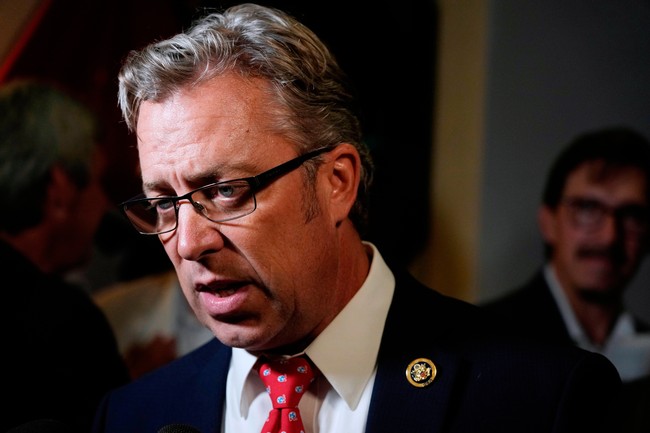
The Republican-held 5th District primary in Tennessee produced a surprise upset as two-term, Trump-backed Rep. Andy Ogles lost to former state Agriculture Commissioner Dr. Charlie Hatcher, a fifth-generation farmer backed by sizable renewable energy funding, setting up a November matchup against a Democratic mayor in a district that was recently redrawn.
What looked like a winnable fight for an incumbent instead flipped Thursday night, catching many conservatives off guard and sparking immediate reaction across the right. The result came down to a rough margin in the high single digits, with Hatcher prevailing and Ogles conceding the field he had represented the last two terms. This is a reminder that primaries can be volatile, even for candidates with high-profile endorsements.
The official tally showed Hatcher with about 53 percent to Ogles’s 47 percent in the GOP primary, a loss that ends Ogles’s bid for a third term. Conservatives who admired Ogles for his hard-line stances on immigration and judicial activism are disappointed, while supporters of Hatcher point to his agricultural roots and promises to defend the district’s interests. The dynamics of outside spending played a notable role in pushing the race toward an upset outcome.
https://x.com/EricLDaugh/status/2085541879488139646
🚨 NOW: Rep. Andy Ogles JUST LOST his embattled GOP primary in Tennessee’s 5th District, to well-financed challenger Charlie Hatcher — DDHQ
Ogles WILL be missed. He repeatedly called out the Islamic invasion, knows America is a Christian nation and filed to impeach rogue judges!
This is a district that was redrawn for 2026.
Ogles built his profile by focusing on immigration, judicial overreach, and national security issues that resonate with many Republican voters. He drew public praise from former President Trump, who praised Ogles’s work and loyalty in a Truth Social post earlier this year. Those endorsements and a clear conservative record did not translate into a primary win once heavy outside money entered the mix.
“Andy will be really enshrined as one of the best congressmen that you’ll ever see. He’s just fantastic,” Trump said. “Andy has always been there when we needed him and when I needed him. He’s been a great help. He’s been a source of inspiration to a lot of people in Congress,” Trump said in a post to Truth Social earlier this year.
Many conservatives had expected Ogles to withstand a challenge because of his vocal record and high-profile alignment with Trump’s agenda. Instead, a significant independent group spent heavily to back Hatcher, signaling that deep-pocketed players can still sway Republican primaries. That outside funding appears aimed at protecting energy incentives and other business-friendly policies that factor into how some donors choose their candidates.
Conservative commentators and podcasters reacted emotionally to the loss, highlighting the sense of betrayal among base voters who saw Ogles as a culture-war champion. The loss will sting for activists who looked to him as a fighter against what they describe as threats to traditional values and the rule of law. Those reactions underscore a larger debate about strategy and candidate selection inside the party.
The Invest in Tomorrow Coalition super PAC reportedly spent nearly $2 million opposing Ogles and supporting Hatcher, according to campaign finance reviews. The group’s backing traced to wealthy interests with ties to renewable energy and technology, signaling an alignment between business priorities and electoral spending. Critics argue that when deep-pocketed donors intervene in primaries, it skews Republican voters’ choices away from grassroots priorities.
Ogles pushed back on those outside influences and framed the spending as proof that special interests don’t want candidates who oppose government subsidies. He told a news outlet that the cash shows “how much money they’re making off of government subsidies” and suggested the donors were upset about reforms that reduced those payments. That messaging appealed to voters frustrated with corporate influence on both major parties.
At the same time, Hatcher presents himself as a traditional conservative farmer who supports President Trump’s agenda and emphasizes service to rural Tennessee. The state’s governor publicly recognized Hatcher’s run as one aimed at advancing the president’s priorities for the district. For many GOP voters, a candidate with agricultural roots and pro-Trump sentiments remains an acceptable alternative to the incumbent.
With Hatcher heading to the general election, he will face Columbia Mayor Chaz Molder, the Democratic nominee, in a race that most observers expect to favor the Republican in November. The district’s redrawing in 2026 changed some dynamics, but partisan lean and rural-conservative voters still give the GOP a structural advantage. Still, the primary upset leaves local conservatives asking whether electoral spending and donor priorities are reshaping who represents them.
Politics in Tennessee’s 5th District will move forward under new leadership, but the debate over outside money and candidate fidelity to conservative principles is far from over. Conservatives now face choices about how to respond: double down on grassroots organizing to counter donor influence or accept a pragmatic alignment with pro-business Republicans who back certain policies. The outcome here will influence how activists and donors approach GOP primaries in the months ahead.

Add comment