
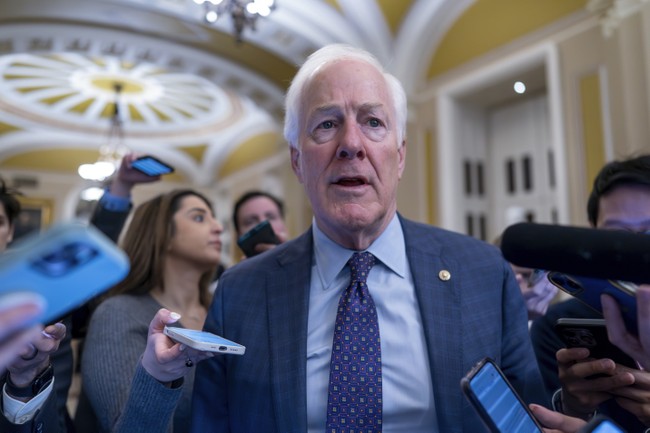
The Texas U.S. Senate contest has shuffled hard: three prominent Republicans are vying for the GOP nod while Democrats have consolidated behind a controversial primary leader, shifting the general election dynamics and making this cycle markedly friendlier for Republicans in a deeply red state.
On the Republican side, the field centers on John Cornyn, Ken Paxton, and Wesley Hunt, each carrying distinct political identities and clear strengths. Cornyn arrives with four terms of Senate experience and a sizable fundraising edge, but he’s viewed as establishment and has softened on issues like guns and immigration over time. Paxton offers an antiestablishment pitch but carries baggage from a past impeachment and personal controversies that opponents use against him. Hunt presents a younger alternative with military service and cross-faction appeal, the sort of candidate who could emerge as a consensus choice if the top two bluntly attack each other.
Current polling shows a very tight GOP primary: Cornyn holds roughly 30.3%, Paxton sits at about 30%, and Hunt trails near 20.5% in the aggregated averages. With none of them anywhere close to 50 percent, a runoff seems likely and could reshape who stands as the Republican nominee. That runoff scenario matters because it will pit establishment energy against populist fury, and the winner will need to unify both wings to prevail in the fall.
Cornyn’s campaign has leaned on experienced strategists, tapping long‑time Republican operatives to manage outside spending and build a Super PAC war chest. That financial advantage gives him reach and helps blunt attacks, but it does not erase the narrative that he’s moderated and sometimes out of step with the party’s grassroots. Paxton’s vulnerabilities are both political and personal, and the relentless media drumbeat over his legal and marital troubles has given Cornyn ample fodder to define him before voters decide.
Wesley Hunt remains the wildcard. He quietly prepared before declaring and has been trying to build positive name recognition, but he still lags in most polls. If the Cornyn‑Paxton fight consumes air time, Hunt could benefit from a Feingold‑style steal up the middle and position himself as the candidate both sides reluctantly prefer. His military background and relative youth give him a ready argument to appeal to swing Republicans and independents who dislike the extremes of either establishment or insurgent politics.
Fundraising will keep being decisive. Cornyn’s cash advantage and outside spending give him staying power through a long primary season, while Hunt and Paxton must prove they can keep pace in advertising and ground game. A presidential endorsement could also be pivotal, but that calculus shifts if Democrats nominate someone perceived as weak; Republicans would be even less likely to split support behind any outside influence when the GOP seems favored statewide.
On the Democratic side, the primary has consolidated differently than many anticipated. Representative Jasmine Crockett’s entry upended several plans and nudged Colin Allred out of the race, leaving Crockett and James Talarico as the main contenders. Polling in the Democratic primary shows Crockett ahead, with the RCP average putting her at roughly 51.5% to Talarico’s 38.5%, making a Democratic runoff less likely and limiting the party’s flexibility in the general.
Crockett’s candidacy has rattled establishment Democrats. As one unnamed Democrat said, “Even if it’s Paxton on the [GOP] ticket, [Crockett] doesn’t give us a shot of winning the Senate, or at least doesn’t put us in the game.” James Carville added sharp criticism, saying Crockett “violates the first rule of politics, and that is, in politics, you always make it about the voters and never about yourself.” Those quotes underline the skepticism from seasoned Democrats about her statewide appeal in a conservative state.
Realistically, Democratic hopes hinge on either a very unusual year or a moderate who can peel off suburban and independent voters. Talarico can raise money and run an aggressive general election campaign, but he starts as an underdog in a state that has favored Republicans in Senate races for decades. Unless the Democrats pick a nominee who broadens their coalition, the GOP looks well positioned to hold this seat.
As the calendar fills with debates, ads, and endorsements, Texas voters will sort through three very different Republican choices and a Democratic nominee who may struggle to connect statewide. The primary season promises bitter fights, strategic positioning, and a runoff that could determine the most electable Republican for the general election. “We’ll (Just Have to) See What Happens.”


Add comment