
A federal judge has ruled that several Illinois laws granting in-state tuition, state financial aid and scholarships to undocumented immigrants are invalid as applied, a decision that the Justice Department supported and that signals continued federal scrutiny of state-level policies favoring those here unlawfully.
The ruling came from U.S. District Judge Stephen McGlynn, a Trump appointee, who sided with the Department of Justice in finding that the RISE Act, the Illinois DREAM Act and in-state tuition rules could not lawfully be applied to illegal immigrants. The judge concluded the state’s approach conflicted with federal statutes and granted summary judgment for the government while denying Illinois’ motion to dismiss. That legal outcome prevents Illinois from enforcing those laws for now, though the court paused the order for 14 days to allow an appeal.
https://x.com/scotus_wire/status/2080811281238335491
At the heart of the dispute are programs that let students who cannot access federal aid tap state funds, and statutes that made scholarships and in-state tuition available to certain noncitizen residents. The ruling contends Illinois read those laws too broadly, effectively providing benefits that federal law does not permit for people in the country illegally. That interpretation raises questions about state authority to extend taxpayer-funded benefits beyond citizens and lawful residents.
Federal officials framed the decision as a defense of both the immigration system and taxpayers. U.S. Attorney Steven D. Weinhoeft was quoted directly on the case in a statement the DOJ released, emphasizing the policy stakes of the ruling for Illinois households and out-of-state citizens. The department has continued to challenge similar policies in other states, signaling a pattern of litigation aimed at limiting states’ ability to offer certain public benefits to undocumented residents.
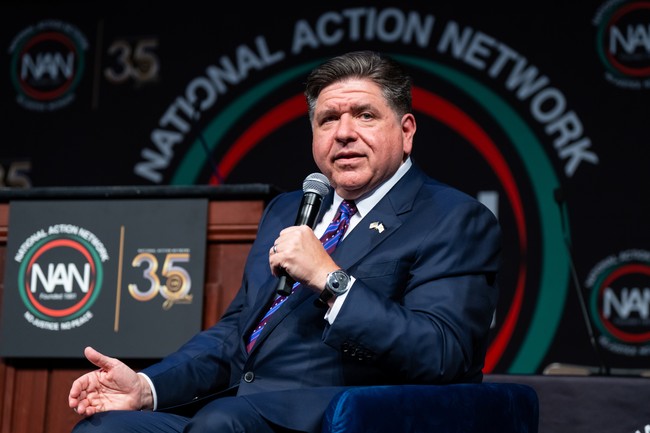
Illinois Gov. JB Pritzker was dealt a major legal blow Friday after a federal judge gutted key state laws providing in-state tuition, financial aid and scholarships to illegal immigrants, marking another win for the Trump administration’s nationwide immigration agenda.
U.S. District Judge Stephen McGlynn, a Trump appointee serving in the Southern District of Illinois, sided with the Justice Department, ruling that Illinois’ in-state tuition policies, the RISE Act and the Illinois DREAM Act are “unconstitutional and invalid” as applied to illegal immigrants.
…
McGlynn granted the federal government’s motion for summary judgment and denied Illinois’ motion to dismiss.
The RISE Act was designed to let students without federal eligibility access state financial aid, and the Illinois DREAM Act created scholarship pathways for certain young people. The federal ruling says those laws, as Illinois interpreted them, improperly extended state-funded benefits to individuals who are not lawfully present. That conclusion creates an immediate compliance problem for universities, community colleges and state agencies that had begun administering those programs to a broader class of students.
Republican lawmakers and conservative advocates hailed the decision as a protection of taxpayers and a correction of what they call unfair advantages offered to people here illegally. Representative Mary Miller publicly criticized the governor’s stance, saying Illinois prioritized noncitizens over American families who pay taxes and follow the rules. Those comments reflect a broader Republican argument that state resources should first serve citizens and lawfully present residents.
The court’s temporary delay before enforcement gives Illinois a short window to seek appellate review, which means litigation is likely to continue. Appeals courts could either uphold McGlynn’s interpretation or reverse it, and the issue has the potential to move to the Supreme Court if lower courts remain split. Until appeals are resolved, colleges and state agencies face legal uncertainty about eligibility and the administration of aid programs.
U.S. Attorney Steven D. Weinhoeft: “Illinois sought to incentivize illegal immigration on the taxpayer’s dime by treating illegal aliens better than U.S. citizens living in other states, in clear violation of federal law. This ruling enforces the statute Congress wrote and stops the State from putting illegal aliens ahead of American citizens.”
Aside from the immediate legal consequences, the case is part of a pattern of federal challenges targeting blue-state measures that expand access to state benefits for undocumented residents. The Justice Department has pursued similar suits in other states arguing that Congress did not authorize those benefits and that federal immigration law takes precedence. For conservatives, the lawsuits are a way to uphold uniform national standards rather than allow a patchwork of state policies that vary radically by jurisdiction.
Operationally, colleges will need to reconcile the ruling with prior admissions, scholarship awards and financial aid distributions they have already made. Administrators will be watching appellate filings closely to understand whether they must rescind awards, alter eligibility criteria or pause further payments. That administrative strain is one reason the law’s critics argue state legislatures should think twice before expanding benefits that might conflict with federal statutes.
For now, the judge’s order stands with a short delay, the Justice Department celebrated the decision, and state officials are considering their next steps. The legal battle is far from finished, but the ruling sends a clear signal that federal authorities are willing to challenge state programs that provide state-funded benefits to people present unlawfully, framing the dispute as both a legal and fiscal matter for taxpayers and public institutions.
A federal judge just struck down multiple Illinois laws, including those signed by @GovPritzker, that give illegal aliens in-state tuition, financial aid, and scholarships. This is a win for Illinois taxpayers and American students who were shut out while Pritzker prioritized foreigners in our country illegally.
The full decision is available in the court record for those who want the legal text and reasoning. The dispute will test how much latitude states have to craft social and educational policies for residents who are not federally recognized as lawfully present. As appeals proceed, the case will remain a focal point in the national debate over immigration policy and the limits of state-level benefit programs.


Add comment