
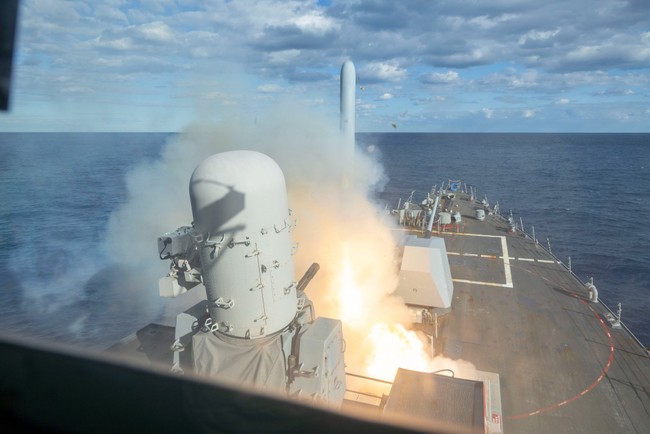
Quick summary: this piece captures the views of two Missouri Republicans on Operation Epic Fury, explains the operation’s military and strategic aims, examines legal and congressional questions, and outlines domestic security and funding implications as voiced by a former U.S. senator and a current congressman.
Operation Epic Fury has dominated headlines for the past several days, and at least from the Republican perspective it represents decisive action to neutralize an acute threat. Former Senator Jim Talent framed the initial strikes as precision moves against Iran’s remaining integrated air defenses and ballistic missile infrastructure, aimed at making follow-on targeting possible while Iranian capabilities were already degraded. He argued timing matters and that weakening Iran now reduces the risk of a larger, costlier conflict later.
Talent insisted the operation’s purpose is straightforward: degrade ballistic missiles, disrupt command and control, and blunt Iran’s regional coercion. He emphasized three pillars of Iranian strength — nuclear development, missile delivery systems, and proxy networks such as Hezbollah, Hamas, Islamic Jihad, and the Houthis — and said the minimum acceptable outcome is to defang those threats. On the strategic level he urged looking at the National Security Strategy and The Art of the Deal to see the approach: create situations where adversaries face only bad options.
When asked about casualties and risks, Talent acknowledged losses and framed them in the grim calculus of war: short-term sacrifice to save larger numbers of American lives down the road. He described the strikes as both “the right thing to do” and “the obvious thing to do,” arguing the operation should be limited in duration and not require supplemental appropriations. In his view, if funding or long-term commitments become necessary, Congress always reasserts itself by controlling appropriations.
Congressman Bob Onder, a physician and attorney representing Missouri’s 3rd District, fully endorsed the president’s decision and restated the existential concern Iran poses. He pointed to decades of Iranian-backed attacks and said a nuclear-armed Iran would not be containable in the same way the Soviet Union was, making the stakes here particularly high. Onder repeated that halting Iran’s nuclear and missile programs is essential to Western security.
Onder also raised domestic security concerns tied to the international situation, noting enhanced Capitol security and the recent terror attack in Austin as signals of an elevated threat environment. He tied that threat environment to the need for robust Department of Homeland Security funding and warned that a partial shutdown risks degrading TSA, Coast Guard, FEMA, and other essential functions. He highlighted that over 400 people on terrorist watch lists entered under the current administration, using that figure to press the urgency of funding DHS.
On legal questions and war powers both Talent and Onder placed the operation in historical context, noting presidents of both parties have launched limited military actions without prior authorization. Talent referenced past administrations and warned that long, expensive campaigns trigger congressional oversight primarily through funding. Onder pointed to examples ranging from Thomas Jefferson’s Barbary actions through Clinton, Obama, and Biden-era strikes to argue the president acted within longstanding executive practice.
Both officials stressed restraint: neither advocated a prolonged ground invasion, and both signaled that sustained land wars would demand a different constitutional and political response. Talent suggested the likely arc of this operation would be measured and relatively short, focused on eliminating specific Iranian capabilities; Onder echoed that a limited campaign fits within presidential authority unless the mission morphs into a large-scale occupation. Their shared message is that decisive, objective-driven strikes can create leverage without immediately expanding into a full-blown war.
Politically, the interviews exposed sharp partisan reactions, but the Republican perspective presented here is unapologetically firm: use overwhelming precision to remove an immediate threat while preserving the option for further pressure if needed. That posture is meant to protect American lives, secure regional trade routes, and impose costs on a regime that has long chanted “Death to America” and sponsored proxies that target U.S. interests. Statements like “These people are crazy” surfaced in conversation as shorthand for frustration with political opponents who oppose funding or decisive response.
Operationally and legally, the message from Missouri’s Republican leaders was clear—this is a targeted campaign aimed at degrading Iran’s offensive tools and creating a strategic opening for a more stable Middle Eastern balance of power. They argued the president acted within both tradition and constitutional authority, and that Congress’s primary role resurfaces when sustained funding or ground commitments are on the table. The interviews offer a compact Republican case for measured, forceful action combined with domestic vigilance and funding priorities.



Add comment