
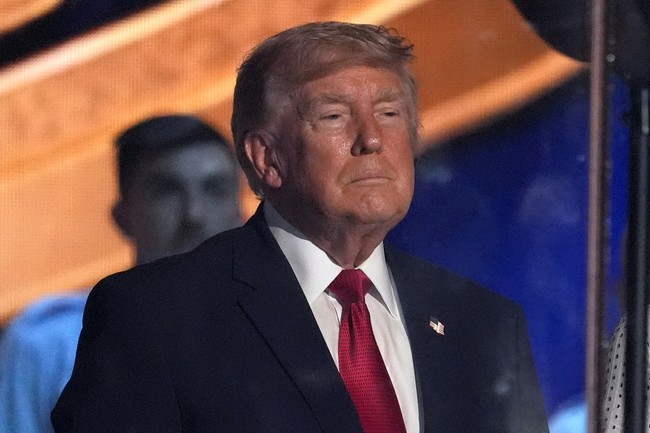
President Trump has declared the ceasefire with Iran effectively over after a string of provocations and U.S. strikes, calling Iranian leaders “scum” and saying he no longer wants to negotiate with a regime he describes as dishonest and violent. His remarks in Ankara followed U.S. military action against dozens of Iranian targets in response to attacks on commercial ships in the Strait of Hormuz, and he signaled a shift from diplomatic patience to tougher measures. The president accused Tehran of repeatedly breaking agreements and warned that a renewed reliance on strength, not talk, will guide U.S. policy. Iran’s negotiators pushed back with defiant rhetoric, and tensions are now sharply escalated.
In Ankara, the president spoke bluntly about the collapse of the brief détente. He was asked a direct question about whether the ceasefire and the memorandum of understanding were dead, and he answered without diplomatic cushioning. “To me, I think it’s over. I don’t want to deal with them anymore, but they’re scum. You know what scum is? They’re scum, they’re sick people, they’re led by sick people, and they’re vicious, violent people,” he responded. “And if they had a nuclear weapon, they’d use it.”
“As far as I’m concerned, it’s over.” The president made clear that his patience has limits and that repeated violations change the playing field. For conservative readers, the message was unmistakable: talk gave Tehran chances to rearm and to attack commerce, so action is back on the table. That action included targeted strikes intended to impose costs and deter further aggression.
The strikes came after Iranian forces targeted commercial vessels, hitting ships in the Strait of Hormuz and endangering regional partners. U.S. commanders reported hitting more than 80 targets to respond to those attacks and to disrupt the networks that enable assaults on shipping lanes. The administration also moved to squeeze Iranian oil revenues by revoking a key license for selling crude on the world market, tying economic pressure to kinetic action. Taken together, these measures were meant to show that violations will be met decisively and at scale.
Trump did not mince words about how negotiations with Iran have unfolded in practice. He recounted a pattern of agreements reached at the table only to be publicly repudiated by Tehran moments later. “We make a deal. Everyone’s agreed, no nuclear weapons. We make a deal. They go outside, talk to the press, they say, ‘We never even talked about it,'” he said, pointing to a mendacious approach he says cannot be trusted. That experience has convinced him that dealing with the regime is often a waste of American time and leverage.
He framed recent events as part of a broader record of Iranian bad faith and violence. “They’re liars, they’re cheats, they’re sick people, they’ve hurt their people,” he said, adding accusations about the regime’s brutality toward protesters. He tied those internal abuses to external aggression, noting attacks on shipping and other destabilizing actions in the region. The administration’s response aims to deny Iran the ability to project power and to signal that U.S. red lines will be enforced.
https://x.com/RapidResponse47/status/2074773233602023509
“I told them, every time you hit, we hit. And of course, they’re dirty players.”
“They’ve kiIIed thousands and thousands of our soldiers. They’ve kiIIed hundreds of thousands of innocent people.”
Those blunt statements reflected both a political posture and a strategic posture: punish attacks and deter future ones. U.S. officials framed the CENTCOM strikes as calibrated but forceful, designed to degrade capabilities used against commercial traffic and opponents in the region. The goal is to make aggression costly while avoiding uncontrolled escalation, though the risk calculus is now more fraught than before.
Iran’s parliamentary speaker, acting as a lead negotiator, pushed back with a defiant line: “The era of bullying and extortion is over. It leads nowhere. We don’t fold.” That rhetoric signals Tehran intends to resist pressure and to present a united front domestically. For U.S. policymakers, however, the choice is whether to accept repeated breaches or to harden responses that reduce the regime’s ability to threaten shipping and allies.
From a conservative perspective, America should not waste time seeking trust from a regime that demonstrated it cannot live up to its word. The recent strikes and economic actions represent a shift back toward tangible deterrence and leverage. As the situation unfolds, the administration insists it will keep using the tools at its disposal to protect commerce and allies while applying maximum pressure to Tehran.
The posture now on display is plainspoken and unapologetic: failed deals and repeated attacks produce a different U.S. approach, one that prioritizes strength and consequences over more rounds of risky diplomacy. That approach reflects the view that American security and regional stability require clear deterrence and a willingness to act when red lines are crossed.


Add comment