
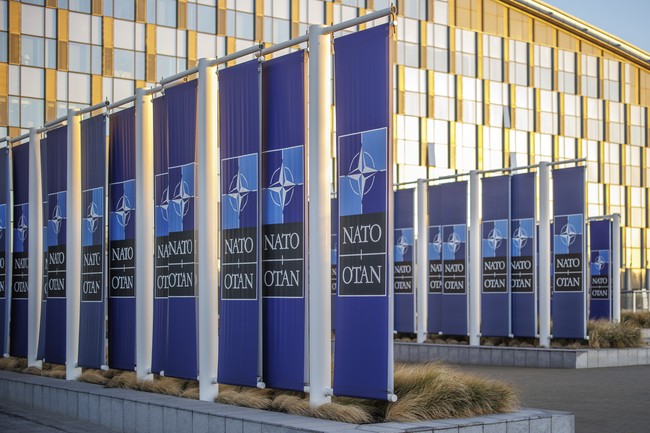
President Trump pressed NATO allies on fair burden-sharing at the summit in Turkey while also spotlighting Greenland as a strategic asset in the Arctic; his message mixes firm demands for higher defense spending with a blunt assessment that geography and raw capability matter in an era of renewed great-power competition.
Trump arrived in Ankara making clear that he expects NATO members to pay more for their own defense. He framed the issue as one of reciprocity, arguing that America should not be the default security guarantor while partners underinvest. This line of argument taps into a long-running frustration in Washington about unequal effort across the alliance.
NATO’s collective defense commitment is essential, but the distribution of spending has been uneven for years. Many European members still fall short of agreed targets and rely on American military power to fill gaps. Calling for allies to aim higher is a pragmatic push to reduce that imbalance and strengthen deterrence.
https://x.com/Chris_1791/status/2074421716848152876
Trump has publicly urged a significant uptick in European defense spending, citing the need to confront threats from Russia and other rivals. The expectation that allies reach more ambitious targets is meant to prompt faster, larger investments in capability rather than slow, incremental increases. A stronger Europe with more capable armed forces would make transatlantic security less lopsided.
Asking partners to shoulder more of the burden is framed not as isolation but as realism about what deterrence requires. The U.S. has long provided the backbone for NATO, from forces to logistics and command structures, and persistent free-riding drains American leverage. Pressure from Washington aims to turn rhetoric into budgets and real capabilities on the ground.
Free-riding can create dangerous dependencies that weaken resolve when crisis hits. Trump’s posture is about forcing a choice: either commit resources or accept that the U.S. will rebalance its presence. That recalibration can take many forms, but the underlying point is straightforward: alliances work best when obligations are shared.
Alongside the spending fight, Greenland has reentered strategic conversations as the Arctic heats up. The island sits astride key northern approaches and offers advantages for monitoring maritime and airspace routes as polar access expands. Control or secure basing arrangements there would enhance early warning and power projection in the High North.
Denmark currently administers Greenland, and any change would require diplomacy and careful negotiation. The proposition of greater U.S. influence over the island is cast as a defensive posture, not expansionist appetite. Given increasing activity by rivals in the Arctic, planners see value in securing terrain that matters for radar, sensors, and force deployment.
Critics who call such steps disruptive often miss the practical logic of geography. In a world where rivals test limits and technology compresses reaction times, physical positioning matters a great deal. Securing key nodes like Greenland is about shoring up lines of defense and preserving freedom of movement in critical areas.
At the summit, Trump’s blunt remarks made clear that he believes allies must show they are willing to invest seriously in their defenses. His approach is transactional: commitments backed by capability, not just symbolic gestures. That tone can be jarring to establishment sensibilities, but it is coherent with a broader strategy of demanding measurable contributions.
Foreign policy leadership, in this view, means confronting imbalances directly and reshaping burdens to better reflect current threats. Pursuing more equitable spending and strategic footholds like Greenland are tools to achieve a sturdier posture. This mix of pressure on partners and focus on critical geography aims to produce a more sustainable and resilient alliance.
JUST IN: President Trump says he probably would NOT have attended the NATO Summit if it wasn’t in Turkey — and is considering pulling MORE troops out of Europe”
We’ve invested TRILLIONS of dollars in NATO. Why?! To protect European countries and others, Canada, etc…”
“Why are we spending hundreds of BILLIONS of dollars, and they’re not there for us? We’ve always been there for them!”
Debate over methods will continue, but the strategic questions are clear: who pays, who fights, and where do we position forces for greatest effect. Allies will negotiate spending commitments and confront regional challenges, including support for Ukraine. How those talks translate into budgets and basing decisions will shape deterrence for years to come.
Policymakers face hard choices about how to balance burden-sharing with the need to protect American interests and sustain credible partnerships. Expect rhetoric to remain sharp while the real work happens in capitals and defense ministries. The outcome will determine whether NATO remains a collective shield or a vehicle for one-sided risk-bearing.
Add comment