
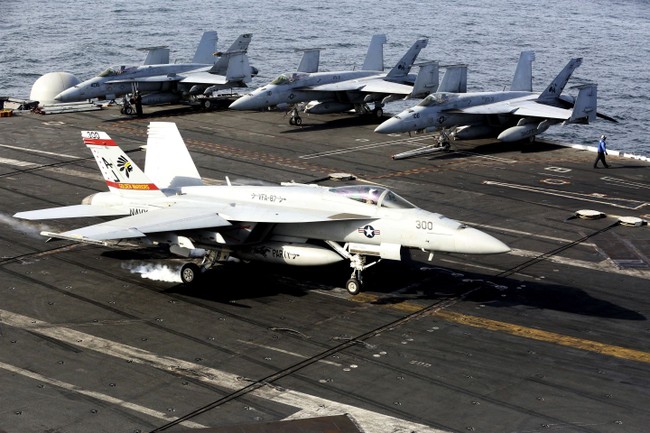
The United States has stepped up military pressure on Iran with fresh airstrikes and a sweeping campaign of sanctions and maritime actions, officials say, while regional partners and internal unrest add to what some call a possible tipping point for the regime.
U.S. Central Command confirmed additional strikes aimed at Iranian targets, framing the action as a direct response to what it described as attempted attacks on American forces in the region. CENTCOM called the strikes “a powerful response to yesterday’s attempted Iranian attacks on U.S. forces based in the Middle East.” These operations are ongoing and, according to U.S. officials, involve a wide range of targets designed to degrade Iran’s ability to project force.
https://x.com/CENTCOM/status/2082623345682518024?ref_src=twsrc%5Etfw
The public rhetoric has matched the action. President Donald Trump had said that the U.S. was going to beat the “f**king sh**” out of them for the surprise attack, and that tone has echoed through official statements and military moves. That blunt posture signals a willingness to use decisive force when American troops or partners are threatened, and it has been followed by concrete steps across multiple instruments of power.
On the economic front, Treasury sanctions have targeted companies linked to coercive maritime schemes that allegedly extort commercial vessels and funnel money to the Islamic Revolutionary Guard Corps. Officials also moved against entities operating a “shadow fleet” used to move Iranian oil, aiming to choke off revenue streams that sustain Tehran’s regional activities. Treasury officials argue these measures are meant to protect shipping lanes and deny funds to violent actors.
Treasury Secretary Scott Bessent said, “With its economy in freefall and inflation in the triple digits, the regime is desperate for cash.” That assessment underlines the logic of squeezing Iran economically while striking militarily, with policymakers hoping to raise the costs of Tehran’s aggression across the board. The combined pressure is intended not only to punish but to change behavior by forcing painful choices on Iran’s leadership.
Former senior military leaders watching the situation say the pressure is building from multiple directions. Vice Adm. Robert Harward observed, “You’re seeing the pressure build on Iran on all fronts,” and described contributions from regional partners, naval cooperation from allies and actions against proxy forces. Harward noted that responses are not just American, which complicates Tehran’s calculations and limits safe havens for aggressive actors tied to the regime.
Harward detailed signs of strain inside Iran as well, pointing to reported protests and harsh domestic measures to contain dissent. “The people came out to protest, and they had to shoot them down to prevent them from overwhelming the execution team, so the pressure in Iran is building, and we could see a tipping point come here in the not too distant future,” he said. Those internal cracks, if real and sustained, could amplify external pressure and create faster change than sanctions alone would achieve.
Regionally, partners have signaled a greater willingness to participate in containment and deterrence. Harward pointed to Saudi engagement and contributions from British naval forces, alongside actions targeting groups like the Houthis and efforts to reduce Iranian influence through operations aimed at proxies. Coordinated action raises operational options and presents a united front meant to deter further Iranian provocations.
At the same time, military leaders emphasize the risks of escalation and the need for clear objectives. The current campaign mixes strikes, sanctions and maritime enforcement to impose costs while avoiding an open, extended war. That mix is deliberate: it offers calibrated pressure to force Iran to change behavior without seeking regime collapse, though the line between pressure and escalation can shift quickly on the ground.
For U.S. policymakers and commanders, the goal is to protect American forces, keep shipping lanes open, and degrade Tehran’s capacity to threaten neighbors and U.S. interests. Those priorities drive the operational tempo and the legal and diplomatic framework that supports it. As events unfold, the administration’s approach will be judged by its ability to impose costs on Iran while minimizing unintended consequences for civilians and regional stability.



Add comment