
This piece examines Mayor Zohran Mamdani’s claim that New York City recovered $104 million for delivery workers by forcing app changes, showing how the increased tips came from customers’ pockets, tracing the rules’ origins, and noting the broader effects on affordability and delivery economics.
Another Zohran Mamdani ‘Affordability’ Scam: Make Takeout Cost More, Then Declare Victory
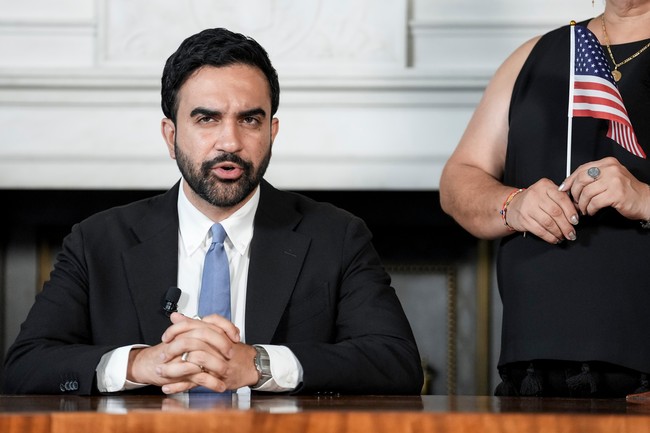
Zohran Mamdani hailed a recent city report as an affordability victory, arguing the city had “put $104 million back in delivery workers’ pockets.” At a press event, he pointed to a rise in tips over six months and framed the change as a fix to corporate behavior. The headline is simple: tips rose, but the money came from customers.
Mamdani credited new city rules that require apps to present a tip option before checkout and include a selectable 10 percent tip by default. He accused Uber Eats and DoorDash of hiding tip buttons and setting defaults below 10 percent, then took credit for making the companies alter their app experiences. That framing treats the higher consumer cost as a municipal win rather than a transfer between New Yorkers.
https://x.com/NYCMayor/status/2082595916247150961?ref_src=twsrc%5Etfw
Uber Eats and DoorDash hid tip buttons and set default tips below 10%. As a result, tips for delivery workers fell 79%.
In January, we made these corporations change their apps — and in the past six months, we’ve put $104 million back in delivery workers’ pockets.
This is only the beginning.
The nuts-and-bolts numbers the city released show the per-order tip increase was modest but widespread: average tips climbed from $1.18 to $2.29 per delivery. That $1.11 jump per order came straight from customers who continued to place app orders. The city projects this equates to roughly a $2,287 annual boost per delivery worker based on the reported order volume.
Local Laws 107 and 108, which require prompt-before-checkout tip displays, took effect after Mamdani assumed office, but they were passed earlier and stem from a prior wave of policy changes. The new tipping requirement followed a separate minimum-pay rule that set a baseline hourly equivalent for gig delivery pay. The combination of mandates and enforcement reshaped app behavior that companies had already altered once the minimum-pay standard began to be enforced.
Uber Eats and DoorDash previously moved tip prompts to post-delivery screens following the minimum-pay enforcement, a design shift city regulators said suppressed tipping. City investigators argued those design tweaks cost delivery workers far more before the latest rules forced another redesign. The city report acknowledges tips have risen versus the low point, but they remain below the level recorded before the companies changed their interfaces in late 2023.
Legal efforts followed quickly, with the companies suing to block the tipping rules. A federal judge denied an injunction in January after finding the firms had not demonstrated a free-speech violation. That decision cleared the way for enforcement, which coincided with the mayor’s announcements and the surge in reported tip totals.
Critics point out that the city’s claim it “put $104 million back” skates over the flow of money, since neither company wrote a check to workers. Customers effectively bore the cost when the visible pre-checkout prompts nudged tips higher. Observers who monitor app interfaces noted that the policy shifted consumer behavior, not corporate payouts, and that the net effect is an internal transfer among New Yorkers.
There are unanswered questions in the data the city released, notably whether the higher effective prices on orders led some customers to cancel or reduce order frequency. The report highlights weekly order volumes that grew compared with earlier points, but it does not isolate the tipping-rule period to show direct before-and-after demand impacts. Without that clear comparison, claims about affordability impacts remain incomplete.
Delivery workers are receiving larger tips than they did at the low point, and that matters to those earning through apps. At the same time, the policy traded a rise in takeaway costs for higher pay for couriers, which is a political and economic choice with visible winners and losers. The mayor framed the result as correcting corporate abuse, but the practical effect is that city policy shifted a burden onto customers to boost worker pay.



Add comment