
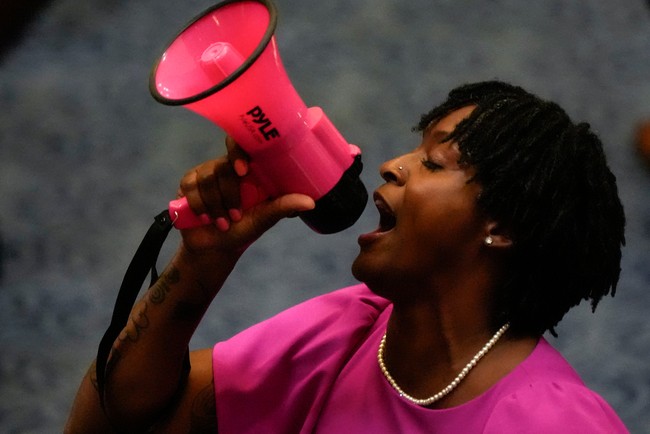
Angie Nixon scored an upset in the Democratic primary for U.S. Senate in Florida, but Democrats in the state face steep headwinds as voters move right and socialism remains unpopular. This piece looks at Nixon’s ideological profile, the matchup with Republican incumbent Ashley Moody, and a reported clash between prominent Florida Democrats that highlights internal party tensions ahead of a difficult general election.
Angie Nixon’s primary victory over Alexander Vindman surprised some observers, but the general election is a different fight. Nixon is openly aligned with the Democratic Socialists of America, a position that will be a target in a red-leaning state where many voters react negatively to socialist labels. Campaign messaging and voter demographics in Florida favor conservative candidates this cycle, and that reality frames how Nixon’s team must operate.
Nixon’s policy brand will be the focal point of attack from Republicans and independent voters who moved toward GOP candidates in recent cycles. Ashley Moody, the Republican incumbent, has name recognition and a record tied to law-and-order and traditional conservative priorities, which plays well across much of Florida. In a state trending red, a DSA-affiliated candidate faces both ideological pushback and practical challenges in persuading swing voters.
Internal party dynamics are adding strain to a Democratic effort that already looks uphill. Reports of a heated exchange involving Nikki Fried and Angie Nixon surfaced after the primary, suggesting friction over strategy and messaging. Those kinds of public spats feed a narrative that Democrats are divided at a moment when unity and disciplined messaging are essential to compete statewide.
https://x.com/AshleyMoodyFL/status/2090944618309284031
Republicans see these developments as confirmation that Democrats are more focused on factional fights than on countering real voter concerns like inflation, public safety, and immigration. That framing is potent in Florida, where many voters prioritize pragmatic governance over ideological purity. The GOP playbook will emphasize contrast between Moody’s conservative record and Nixon’s DSA ties to underscore perceived risks of a leftward shift.
For Democrats, the path forward requires reconciling progressive priorities with the preferences of moderate Floridians who balk at radical labels. That is easier said than done when activists and notable party figures are publicly arguing about direction and tactics. Voter outreach, coalition-building, and careful message discipline will be crucial if Nixon hopes to narrow the gap in a state trending against her party.
Campaign funding and national attention will inevitably flow based on perceived winnability, and internal discord can discourage donors and outside groups from investing heavily. Even motivated base turnout isn’t always enough in statewide contests where suburban and independent voters swing outcomes. Florida’s changing electorate means Democrats must build broad appeals rather than rely solely on energized extremes.
Republican strategists will press advantage by tying Nixon to national progressive movements and by highlighting concrete policy contrasts with Ashley Moody. That approach capitalizes on voter skepticism about socialism and focuses on everyday pocketbook issues and public safety. With the GOP narrative already resonating, Democrats must work to neutralize attack lines while offering tangible, moderate solutions that resonate across demographics.
Local media coverage of any public disagreement among Democratic leaders only magnifies the problem by giving opponents material to use in advertising and debates. In tight races, perception matters almost as much as policy differences, and the optics of disunity can shift undecided voters. A disciplined campaign that limits internal public conflict is more likely to survive the barrage of negative messaging that comes with high-profile statewide contests.
Grassroots organizing, targeted messaging in key swing counties, and careful debate preparation will shape the tenor of the general election. Nixon’s team faces the task of broadening appeal beyond primary voters without alienating progressive activists whose energy won her the nomination. How well they can thread that needle will determine whether the seat remains with the GOP or flips in an otherwise difficult environment for Democrats.
— Charlie Kirk Stan (@ForCharlie47)
Editor’s Note: The 2026 Midterms will determine the fate of President Trump’s America First agenda. Republicans must maintain control of both chambers of Congress.
Help RedState continue to report on the Democrats’ radicalism and inform voters as our nation faces a crossroads. Join RedState VIP and use promo code FIGHT to receive 60% off your membership.



Home-based job that pays more than 12,000 Dollar per month by doing simple tasks on a laptop or mobile device part-time. Last month, I earned 24,863 Dollar from this job by working 4 hours per day online. Very simple jobs to do, and the earnings are insane. Everyone can now make more money online by joining the website listed below…..
𝒋𝒖𝒔𝒕 𝒖𝒔𝒊𝒏𝒈 𝒕𝒉𝒊𝒔 𝒔𝒊𝒕𝒆.. Www.PayAtHome1.Com