
Checklist: Summarize Rubio’s briefing to Congress; quote his key statements on timing and objectives; report on the military impact described; explain stated U.S. goals of disarmament and the potential political outcome for Iran.
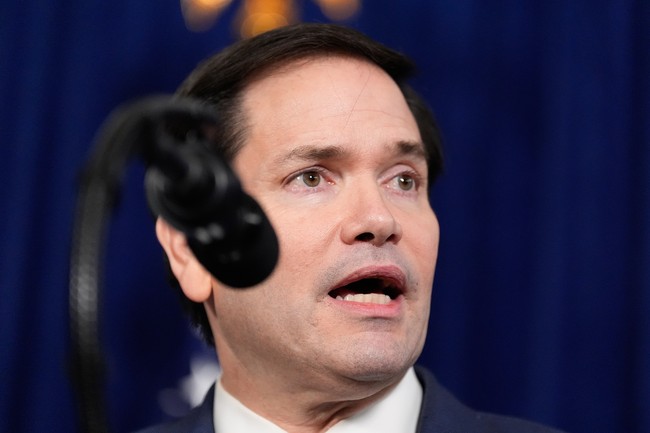
Senator Marco Rubio addressed reporters after briefing the Gang of Eight on Operation Epic Fury, offering a blunt, national-security-first rationale for the strikes on Iran. He stressed the urgency of acting now to prevent Iran from reaching a point where its swarm capabilities would make countermeasures ineffective, and he framed the operation as necessary to deny Tehran lethal capacity. Rubio also hinted at coordination with Israel while emphasizing U.S. readiness to act. The comments paint a picture of a campaign designed to remove immediate threats and to shape conditions for possible political change inside Iran.
Rubio began by answering the predictable question of timing and necessity, making clear that the operation was not optional. He argued that in roughly a year or so Iran would accumulate enough short-range missiles and drones to hold wide areas hostage, implying that delay would cede strategic advantage. That argument underpins the administration’s decision to strike now, when Iranian capabilities are degraded and more vulnerable. The goal, as he put it, was to prevent a future in which Tehran could act with impunity.
First, as for :
Secretary Rubio said:
Number One is, no matter what, ultimately, this operation needed to happen. That’s the question of why now. But this operation needed to happen. Because Iran, in about a year or a year and a half, would cross the line of immunity, meaning they would have so many short-range missiles, so many drones, that no one could do anything about it. Because they could hold the whole world hostage. Look at the damage they’re doing now. And this is a weakened Iran. Imagine a year from now. So that had to happen. Obviously, we were aware of Israeli intentions and understood what that would mean for us, and we had to be prepared to act as a result of it. But this had to happen no matter what.
The line “we were aware of Israeli intentions” is provocative and worth noting, but Rubio’s core point was the urgency of preventing an inevitable escalation in Tehran’s strike capacity. In practical terms, that means targeting missile stockpiles, drone production, and the command nodes that allow these systems to threaten neighbors and U.S. forces. From a conservative viewpoint, this is classic forward defense: stop the threat before it becomes unmanageable. If successful, the operation buys time and space for regional stability and American strategic freedom of action.
Here’s another :
Again, Secretary Rubio said:
They’re suffering a tremendous amount of damage. Honestly – and again, I’m not going to give away the details of our tactical efforts, but the hardest hits are yet to come from the U.S. military. The next phase will be even more punishing on Iran than it is right now. Someone was screaming how long will it take, I don’t know how long it will take, we have objectives. We will do this as long as it takes to achieve those objectives. And we will achieve those objectives. The world will be a safer place when we’re done with this operation.
Rubio’s line that “the hardest hits are yet to come” signals that the United States intends a sustained campaign targeted at removing Iran’s ability to conduct offensive and coercive operations. He claimed that Iran’s navy and air force have been crippled and that senior leaders have been neutralized, implying that subsequent strikes will finish degrading remaining capabilities. That is a hard-edged statement meant to reassure allies and warn adversaries that the U.S. will not stop short of achieving clearly defined military objectives. For Republicans concerned about deterrence and American strength, this posture is exactly what proponents have argued for: decisive, sustained action to remove imminent threats.
The stated final aim, according to Rubio, goes beyond mere battlefield attrition; it’s about denying Iran the means to bully its region and the world with ballistic missiles and drone swarms. He emphasized that, regardless of who governs Iran in the future, the primary objective is to remove the weapons that can threaten U.S. bases and allies. That places disarmament as the principal mission, with regime change or political transformation as a possible but secondary outcome. The logic is clear: remove the immediate danger first, then let political dynamics unfold.
Finally, on the :
We would love to see this regime be replaced. And ultimately, as the president has said… (unintelligible call from the press) No, let me finish my answer. As the president said, he would love for the people of Iran to use this as an opportunity to rise up and remove these leaders. They’ve been wanting to remove them for a long time. We’ve seen successive waves of protests. And we’ve seen them slaughter people. But the objective of this mission is to make sure they don’t have these weapons that can threaten us and our allies in the region. That’s why we’re doing what we’re doing now. And while we would love to see a new regime, the bottom line is, no matter who governs that country, a year from now, they’re not going to have these ballistic missiles, and they’re not going to have these drones to threaten us. That’s the objective of this mission. It’s to deny them the ability to use ballistic missiles to threaten their neighbors, to threaten our bases, to threaten our presence in the region, and ultimately as a shield behind which they can do whatever they want with their nuclear weapons ambition. We were not going to let them hide behind that. And that’s why this was such a critical mission to undertake now, while they were at their weakest point, and not a year from now, where they could inflict even more damage and perhaps already be behind that point of immunity.
Rubio frames the operation as narrowly focused on removing military threats while expressing hope that Iranians might seize the moment to seek political change. That ordering—security first, political change second—reflects a pragmatic conservative approach to international crises. It acknowledges the moral desire to see theocratic repression end while making clear the immediate priority is protecting American lives and regional partners. The comments make the administration’s priorities unmistakable and lay out why Republican policymakers see the operation as necessary now rather than later.

Add comment