
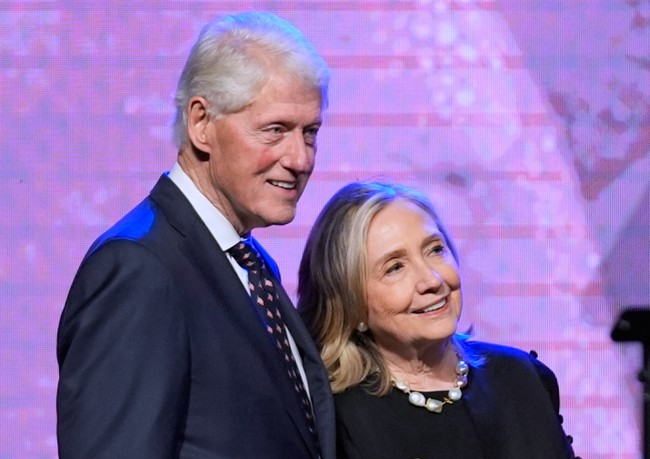
Bill and Hillary Clinton testified to the House Oversight Committee about Jeffrey Epstein and Ghislaine Maxwell, and a brief viral street moment afterward has drawn as much attention as their depositions—one showed Bill’s shaky demeanor under oath and another showed an awkward public stumble that quickly turned into punchlines online. The depositions raised questions about memory and accountability, and the New York street scene gave critics more material to mock. This piece walks through both the legal testimony and the odd sidewalk interaction, keeping the facts and quoted lines intact.
The depositions themselves were notable for how they looked more like damage control than forthright cooperation. Bill Clinton denied knowledge of certain matters while his hands visibly shook during testimony, and his memory lapses created obvious contrast with earlier claims from other witnesses. He “couldn’t remember a lot,” the record shows, and that fragility under oath naturally invites skepticism rather than sympathy.
People who watched the testimony saw contradictions between Bill’s answers and other available accounts, which only deepened doubts about the transparency of those involved. He even insisted he had not lied while testifying, a claim that sits uneasily next to more public incidents where his statements were challenged. For many Republicans and independents, those moments underscore long-standing concerns about accountability from political elites.
Hillary’s deposition drew its own headlines for optics rather than substance. Requests for “beauty lighting” and a custom backdrop were reported, a detail that reads as carefully staged theater rather than straightforward cooperation with investigators. When your team worries more about how you look on camera than about the conduct being investigated, that choice sends a message about priorities and seriousness toward the process.
Outside the hearing room, the Clintons’ walk through New York produced a short, viral clip that people couldn’t resist turning into memes. As they walked after an event, Bill began clapping oddly and then seemed to stumble into Hillary while they waited to cross the street. Security surrounded them, yet the brief contact and the couple’s reactions were all anyone could talk about for a few hours.
Observers pointed to the way Hillary reacted after the contact, interpreting body language as more than just surprise. She reportedly said, “Don’t do that,” then turned and walked back to the sidewalk as if trying to create distance. Bill looked bemused and said something along the lines of “Not a good idea,” which only fueled the online chatter. Those exact words framed the clip and became its most quoted beats.
Some on social media joked the moment looked staged or that the interaction was part of an offhand spat, but the more lasting effect was how the clip fed a narrative many conservatives already hold. After years of controversies and allegations tied to the couple, a small physical stumble became a metaphor for how the public views them: awkward, defensive, and out of step with straightforward accountability. That perception is powerful, and this episode made it stickier.
It’s worth noting the generational element in how the public interprets such moments. When older public figures display signs of frailty or confusion, the reaction mixes concern, criticism, and political calculation. For critics of the Clintons, the depositions and the sidewalk stumble reinforced a lack of confidence that has deep roots in the electorate and in conservative commentary.
Beyond the theater of optics and one-liners, the underlying legal issues remain the central story. The Oversight Committee’s questioning about Jeffrey Epstein and Ghislaine Maxwell touches on serious allegations and connections that demand full answers, not just staged lighting and scripted appearances. The public rightly wants clarity about what was known, when it was known, and who benefited from silence or obfuscation.
The clip of the two trying to cross the street is small in the grand scheme, but it’s useful as a cultural snapshot. It captured a pair long familiar to controversy, reacting in a way that reinforced decades of criticism rather than changing hearts or minds. For many conservatives, it was another reminder that image management can’t erase questions about conduct or character.
Ultimately, the depositions and the viral sidewalk moment together highlight how accountability and optics intersect in modern politics. Whether on camera in a hearing room or on a New York avenue, public figures are judged both for what they say and how they present themselves, and in this case neither moment helped the Clintons rebuild trust among skeptics.


Add comment