
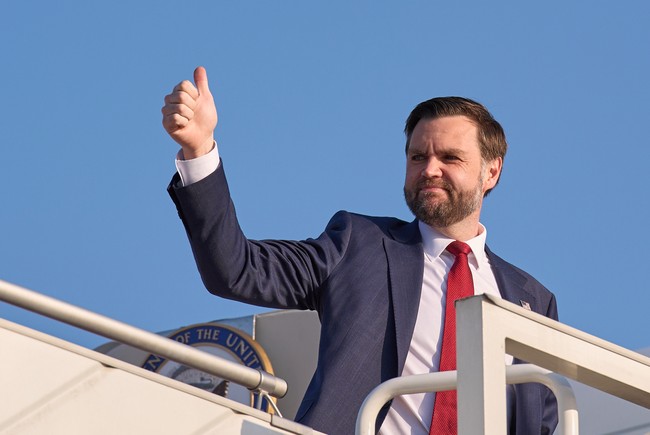
The talks in Switzerland led by Vice President JD Vance produced concrete steps toward stabilizing the region and reining in Iran’s nuclear ambitions, with the IAEA allowed back in, the Strait of Hormuz kept open, a de-escalation mechanism agreed, and technical teams set to finish a deal within 60 days. This piece summarizes those developments, the political framing from the U.S. side, and the stakes for American energy and security in plain, direct terms.
The initial negotiation rounds wrapped up with Vice President Vance describing the session as productive and forward-looking. He said the talks built on last week’s memorandum of understanding and that, despite some “a little bit of whining” from Iran, the U.S. team accomplished its mission objectives. “Yesterday was a very, very good day. We made a lot of good progress. We did exactly what we wanted to do,” Vance declared, framing the trip as effective diplomacy backed by strength.
Delegations focused on four core issues: keeping the Strait of Hormuz open, restoring International Atomic Energy Agency access to Iran, creating reliable deconfliction measures to prevent escalations, and assembling technical teams to finalize the agreement within a firm 60-day window. Each element ties directly into U.S. priorities: protecting global energy flows, verifying denuclearization, avoiding unintended wars, and imposing timelines that force results. Those priorities reflect a Republican approach that mixes firm leverage with clear demands, not open-ended talking points.
https://x.com/TrumpWarRoom/status/2069040087946457295
Vance emphasized the economic and security importance of the Strait of Hormuz, noting the volume of crude oil and natural gas that transit the waterway and the direct effect that has on American fuel prices. He argued a practical de-escalation mechanism is essential because conflict is inevitable at times, and a predictable response path prevents small incidents from becoming larger wars. Keeping commerce flowing and prices down matters to everyday Americans, and that was a central selling point of the talks.
The vice president also confirmed that Iran agreed to permit IAEA inspectors back into the country, a key verification step Republicans have said must accompany any deal. Allowing inspectors inside is not merely symbolic; it’s a functional requirement to determine whether the regime is dismantling relevant infrastructure or continuing covert work. The shift from rhetoric to actionable inspection protocols is a political win for those demanding accountability from Tehran.
Treasury actions accompanied the diplomatic language, with a temporary 60-day general license enabling the production, delivery, and sale of Iranian oil as part of the framework to incentivize compliance. The administration presented that move as conditional and time-limited, giving Iran a clear, short-term benefit tied to specific commitments. From a Republican perspective, that kind of calibrated leverage—reward for verifiable behavior over a fixed period—matches a strategy of peace through strength.
Vance and others pushed a regional ceasefire as part of the talks, explicitly linking progress with reduced violence from Hezbollah and a safer horizon for Israel. “We want a regional ceasefire,” Vance said, laying out the practical objective of halting cross-border attacks that destabilize the area. The goal is not utopian peace; it is a pragmatic reduction in violence that protects allies and prevents escalation into broader conflict.
On the domestic front, Vance addressed the possibility of unfreezing Iranian assets by specifying how any released funds would be used. He stated plainly that money would be routed to buy American agricultural products—soy, corn, and wheat—so the Iranian people would benefit through food imports from U.S. farmers. That linkage was framed as both humanitarian and politically sensible: Americans gain export markets while food aid reaches civilians rather than bankrolling malign activity.
Technical teams from both sides will remain on site in Switzerland to iron out details over the coming days, working under the 60-day clock established in the framework. The deadline creates pressure for concrete results rather than indefinite negotiations, which critics have long warned can become a tactic to postpone accountability. Republicans, in particular, argued that timelines and inspection regimes are essential if any agreement is to genuinely reduce threats rather than paper over them.
The messaging around these talks blends firmness with diplomatic action: insist on verification, tie incentives to short windows and clear benchmarks, and aim for regional stability by reducing violent escalations. The approach is consistent with a stance that prizes American security and economic interests first, while using leverage to extract measurable concessions. If the technical teams deliver on the MOU’s promises in the weeks ahead, the administration will claim a substantive foreign-policy victory rooted in results rather than rhetoric.



SMART W0RK I was kind of worried about the entire thing. I’ve never worked from home, But Yeah, (Dd200) I did just join and all is good. so I will post back how it goes!____ clicked on the name in my profile