
I’ll explain what DHS revealed about Iran’s delegation, quote officials and the Iranian coach exactly, note the border concerns tied to IRGC links, describe how U.S. officials limited the delegation, include reaction from Iran’s coach, and keep the original quoted passages intact.
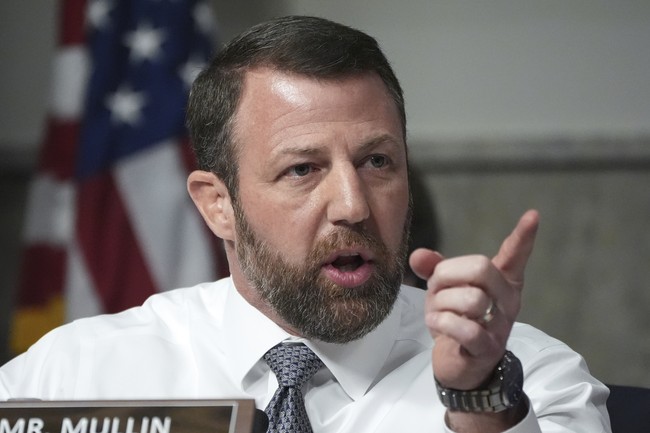
Department of Homeland Security Secretary Markwayne Mullin warned about troubling activity tied to Iranian nationals and the Iranian Revolutionary Guard Corps when he spoke recently on Fox Business’ “Sunday Morning Futures.” He described an “unusual amount” of people linked to Iran trying to cross the northern border and stressed that U.S. and Canadian partners have been working together to apprehend them. That increase, he said, came with alarming patterns of connections to the IRGC among those detained.
https://x.com/EricLDaugh/status/2068702351993536814
“So our Northern Border, we’ve seen arrests go up daily on Iranian nationals, and we have a good partnership with our Canadian partners that have been able to help apprehend them, too. But it’s worrisome, because the amount of influx we see and the amount of connections we have when we capture the people, that they have direct ties to the IRGC.”
The IRGC stands for the Iranian Revolutionary Guard Corps, a group long designated by U.S. policy as a malign actor. Mullin said those same national security instincts influenced how the Department of Homeland Security handled Iran’s World Cup delegation. He explained that, while delegations usually include about 120 support staff, the U.S. allowed only roughly 53 into the country because many others raised red flags.
“The rest of the individuals that Iran had tried to bring in, all also had direct ties to the IRGC and aren’t their normal traveling group. So these games that Iran plays, unfortunately, makes them an adversary that you can’t trust. And no one knows that more than President Trump.”
That kind of vetting is basic common-sense security. If people traveling under diplomatic or sporting auspices are revealed to have links to a hostile military force, a sovereign country has every right to restrict entrance. The U.S. moved conservatively here, prioritizing safety over optics, and made clear it would not let the event be used as cover for bad actors.
Iran responded by denying the charge that its delegation included IRGC-linked figures. Meanwhile, Iran’s coach took a very different public tone, complaining about conditions and accusing hosts of discrimination. His comments painted the team as victims and suggested logistical headaches were to blame for any troubles.
“We were in war conditions for six months, we didn’t have our league operating,” Ghalenoei said. “We had only one FIFA [friendly] date and it took us 40 hours to go and play a match outside of Iran. And our league was not operating and everybody knows about the visa situation, and they know what happened to us coming to the U.S.”
Just like Iran’s opening match here at the renamed Los Angeles Stadium, Ghalenoei said Iran had travel issues and was told it needed to return to its base camp in Tijuana immediately after the game instead of staying the night to recover.
The coach’s grievance over travel and scheduling sounded like sour grapes when weighed against the security concerns leaders outlined. Teams frequently move between venues and sleep on planes or in transit; the U.S. decision to limit certain visitors was framed as necessary, not punitive. The optics of complaining about logistics while facing credible national security concerns do not play well for a regime already under scrutiny.
Officials on the U.S. side emphasized that screening and restrictions were based on intelligence and patterns, not sportsmanship. When national security is at stake, teams and federations have to accept that normal courtesies may be curtailed. The point from DHS was simple: you can love the sport and still guard against exploitation of global events by bad actors.
Observers noted that other teams routinely travel immediately after matches and that the practice of flying post-game is not unusual, undermining the coach’s portrayal of extraordinary hardship. That critique highlighted a gap between the narrative Iran offered and the realities of international tournament logistics. In a high-stakes environment like the World Cup, portraying weakness or playing the victim rarely wins public sympathy.
Beyond the immediate dispute, the episode underscores ongoing U.S. concerns about Iran’s global activities and methods. When intelligence shows repeated links between travelers and the IRGC, those signals have to guide policy and operational decisions. The administration responsible for homeland security must act on those signals to protect citizens and critical infrastructure.
At root, this was a choice: prioritize security screening or accept the risk that a major international event could be used for influence operations. U.S. officials chose the former, and that choice reflected a stance many Americans expect from their leaders when confronted with credible threats. The tension between hosting international competitions and defending national borders will keep driving similar decisions in the future.

SMART W0RK I was kind of worried about the entire thing. I’ve never worked from home, But Yeah, (Dd2) I did just join and all is good. so I will post back how it goes!____ clicked on the name in my profile