
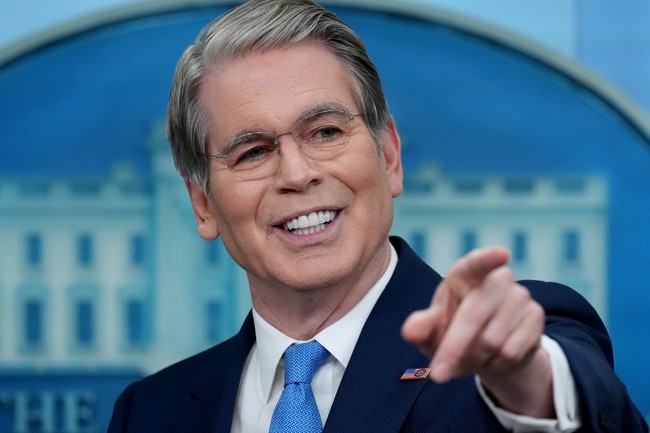
The Treasury Department, led by Scott Bessent, has stepped up pressure on Iran by targeting electronic and digital financial channels tied to the Islamic Revolutionary Guard Corps, naming networks, exchanges, and individuals alleged to have laundered and moved millions in crypto and other assets to sustain Tehran’s operations.
The message from Washington is blunt: economic tools remain in play alongside military options. Officials say they are pursuing not just traditional banking links but also shadow banking, online gambling conduits, and unregulated digital-asset platforms that allegedly concealed flows to Iran. Those moves aim to choke access to funds that could support the IRGC and other regime-connected actors.
This latest campaign identifies specific actors and corporate webs said to facilitate sanctions evasion, with a focus on exchanges and intermediary firms across multiple jurisdictions. Treasury describes complex schemes that combined digital currency transfers with online gambling networks to obscure the origin and destination of funds. The effort is portrayed as part of a broader push to tighten the economic noose on Tehran while denying it covert financial lifelines.
https://x.com/SecScottBessent/status/2085792905399058508
Now OFAC has targeted all IRGC electronic and digital assets, from dollars, to rials, to cryptocurrency.
Bessent’s public statement on social media was direct and uncompromising. He framed the Iranian regime’s digital tactics as proof that the administration’s economic strategy is working and vowed continued pressure. His words underline the Treasury’s intent to go after the full range of instruments used to move money into and out of Iran.
The Iranian regime’s reliance on digital assets and shadow banking networks is further evidence that Economic Fury is working. We will continue to increase the economic pressure. Whether in dollars, rials, or crypto, Treasury will hunt down and dismantle the illicit financial networks that keep the regime afloat.
The department released a detailed description of the actions it was taking against exchanges and networks accused of laundering billions and preserving covert financial access. Officials say two major digital-asset exchanges and the ringleader of an international front-company network were targeted for facilitating illicit cryptocurrency activity and sanctions evasion. The department alleges these platforms were used to route large volumes of digital assets through sprawling corporate structures and an extensive online gambling operation to mask origins.
Today, the U.S. Department of the Treasury’s Office of Foreign Assets Control (OFAC) is moving against digital asset exchanges that the Iranian regime relies on to launder billions of dollars, maintain covert access to international financial systems, and support the Islamic Revolutionary Guard Corps (IRGC), among other terrorist groups. This action targets two major digital asset exchanges used by Tehran, along with the ringleader of a network of front companies operating across multiple jurisdictions, facilitating illicit cryptocurrency activity and sanctions evasion. Iranian actors exploited unlicensed or lightly regulated digital currency exchange platforms to transfer large volumes of digital assets. They executed this scheme through sprawling corporate networks and an extensive online gambling enterprise that obscured the origin of the funds and ultimately laundered the illicit proceeds for the benefit of the IRGC and regime‑connected individuals.
One individual singled out by OFAC is Siavash Kayvanpour, described as operating from the United Arab Emirates and overseeing a constellation of companies tied to digital currency operations. Treasury allegations outline transfers between IRGC-linked addresses and a platform called the Shelbit Exchange that, according to officials, moved sums totaling more than the equivalent of a few million dollars in digital assets. Those kinds of transactions are cited as examples of how the regime allegedly maintained clandestine revenue streams.
Treasury says Kayvanpour’s network included companies with commercial and trading faces and that the Shelbit operation also serviced a Persian-language gambling website network. Officials claim tens of millions of dollars in digital assets from that gambling network were laundered through Shelbit, and they highlight the apparent disconnect between convictions of certain influencers and their continued ability to access Iran’s tightly regulated online payments systems. That contrast is presented as evidence of the regime’s hypocrisy and corruption.
The designation actions extend beyond Shelbit and Kayvanpour to other named entities and exchanges said to be involved in processing transactions for previously designated Iranian platforms. OFAC cited additional firms and exchanges believed to have handled millions of dollars’ worth of transactions that linked back to Tehran’s financial ecosystem. The pattern described combines onshore and offshore components that regulators argue allowed Iran to exploit regulatory gaps and opaque corporate structures.
Officials say these measures are intended to disrupt not just single transfer routes but entire networks that move value across currencies and jurisdictions. The Treasury aims to raise the cost and risk of doing business with Iran-related actors, signaling to financial intermediaries and service providers that facilitating such activity carries heavy consequences. For now, the department maintains it will continue to press where it finds vulnerabilities so that the regime’s financial apparatus is harder to hide and harder to use.


Add comment