
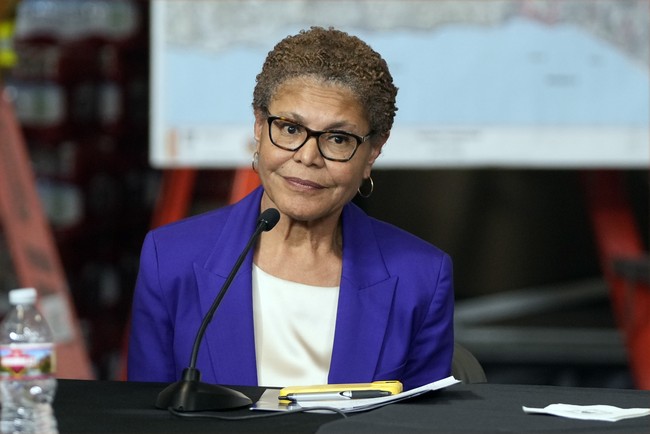
This piece examines Los Angeles Mayor Karen Bass’s recent comments defending why some people experiencing homelessness might use meth, the backlash from critics including Spencer Pratt, and how these remarks fit into wider concerns about public safety, infrastructure failures, and city leadership ahead of the November election.
Karen Bass has a long record of controversial remarks that have drawn sharp criticism from opponents and commentators. Her recent suggestion that some homeless people use methamphetamine to stay awake at night “to protect yourself” rekindled outrage from residents concerned about rising crime and addiction. The comment was made in the midst of renewed scrutiny over the city’s homelessness crisis and public safety challenges. For many critics, the statement crossed a line from explanation into normalization of dangerous behavior.
At a press event, Bass said, “All of this can be found at URL,” a gaffe that became a handy example for detractors of what they call sloppy or tone-deaf leadership. That moment, along with other high-profile missteps, has been used by opponents to paint a picture of a mayor out of touch with on-the-ground realities. Critics argue that rhetoric matters when people are looking to city leaders for concrete action, not rationales that sound like excuses. For voters and taxpayers, it raises a basic question: who is actually fixing the streets?
When pressed to clarify her meth remark, Bass repeated: “What I said is, is that I know that people have used meth to stay awake at night, so they don’t fall asleep because they’re worried about being assaulted.” Those words were shared widely online and ignited immediate backlash. Opponents accused her of trying to justify meth use instead of addressing addiction and safety problems. The response underscores how political messaging around crime and homelessness can rapidly become a referendum on competence.
Observers contrasted Bass’s comments with recent infrastructure failures that have left residents furious and fearful. A massive water main burst early one morning in West Hollywood sent a torrent down Sunset Boulevard, flooding vehicles and businesses and disrupting daily life. While West Hollywood is its own city, the disaster highlighted the interconnected nature of Los Angeles County’s infrastructure and the perception that regional problems reflect statewide mismanagement. For critics, such visible breakdowns feed into a broader narrative of decline that local leaders are failing to reverse.
Enter Spencer Pratt, a former mayoral candidate who seized on Bass’s remark with pointed ridicule and derision. Pratt’s viral posts mocked the idea of meth as a tool for “night watch duty” and argued that leaders should be fixing streets and addressing homelessness rather than normalizing hard drugs. His reaction resonates with a segment of voters who want tougher policies and clearer accountability from city rulers. Pratt framed the debate as one of protecting communities versus soothing rhetoric that leaves problems unresolved.
https://x.com/montoyalouis1/status/2077521255599620460
Political consequences are already in view as voters prepare for the general election. Bass faces challengers who promise different approaches, and critics warn that a continuation of current policies could make Los Angeles less safe and less livable. Some opponents suggest that the mayor’s remarks reveal an ideological tilt that prioritizes sympathetic explanations over strict enforcement and practical solutions. For Republican-leaning observers, this is a clear sign the city needs leadership that prioritizes order, enforcement, and the rule of law.
Beyond the headlines, the debate reveals deeper tensions about how societies respond to homelessness and addiction. One camp advocates for harm-reduction strategies and expanded social services, while another insists on enforcement, treatment mandates, and restoring public order. Bass’s comment landed squarely in the crossfire, becoming shorthand for a perceived policy gap between empathy and enforcement. Voters are left weighing which approach will actually reduce suffering and restore safe public spaces.
The viral nature of the exchange also highlights the power of social media to amplify political moments into lasting narratives. A single sound bite can travel nationwide and be replayed endlessly by critics and supporters alike. That dynamic means local leaders operate in a highly charged environment where every offhand remark can become campaign fodder. For politicians running in November, navigating that terrain will require sharper messaging and demonstrable results.
What remains clear is that the city’s problems are complex and visible, from street homelessness and drug addiction to failing infrastructure and emergency responses. The public wants practical plans and measurable outcomes, not statements that seem to excuse dangerous behavior. As the election approaches, voters will weigh whether current leaders have the vision and will to tackle these issues or whether it’s time for a different approach that restores safety and order.
😂 Karen Bass on LA homelessness: “Sleep out on the street a couple weeks and tell me you’re not using something to stay sane… or use meth so you don’t go to sleep to protect yourself!”
Meth for clear-headed night watch duty? Brilliant leadership. Next she’ll prescribe energy drinks and conspiracy podcasts for “mental clarity.”
We pay taxes for this genius? Fix the streets, not normalize the nightmare.
Pratt’s reaction and the online uproar illustrate how political theater and policy substance collide in modern media cycles. Critics argue that words like Bass’s erode public confidence in the ability of leaders to manage crises and maintain public safety. Supporters might say she was acknowledging grim realities on the street that require humane solutions. But for many voters, rhetoric without action is simply unacceptable.



Add comment