
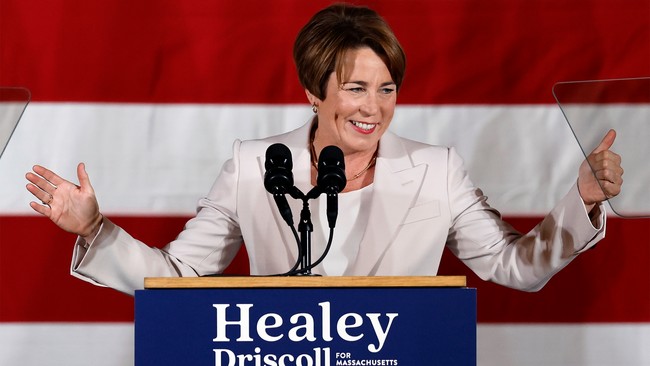
Massachusetts just passed a law allowing abortion up to birth, and this piece looks at what changed, how state policy now compares to other states, the language lawmakers used, and the political fallout from the move.
After the Supreme Court returned abortion policy to the states in 2022, each state charted its own course. Some tightened limits, others expanded access, and Massachusetts has now moved to remove gestational age restrictions entirely. That shift puts the state in a small group of jurisdictions taking abortion law to its broadest interpretation.
The new law replaces specific late-term restrictions with deference to medical judgment, effectively allowing physicians to decide in any case. Massachusetts joins Alaska, Colorado, Maryland, Michigan, Minnesota, New Jersey, New Mexico, Oregon, Vermont and the District of Columbia in removing explicit gestational age limits. That list now reflects a clear regional divide on how abortion policy is handled.
Supporters framed the change as restoring access and protecting health care decisions from politicians. Critics say it eliminates meaningful safeguards and opens the door to ending viable pregnancies. Either way, the law positions Massachusetts as a testing ground for where liberal policy on abortion can go when elected officials choose to expand access without specific gestational caps.
Here is a verbatim excerpt that was widely circulated after the bill became law:
Governor Maura Healey on Monday signed legislation to make it easier for women to receive an abortion later in their pregnancies, making Massachusetts’ laws among the country’s broadest and handing the governor a legislative win as she wages her re-election bid.
The now-law, which lawmakers sent to Healey’s desk in the final hours of their last scheduled formal session last month, reshapes the rules for how women can terminate their pregnancies at 24 weeks or after. State law used to allow abortion at that stage only under specific circumstances, including to preserve a patient’s life.
The new law leaves the decision to end a pregnancy entirely to “the professional judgment of a physician.”
The quoted passage makes clear the legislature abandoned the prior 24-week guardrail except in cases where a physician’s judgment dictates otherwise. For many conservatives, that phrasing removes a clearly defined outer boundary and substitutes a standard that could be applied broadly. The result is predictable: heated debate and political ammunition for challengers who argue for renewed emphasis on unborn life and viability standards.
Another commonly shared message after the signing read exactly as posted on social platforms:
https://x.com/EricLDaugh/status/2086974128565723606
🚨 UPDATE: Massachusetts Gov. Maura Healey (D) has officially signed a law allowing abortion up to the POINT OF BIRTH, with liberals cheering
This is straight-up demonic.
The previous law only allowed abortions after 24 weeks in limited circumstances.
Pray for the kids 🙏🏻
Pro-life must win everywhere.
That kind of social media language shows how emotionally charged this issue is and why it will drive turnout and fundraising on both sides. Advocates framed the change as protecting access and preventing criminalization of medical decision-making, while opponents framed it as eliminating moral and legal limits. Those competing frames will play out in primaries, general elections and state-level races for years to come.
Some commentators pointed to specific historical cases to stoke outrage and concern over medical judgment as the deciding factor. References to notorious malpractice and criminal acts by rogue providers surfaced quickly, because when you remove a clear statutory limit people naturally question who makes the final call. That skepticism fuels demands for stronger legal protections and for lawmakers to define thresholds, not rely solely on clinical discretion.
Politically, the law gives Democrats a talking point: protect reproductive freedom and keep decisions between patients and clinicians. Republicans and pro-life activists get an equally clear rallying cry: restore limits and protect the unborn. In short, Massachusetts’ move gives both sides a compact slogan and a campaign focal point for the 2026 cycle and beyond.
Expect litigation, policy debates and legislative countermeasures in other states as the national conversation continues. Where one state goes, activists in both parties take note and adapt their strategies. For now, Massachusetts stands as an example of how far a state can push abortion access when elected leaders choose to remove gestational age constraints and rely on professional judgment.



Add comment