
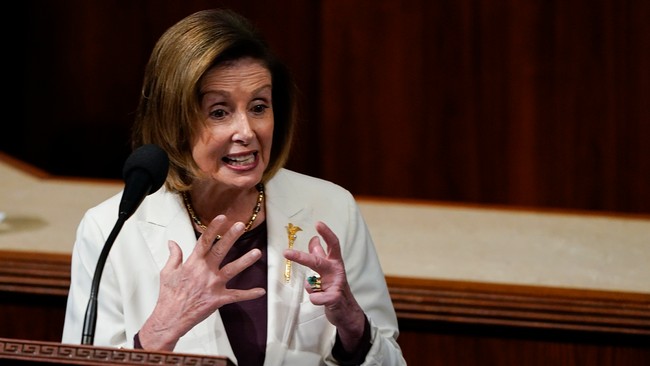
Nancy Pelosi’s retirement has set off a nasty fight in San Francisco as she uses her clout to block State Senator Scott Wiener’s bid to replace her, while Pelosi backs Connie Chan. The clash centers on an AI chatbot created in Chan’s voice and an escalating public spat that mixes gender and race accusations with classic insider politics. Both sides have traded hardball rhetoric, and the episode exposes the fractures and theater of California Democratic politics. This article walks through the fallout, the key statements, and what the showdown reveals about influence and tactics in the Bay Area.
California’s political scene keeps producing headline-grabbing figures, and this is another one. Two of the state’s most polarizing players now find themselves on opposite sides of a bitter succession fight for a high-profile congressional seat. One is Nancy Pelosi, a powerhouse with a long political machine, and the other is Scott Wiener, a flamboyant state senator who has courted controversy.
The immediate trigger was a novelty AI chatbot that answered questions in Connie Chan’s voice, created by Wiener’s team. The site described itself bluntly: “I’m Connie, the world’s first AI trained to say ‘no’ to anything you ask,” and the stunt was meant as cheeky campaign content. What started as a campaign gimmick quickly became a political grenade when Pelosi and allies publicly denounced it, framing the chatbot as an attack on women and people of color.
The internal feud spilled out into public statements and formal condemnations, with Pelosi marshaling a faction of female Democrats to reprimand Wiener. The criticism wasn’t just about tone; it accused Wiener’s team of leaning on sexist and racist tropes in a manner Pelosi said was unacceptable. That kind of moral high ground argument is useful in politics, and Pelosi used it to portray Wiener as crossing a line.
Nancy Pelosi is unleashing her political machine to block one of California’s most prominent state lawmakers from replacing her in Congress, bringing an increasingly bitter feud to a head inside San Francisco’s Democratic establishment.
The latest clash erupted after Pelosi and her allies publicly blasted Scott Wiener’s campaign last week over an AI-powered chatbot imitating her preferred successor, San Francisco Supervisor Connie Chan, calling the bot “sexist” and a source of “harmful racial tropes that echo Trump birtherism.”
Pelosi’s official statement on the matter was direct and forceful, and she framed the chatbot as a misuse of technology intended to undermine women’s voices in public life. That argument plays well among progressive activists who worry about online harassment and the weaponization of AI. In San Francisco’s internal power plays, though, it also functions as a blunt instrument to weigh in on a heated primary.
“Using AI to fabricate a woman’s voice for ridicule or attack is a gross misuse of technology and reflects a disturbing willingness to erase women’s agency and reinforce the sexist tropes that have long been used to undermine women in public life.”
Pelosi also tied the stunt to racial harms, insisting the impact intensifies when the target is a woman of color. That language broadened the scope of the critique and raised the bar for what counts as acceptable campaign tactics. It’s a common move: escalate a positional complaint into a moral condemnation, which gives the accuser leverage beyond a simple political disagreement.
When the target is a woman of color, those harms compound with racial stereotypes that have historically been used to question women’s credibility, leadership, and belonging.
Wiener quickly took down the chatbot and issued contrite-sounding apologies, which calmed some critics but didn’t erase the larger damage. For conservatives watching California politics, this spectacle reinforces the image of a party that often handles internal fights with performative outrage. Pelosi’s intervention is a reminder that political machines still matter and that endorsements and public rebukes can reshape contests overnight.
There’s a genuine policy concern here about the use of AI to simulate voices and statements, and Pelosi has a point about potential harms. But the way the issue was weaponized in a local succession fight feels calculated, not purely principled. Using gender and race accusations as leverage in internal Democratic fights looks less like moral clarity and more like strategic strikecraft to shape outcomes.
The episode also underscores how small-bore stunts quickly become existential controversies in a media ecosystem primed for outrage. A chatbot meant to be a quirky campaign device turned into fodder for a larger narrative about party identity, morality, and who gets to control San Francisco’s political future. That kind of escalation is now standard politics in the state.
For conservatives, watching Pelosi deploy her influence this way is confirmation of two things: first, that entrenched figures will use every tool available to shape their succession, and second, that the left’s internal battles are often resolved with moralism rather than open debate. California remains a laboratory for the worst excesses of modern partisan theater, and this fight is just the latest episode.
Wiener’s removal of the chatbot and his apologies might quiet this particular fight, but the underlying tensions remain. Both sides have reputations and constituencies to protect, and the contest for Pelosi’s seat will keep producing headlines as the primary approaches. Expect more theatrics, more moral framing, and more evidence that power in San Francisco is still heavily centralized.
https://x.com/TeamPelosi/status/2085488807152136474



Add comment