
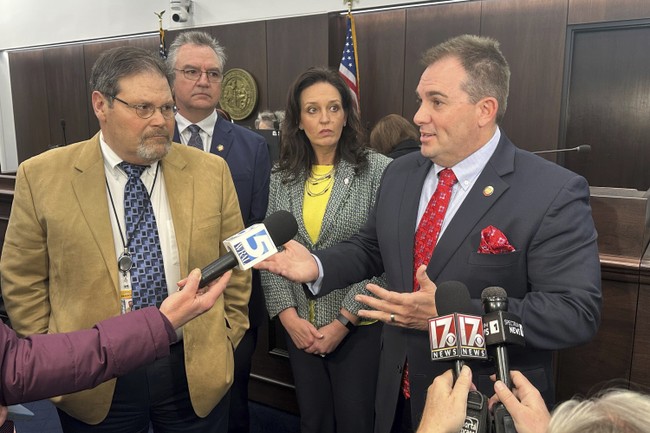
Chuck Edwards abruptly withdrew from his reelection in North Carolina’s 11th District after a House Ethics Committee report urged censure, and the county GOP quickly picked state Rep. Jennifer Balkcom as the replacement nominee; this article outlines the timeline, the ethics findings, Balkcom’s selection and statements, and the political stakes heading into a tight fall campaign.
The House Ethics Committee recommended censure for Representative Chuck Edwards after reviewing allegations that he “may have created or fostered a hostile work environment and engaged in sexual harassment in violation of House Rules, laws, or other standards of conduct.” The committee concluded Edwards “engaged in persistent unprofessional and inappropriate conduct towards two young female staffers” while not finding evidence he “engaged in sexual activity with or explicitly propositioned any individual under his employ.” The report and the fallout prompted Edwards to end his reelection bid and finish the current term.
Edwards’ public message was succinct and personal: “After much prayer and reflection, I’ve decided to withdraw from my re-election campaign. I will complete my current term. Serving Western North Carolina has been the honor of my life. Thank you for your trust, prayers, and support. God bless WNC and America.” That statement did not address the committee’s detailed conclusions, and the timing left Republicans scrambling to protect a vulnerable seat less than three months before Election Day.
With ballots soon to be mailed and the campaign calendar compressed, the NC-11 Republican Executive Committee acted swiftly to name a new nominee who could unify the party and run a hard, focused fall race. Out of five contenders, the committee selected state Rep. Jennifer Balkcom to replace Edwards and carry the GOP banner into November. Her selection reflects a preference for experience in Raleigh and a candidate who can quickly pivot to a federal campaign.
Balkcom represents a state legislative district in Henderson County and now faces Democrat Jamie Ager, who already won the party’s primary in March. The timeline is brutal: absentee ballots begin going out in early September, leaving Balkcom a narrow window to introduce herself to voters across a geographically large district. That short runway means the campaign will run on a fast pace of earned media, targeted messaging, and grassroots ground game rather than lengthy persuasion efforts.
In announcing her new role as the nominee, Balkcom said in part that “It has been an incredible honor to fight for Henderson County in Raleigh, and I will take that fight to Washington and work every single day to make life more affordable for working families, improve community safety, support our farmers, and ensure we have the resources we need to continue to recover from Hurricane Helene.” Those priorities map to traditional Republican strengths: economic sanity, public safety, and support for rural communities and agriculture.
Balkcom’s political evolution is candidly acknowledged; she is a former Democrat and has been direct about why she switched sides. Her critique of her old party was stark and exact: “Like many Americans, the Democrat Party left me behind when they abandoned their values and embraced extremism. We’re seeing that extremism play out across the country, as their party nominates radical socialists who want to raise taxes, open our borders, and do away with our way of life. We must prevent that radical agenda from reaching our government, and that starts right here in the Eleventh District.” That language sharpens the contrast she intends to draw with her opponent.
Republicans see an opportunity to frame this suddenly competitive race as a referendum on national direction, leaning into concerns about affordability, security, and cultural change. The Cook Political Report moved NC-11 from “leans Republican” to “toss-up” after the ethics probe and a weak fundraising quarter for Edwards, signaling that Democrats will view this district as one they can flip and will pour resources into the closing weeks.
Party operatives note that late changes carry risks but also a clear path: consolidate the conservative base, prioritize early and absentee voters, and emphasize kitchen-table issues that resonate across suburban and rural parts of the district. Balkcom’s background in state government gives her a launchpad to lay out concrete policy priorities and to stress continuity between local concerns and federal action.
https://x.com/NCGOP/status/2086965155816988702
The campaign will be watched closely as an indicator of how well Republicans can manage unexpected turmoil and still hold ground where margins are tight. With Election Day less than three months away, the new GOP nominee must move fast, communicate plainly, and capitalize on clear contrasts with the Democratic alternative. The next several weeks will test whether a rapid replacement can turn short-term disruption into a focused, effective fall effort.

Add comment